
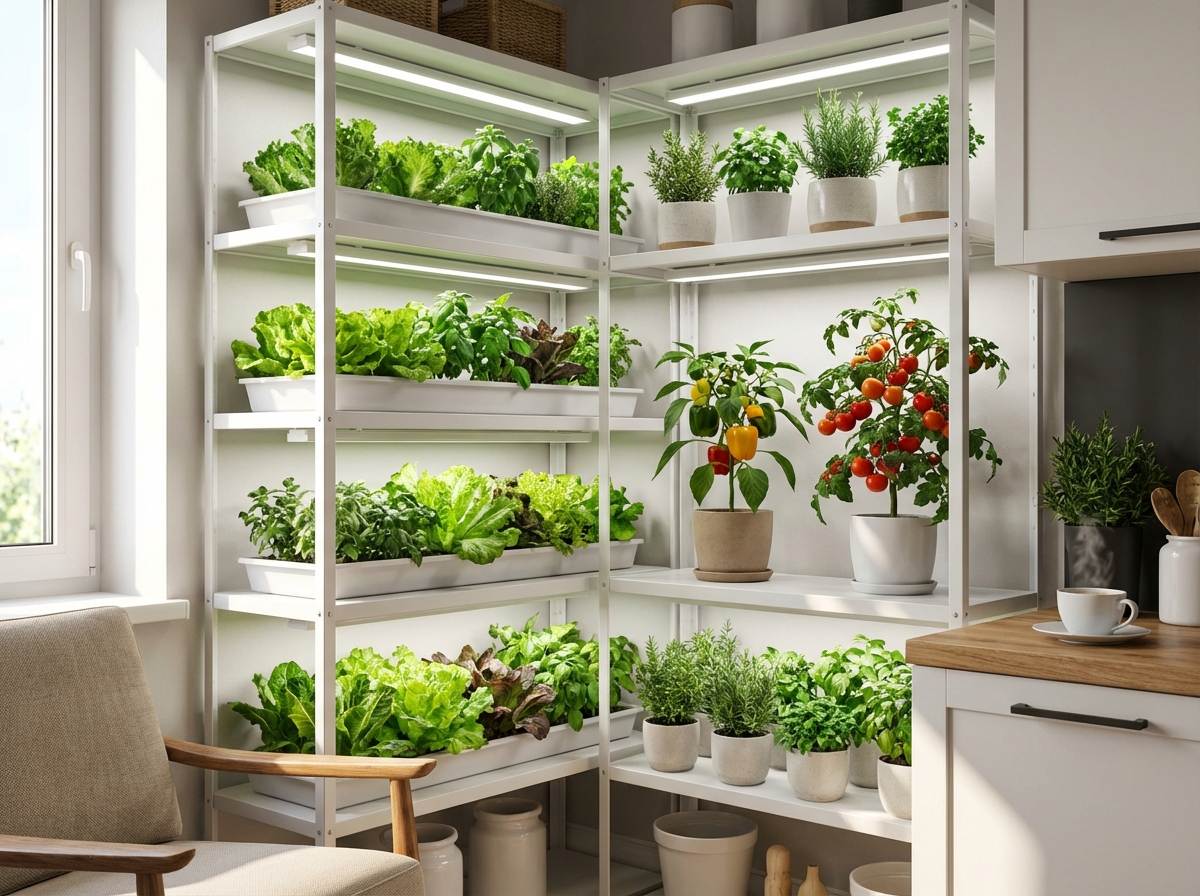
Growing vegetables in an apartment without sunlight might sound unrealistic, but once you understand how plants really work, it becomes completely achievable. Over the past 15 years, I’ve grown vegetables in small indoor spaces where sunlight was almost nonexistent.
The biggest lesson I learned is simple: plants don’t need sunlight—they need the right type of light and environment.
This guide walks you through a clear 7-step system to Grow Vegetables in an Apartment, along with practical insights, mistakes to avoid, and advanced techniques that most beginners never learn.
Why Sunlight Is Not Necessary
Plants use light for photosynthesis, but they don’t specifically require sunlight. Artificial lighting—especially modern LED grow lights—can fully replace natural light when used correctly.
Indoor growing gives you an advantage because you control everything:
- Light duration and intensity
- Water supply
- Nutrient delivery
- Temperature stability
When I switched from window-based growing to controlled lighting, growth became faster, leaves turned darker green, and yields became consistent.
Choosing the Right Vegetables for Indoor Growing
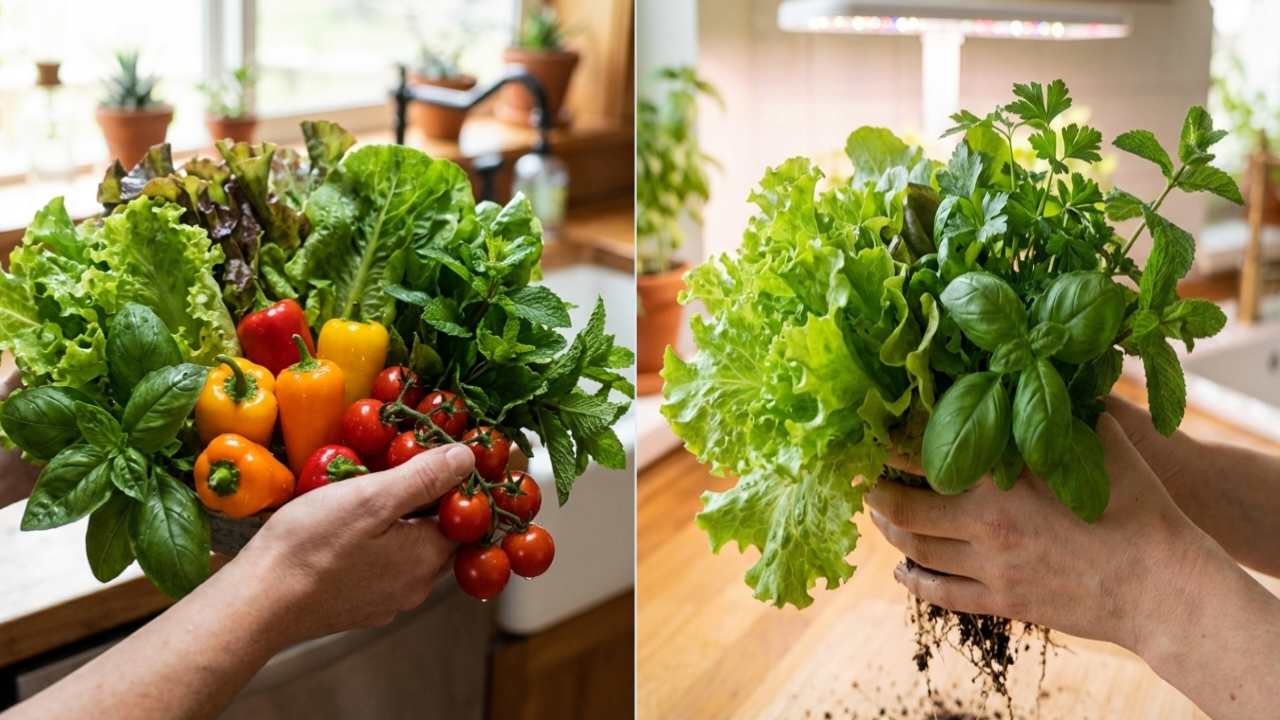
Selecting the right vegetables is the foundation of successful indoor gardening, especially when you don’t have access to natural sunlight. Not all plants adapt well to artificial conditions, so it’s important to choose crops that grow quickly, require less space, and perform efficiently under grow lights. Leafy greens and herbs are ideal because they have shallow roots and shorter growth cycles.
Starting with the right vegetables not only improves your success rate but also helps you build confidence as a beginner while ensuring consistent and rewarding harvests indoors.
- Lettuce
- Spinach
- Kale
- Basil
- Mint
- Parsley
- Cilantro
- Microgreens
- Green onions
- Cherry tomatoes (with strong lighting)
Step 1: Define Your Setup and Space
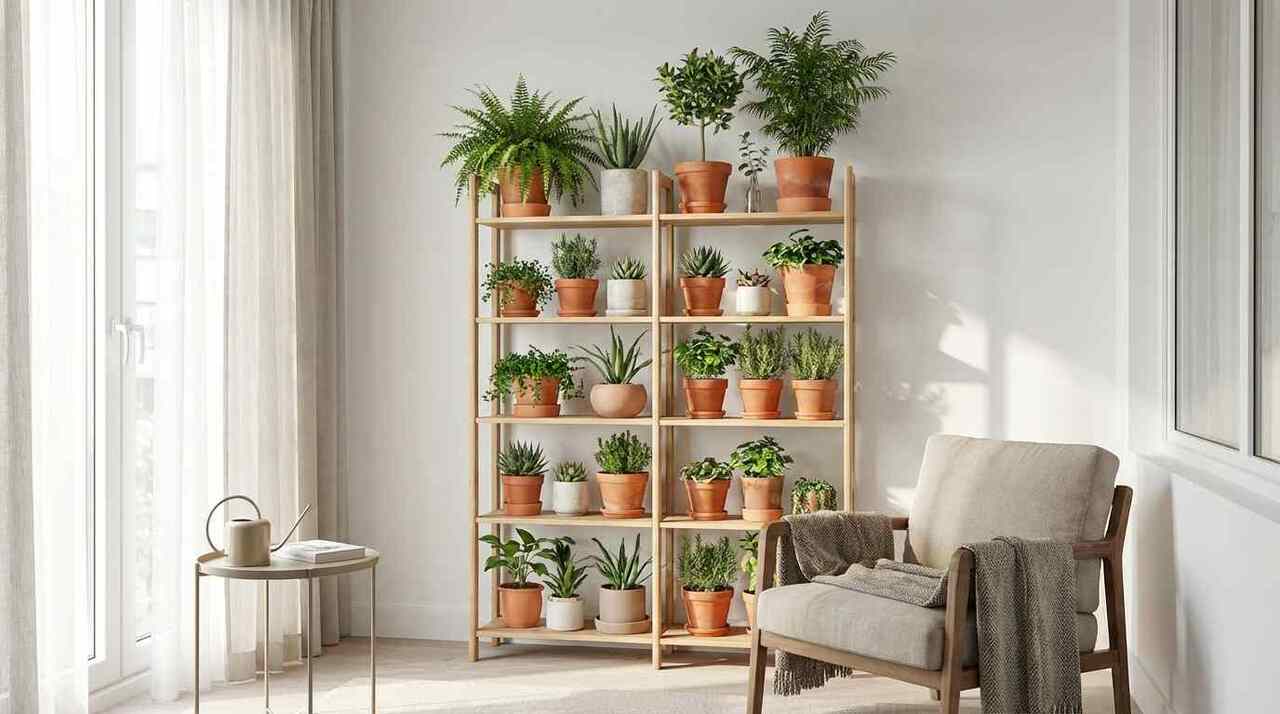
Before planting anything, choose where your indoor garden will be located. You don’t need a large area. A small corner, shelf, or table works perfectly.
The goal is to pick a space where you can easily install lights, maintain stability, and access plants daily. In my first apartment, I used a kitchen corner. Later, I upgraded to a vertical rack, which significantly increased production without using more space.
Step 2: Choose the Right Vegetables
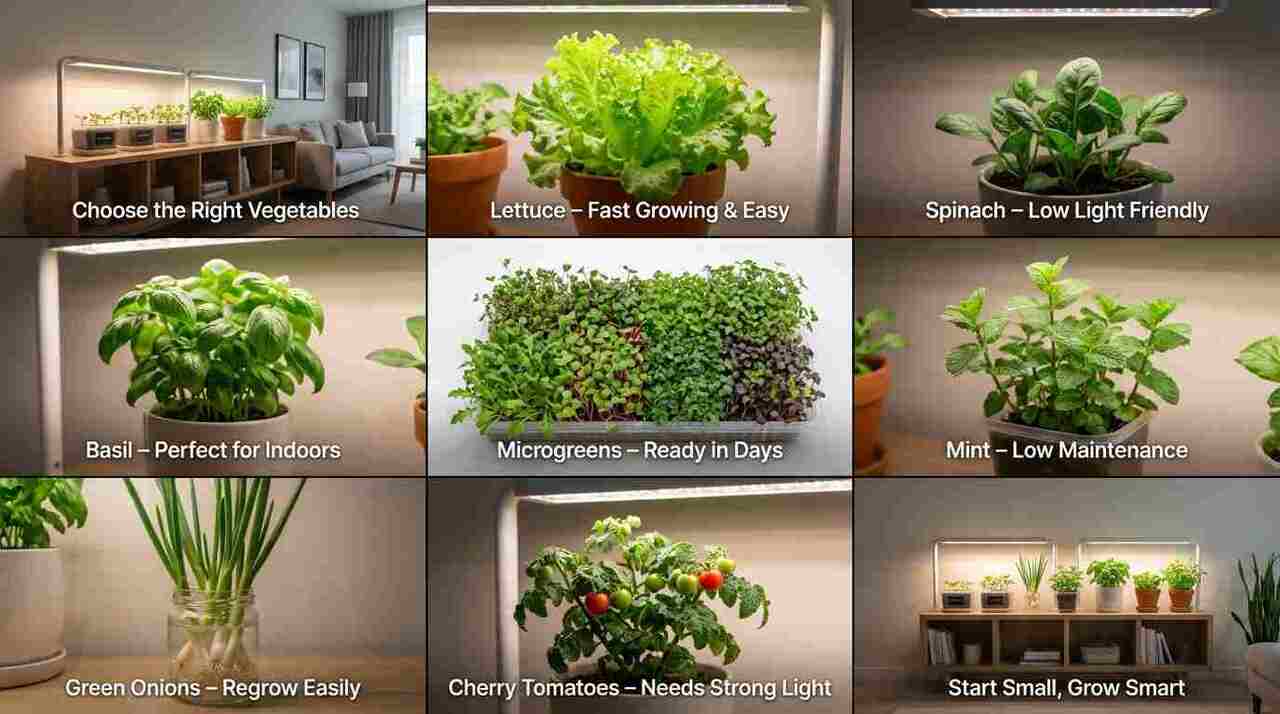
Indoor success depends heavily on plant selection. You should choose crops that grow quickly and adapt well to artificial light.
Leafy greens like lettuce, spinach, and kale are ideal. Herbs such as basil, mint, parsley, and cilantro also perform very well indoors.
- Leafy greens grow fast and require less light
- Herbs are compact and easy to maintain
- Microgreens offer the fastest results
Fruiting plants like tomatoes and peppers can also be grown indoors, but they require stronger lighting and more attention.
From my experience, starting with lettuce and basil gives the fastest success and builds confidence.
Step 3: Install Proper Grow Lights
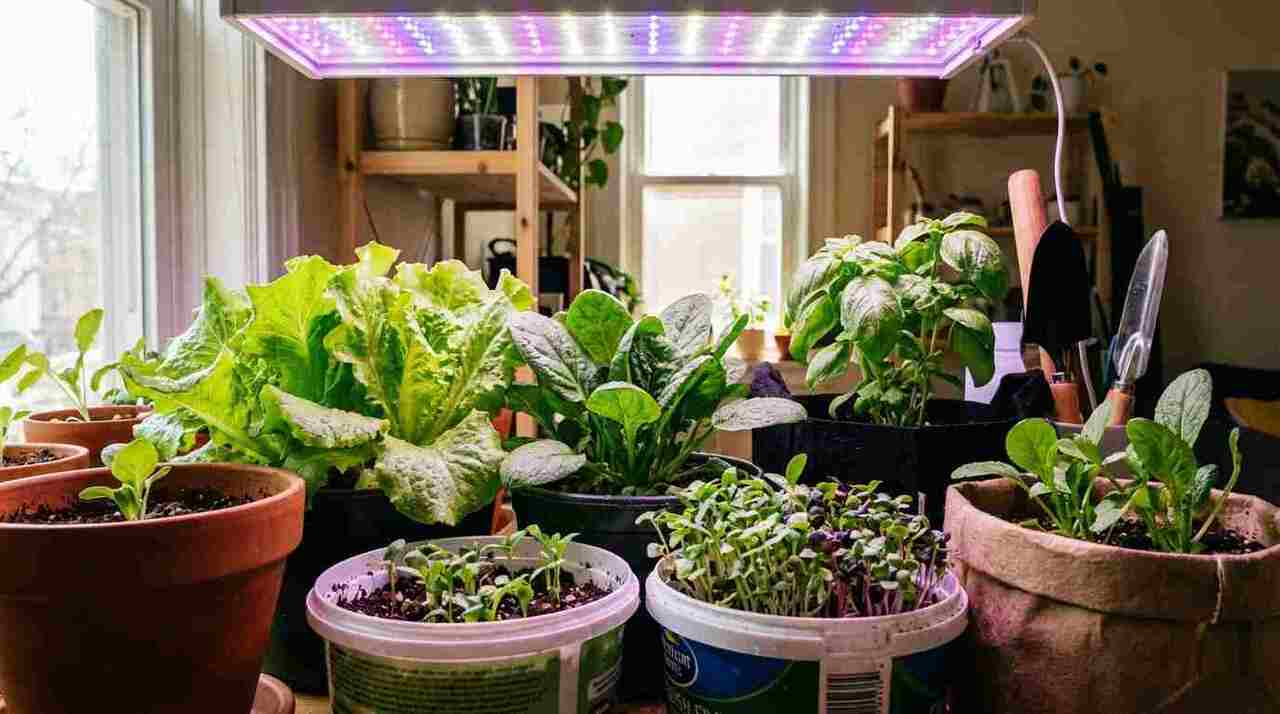
This is the most important step in indoor gardening. Without proper lighting, plants will not grow effectively.
Use full-spectrum LED grow lights, which are designed to mimic natural sunlight. Position the lights about 12–18 inches above the plants and run them for 12–16 hours daily.
Consistency matters. I always recommend using a timer so plants receive the same light cycle every day.
When I switched from regular bulbs to grow lights, plant growth improved dramatically. Stems became stronger, leaves healthier, and overall productivity increased.
Step 4: Use the Right Containers and Growing Medium
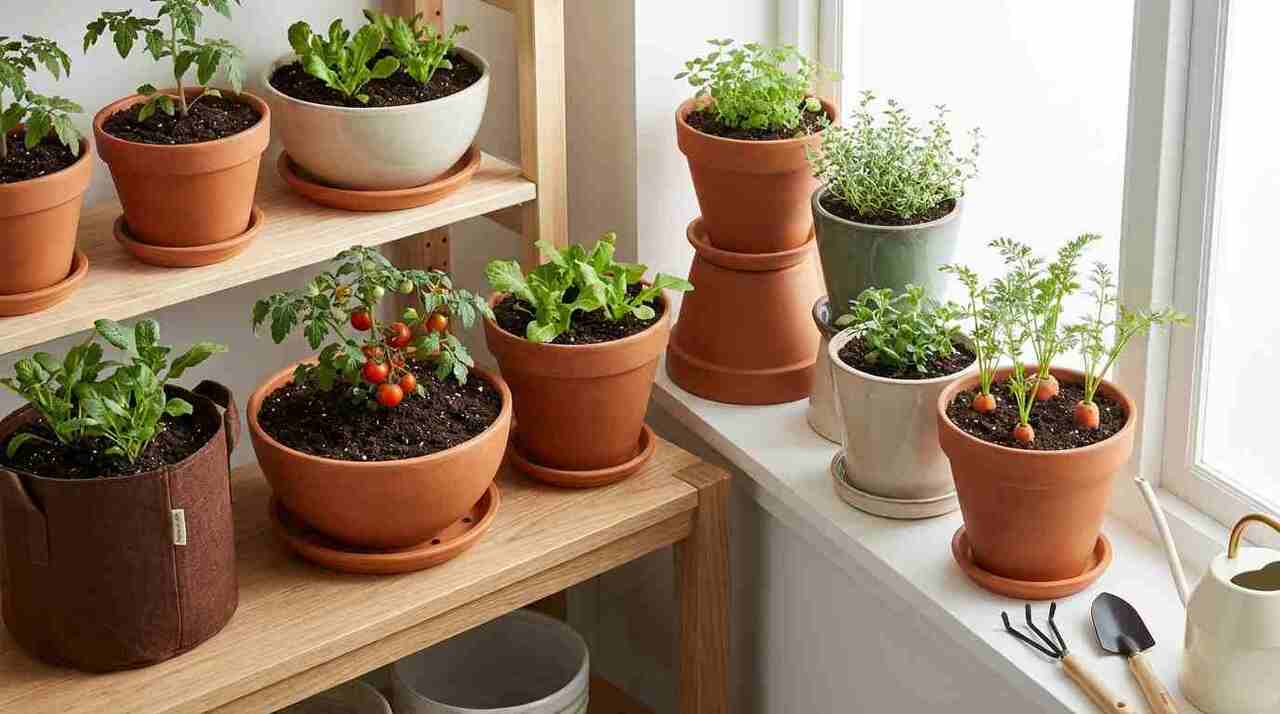
Indoor gardening relies on containers, so choosing the right setup is important. Use pots with proper drainage holes to prevent water buildup.
Avoid heavy garden soil. Instead, use a lightweight potting mix that allows good airflow and drainage.
In my early attempts, I used dense soil, which slowed growth and caused root issues. Switching to a proper potting mix improved plant health immediately.
Match container size to the plant. Smaller plants need shallow containers, while larger plants require deeper ones.
Step 5: Master Watering
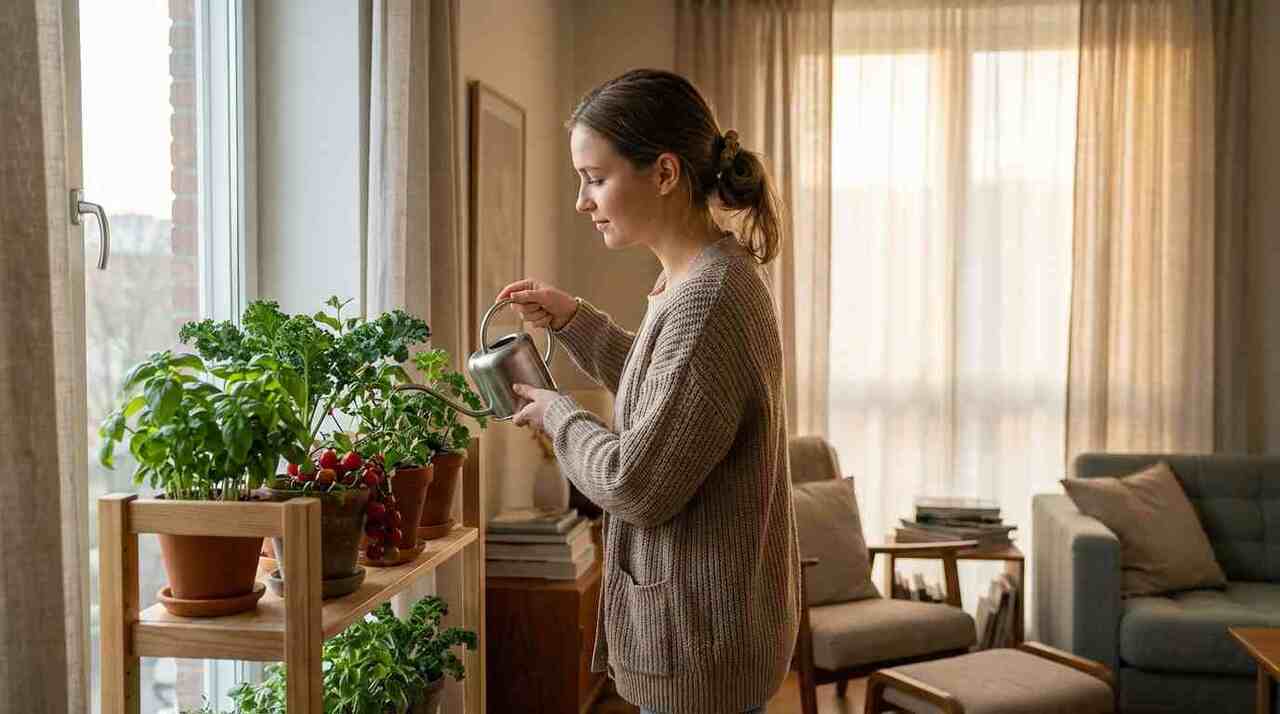
Watering is the most common reason indoor plants fail. In apartments, soil stays moist longer due to low airflow.
Instead of watering on a fixed schedule, check the soil first. If the top layer is dry, water the plant. If it is still moist, wait.
I used to water daily, thinking it would help plants grow faster. Instead, it caused root rot and weak growth. Once I adjusted my watering method, plant health improved significantly.
Step 6: Control Temperature and Airflow
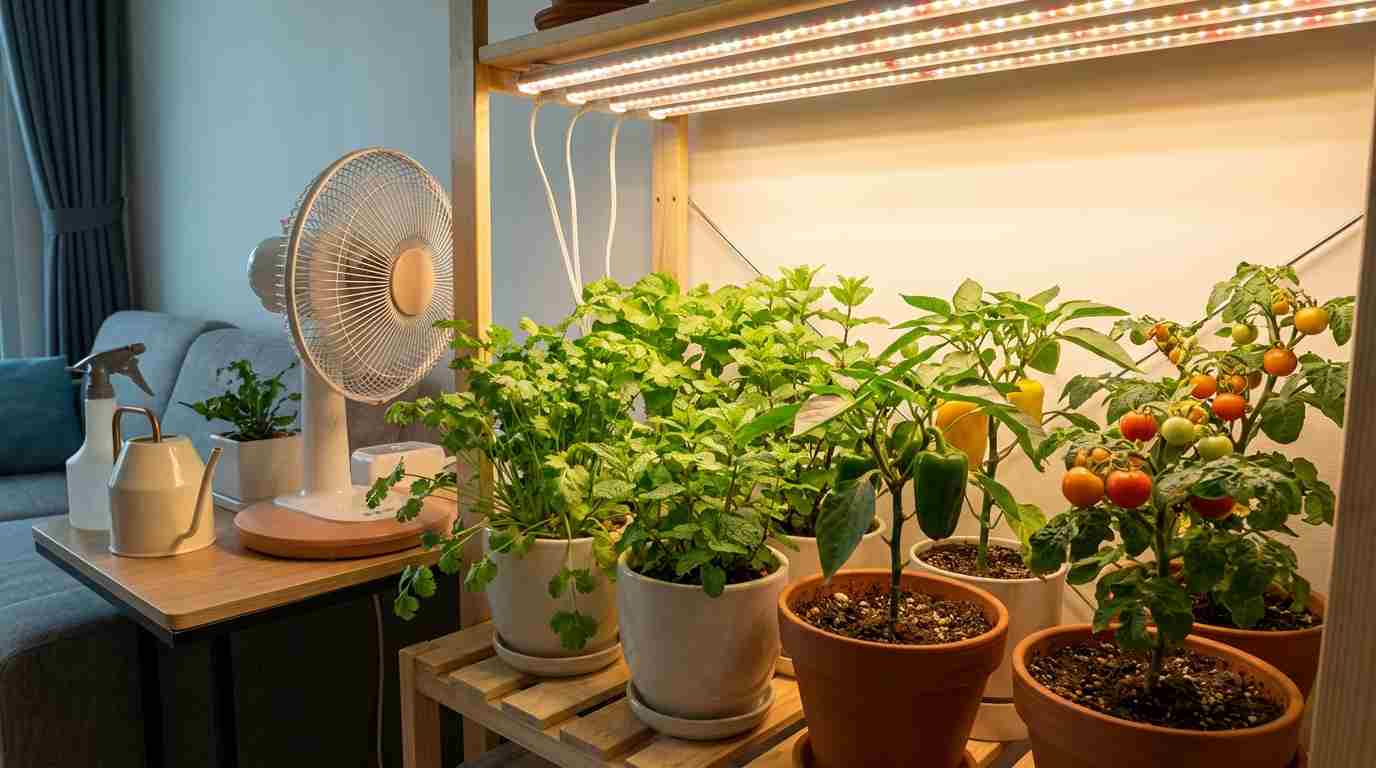
Most vegetables grow well at normal room temperatures between 65°F and 75°F. The key is maintaining consistency.
Avoid placing plants near air conditioners, heaters, or drafty areas. Sudden temperature changes can stress plants.
Airflow is also essential. In nature, wind strengthens plants and prevents disease. Indoors, you need to replicate this effect.
I use a small fan for a few hours each day. This simple step improves plant strength and reduces the risk of mold and pests.
Step 7: Feed and Maintain for Continuous Growth
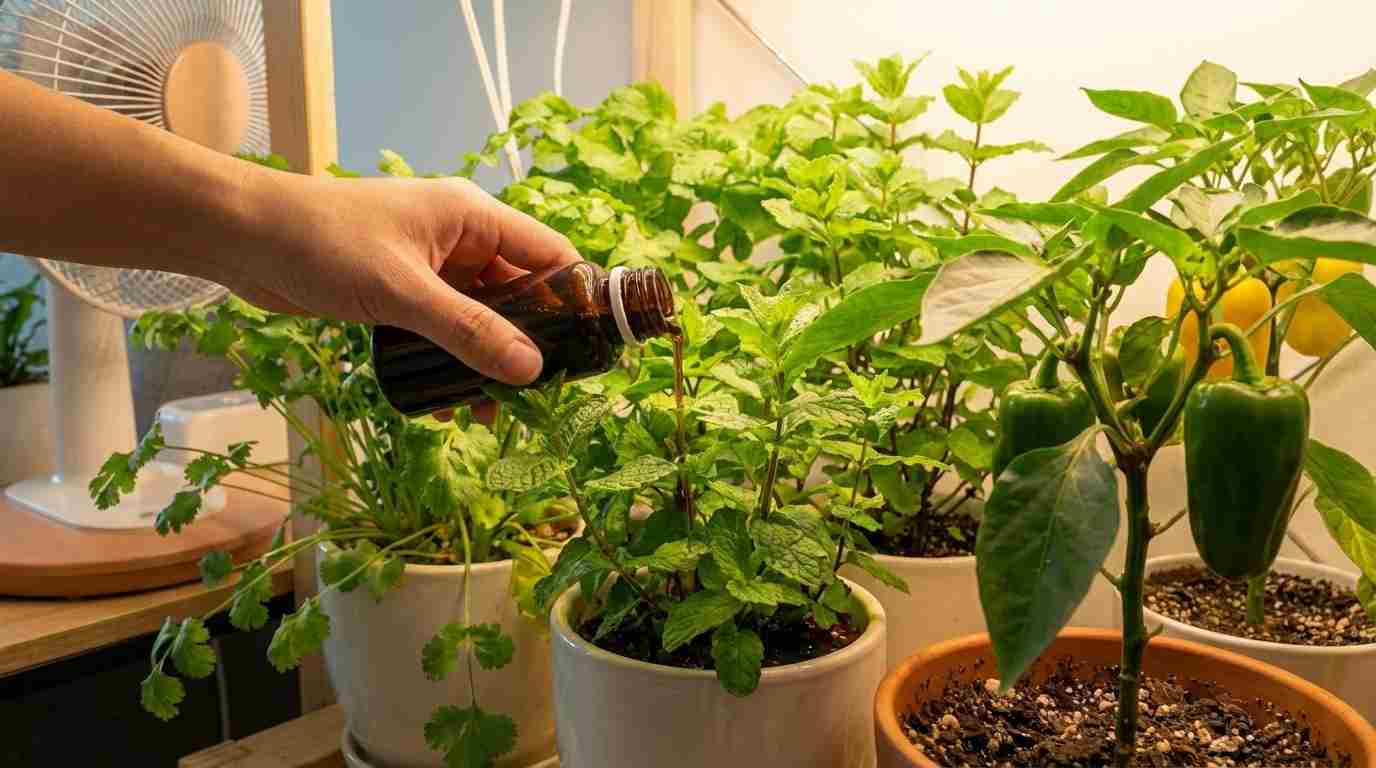
Indoor plants depend entirely on you for nutrients. Use a balanced liquid fertilizer every 10–14 days.
Avoid overfeeding, as it can damage roots. Consistency is more important than quantity.
Regular maintenance is also important. Remove dead leaves, adjust light height as plants grow, and monitor overall plant health.
One effective technique is staggered planting. By planting new seeds every couple of weeks, you can ensure a continuous harvest instead of a single yield.
Watering Tips That Make a Big Difference
Water slowly so moisture reaches the roots evenly. Always allow excess water to drain out.
Loosening the top layer of soil occasionally improves oxygen flow and supports healthier root development.
My Personal Experience
When I started indoor gardening, I struggled because I treated it like outdoor gardening. I relied on natural light and watered frequently.
The real breakthrough came when I began controlling the environment. Once I optimized lighting, reduced overwatering, and improved airflow, everything changed.
I still remember harvesting my first batch of lettuce indoors. That moment made me realize that sunlight and space are not limitations—knowledge is.
Advanced Tips for Better Results
- Use timers to maintain consistent light cycles
- Add reflective surfaces to improve light efficiency
- Rotate plants to ensure even growth
- Try vertical gardening to maximize space
For advanced growers, hydroponics can further increase yield and speed up growth.
Common Mistakes and Their Results
- Weak lighting leads to slow and weak growth
- Overwatering causes root rot and plant damage
- Wrong plant selection reduces success rate
- Poor airflow increases disease risk
I have personally made all of these mistakes, and correcting them made a significant difference.
Final Thoughts
Growing vegetables in an apartment without sunlight is not a limitation—it’s a different way of gardening.
By controlling light, water, nutrients, and environment, you can grow fresh vegetables year-round.
The system may take some time to set up, but once it’s in place, it becomes simple and efficient.
You don’t need a backyard or sunlight to grow your own food. You just need the right system and consistency.