
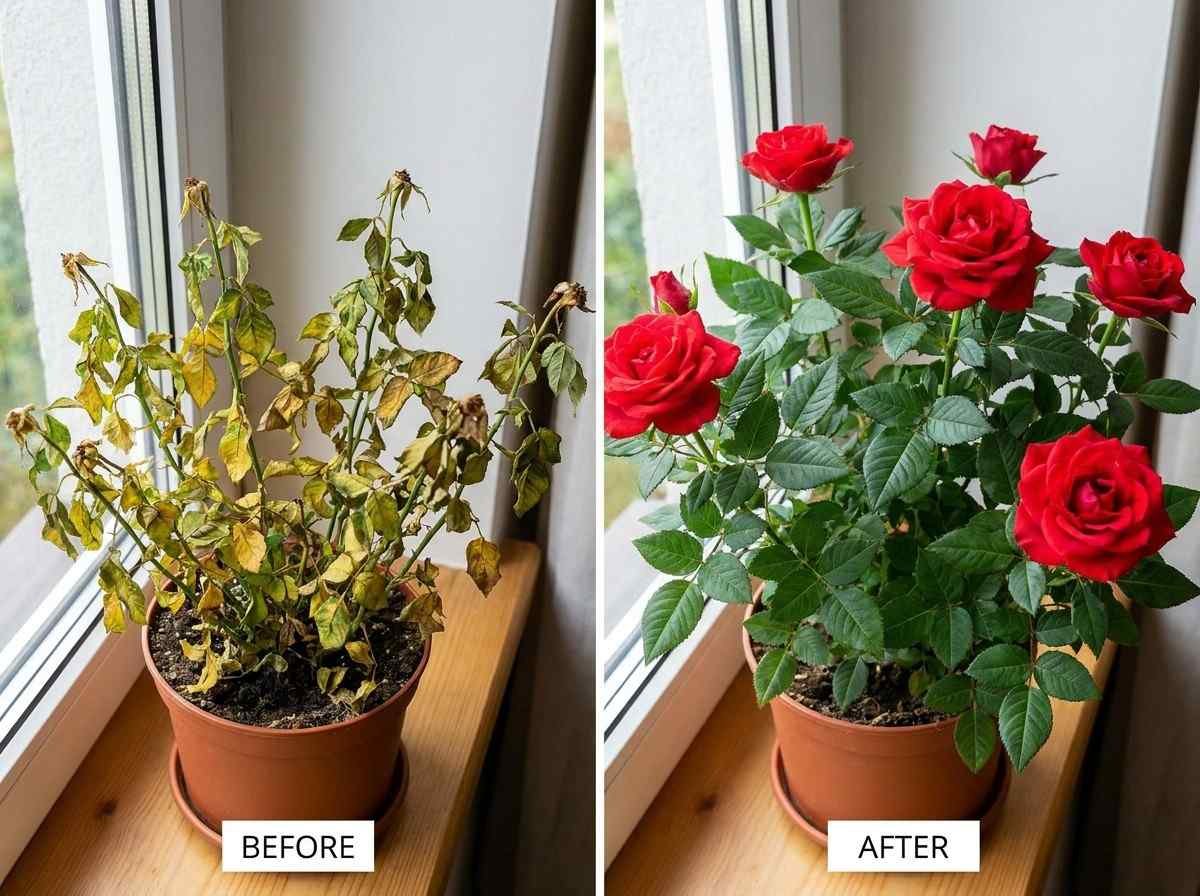
I still remember the first time I walked out to my backyard and found my rose bushes looking absolutely pitiful leaves pale, yellowing, dropping off like it was fall in July. I’d spent three weekends prepping that garden bed, and honestly, it stung. I stood there with my morning coffee thinking, what did I do wrong?
If you’ve found yourself Googling “why are my rose leaves turning yellow” at 11 p.m. with a flashlight in your hand, trust me, you’re not alone. Yellow leaves on roses are one of the most common complaints among home gardeners across the country from the humid Southeast to the dry Southwest. The good news? This is almost always fixable once you know the real reason behind it.
In this guide, I’m going to walk you through every major cause, how to identify it, and exactly what to do. By the end, you’ll know your roses better than most people ever do.
The Quick Answer: What Makes Rose Leaves Turn Yellow?
Rose leaves turn yellow for many reasons overwatering, underwatering, nutrient deficiencies, fungal diseases, pests, or even normal seasonal shedding. The key is learning which problem you’re dealing with so you don’t waste money on the wrong fix.
Here’s a fast-reference table before we go deep:
| Cause | What It Looks Like | Quick Fix |
|---|---|---|
| Overwatering | Uniform yellowing, mushy stems near base | Let soil dry out; improve drainage |
| Underwatering | Yellow edges, crispy tips, dry soil | Deep watering 2–3x per week |
| Black Spot Disease | Black spots with yellow halos | Fungicide spray; remove infected leaves |
| Iron Deficiency | Yellow leaves with green veins | Chelated iron treatment |
| Nitrogen Deficiency | Older leaves yellow first, uniform fade | Balanced fertilizer with nitrogen |
| Spider Mites | Tiny yellow speckles, fine webbing | Neem oil spray or miticide |
| Wrong Soil pH | Widespread yellowing across plant | Test soil; adjust with sulfur or lime |
| Root Rot | Rapid yellowing, wilting despite wet soil | Repot with fresh soil; trim black roots |
| Natural Shedding | Older lower leaves fall off seasonally | No action needed |
| Too Much Sunlight | Bleached yellow, leaf scorch | Add afternoon shade |
| Chemical Burn | Sudden yellowing after fertilizing | Flush soil deeply with water |
1. Overwatering: The #1 Culprit Most People Don’t Suspect
I’ll be real with you, I killed my first climbing rose by loving it too much. Watered it every single day because I thought more water meant faster growth. The leaves went yellow, then the whole plant collapsed. It was root rot, and it was entirely my fault.
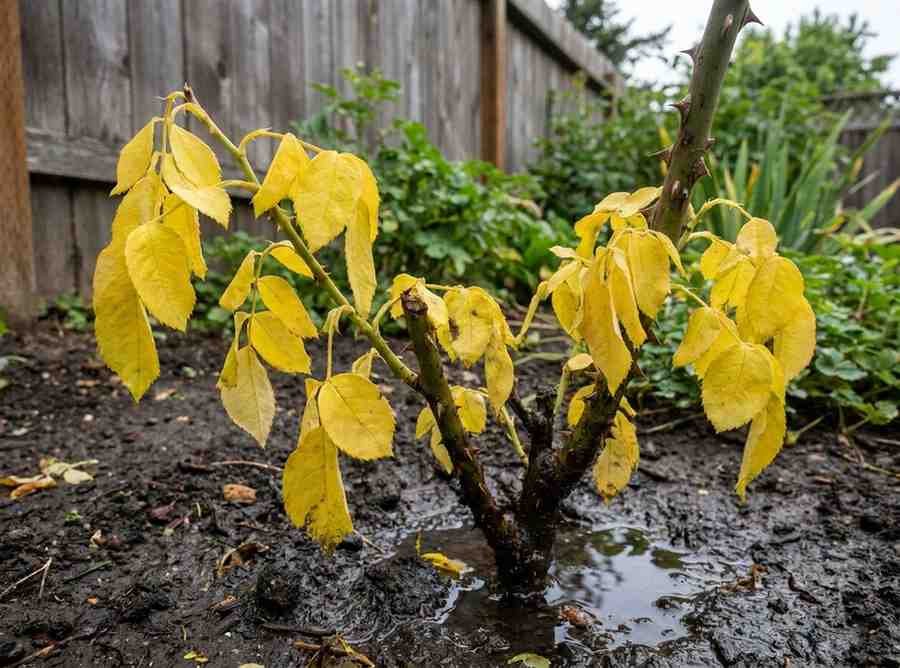
Overwatering cuts off oxygen to the roots. Without oxygen, roots can’t absorb nutrients even if they’re present in the soil, so leaves start showing yellowing as a stress signal.
How to Identify Overwatering
- Leaves yellow uniformly, across multiple parts of the plant
- Soil feels consistently soggy or muddy
- Stems near the soil line feel soft or mushy
- You may notice a sour or musty smell from the soil
How to Fix It
- Stop watering and let the top 2 inches of soil dry out completely
- Check that your planting area or pot has good drainage holes
- Amend heavy clay soil with perlite or coarse sand to improve drainage
- Water roses deeply but infrequently — about 1 inch of water per week is the general rule for most U.S. climates
Personal tip: I bought a cheap soil moisture meter from my local hardware store (around $10), and it completely changed how I water. Stick it in before reaching for the hose — roses don’t need water until the meter reads “dry.”
2. Underwatering: Especially Common in Hot Summer Months
The opposite problem, but just as damaging. During July and August in states like Texas, Arizona, or Georgia, roses can go through water incredibly fast. If you’re only giving them a light sprinkle every few days, the roots aren’t getting what they need to push nutrients up to the leaves.
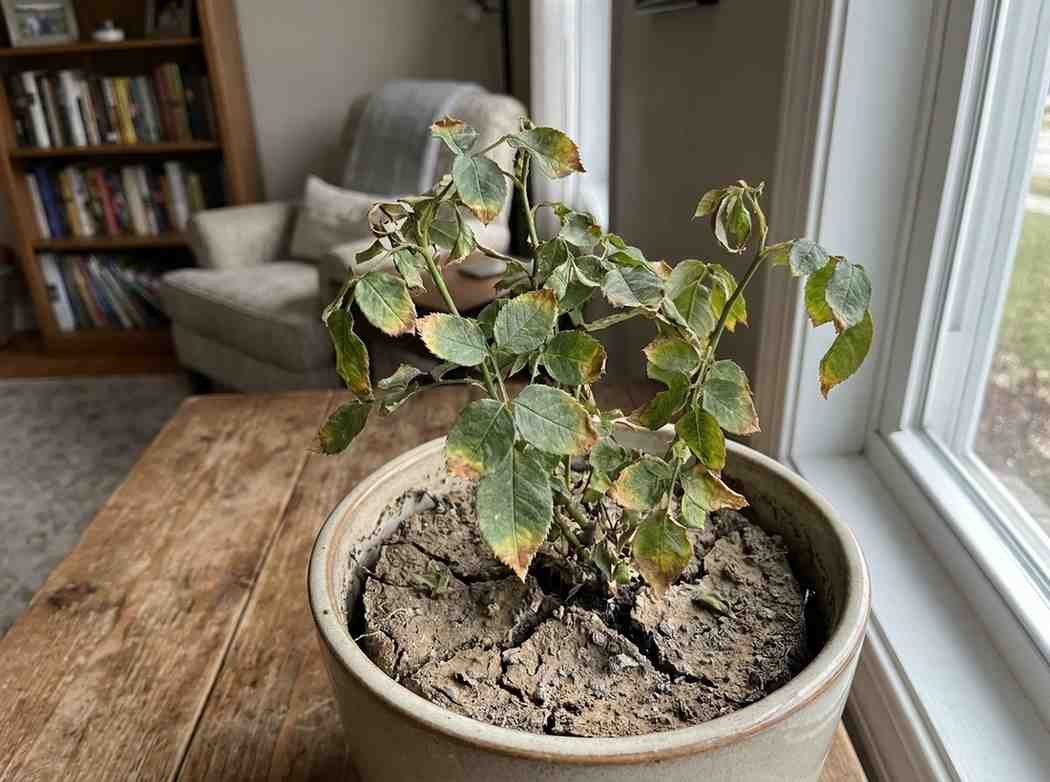
Signs of Underwatering
- Yellowing starts at the edges or tips of leaves
- Leaf edges feel dry and slightly crispy
- Soil pulls away from the edges of the pot or garden bed
- Plant looks wilted in the morning, not just midday
How to Fix It
Water slowly and deeply — let the water soak down at least 12 inches into the soil. A soaker hose set on a timer is one of the best investments you can make for rose care. Mulch around the base (about 3 inches deep) to dramatically reduce moisture loss in hot weather.
3. Black Spot Fungal Disease: The Classic Yellow + Black Combo
If you see black spots with yellowing halos on your rose leaves, you’re dealing with black spot disease, caused by the fungus Diplocarpon rosae. This is extremely common in humid parts of the U.S. — think the mid-Atlantic states, the Pacific Northwest, or anywhere that gets consistent summer rain.
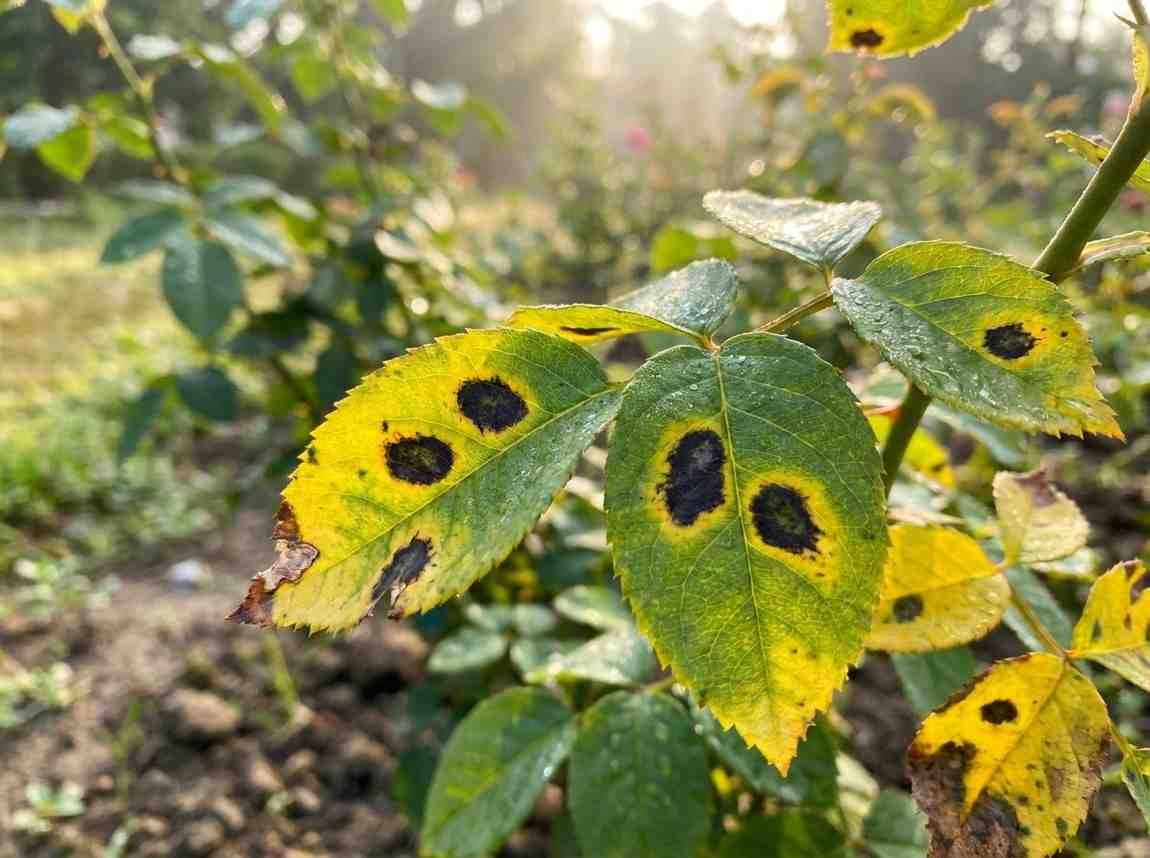
This is absolutely one of the top reasons why rose leaves turn yellow, and it spreads fast if you don’t act quickly.
How to Identify Black Spot
- Circular black spots with fringed or feathery edges on upper leaf surfaces
- Surrounding leaf tissue turns bright yellow
- Infected leaves fall off prematurely
- Problem gets worse after rainy or humid spells
Treatment Plan
- Remove infected leaves immediately — bag and toss them, never compost them
- Apply a fungicide spray (look for products with chlorothalonil, myclobutanil, or copper at your local garden center)
- Spray early in the morning so leaves dry before nightfall
- Avoid overhead watering — use drip irrigation or soaker hoses instead
- For a natural approach, a baking soda spray (1 tablespoon per quart of water with a few drops of dish soap) can help as a preventive measure
4. Iron Deficiency (Chlorosis): Yellow Leaves with Green Veins
This one is easy to spot once you know what to look for. If the space between the leaf veins is turning yellow while the veins themselves stay bright green, that’s chlorosis caused by iron deficiency. It typically starts on newer growth first.
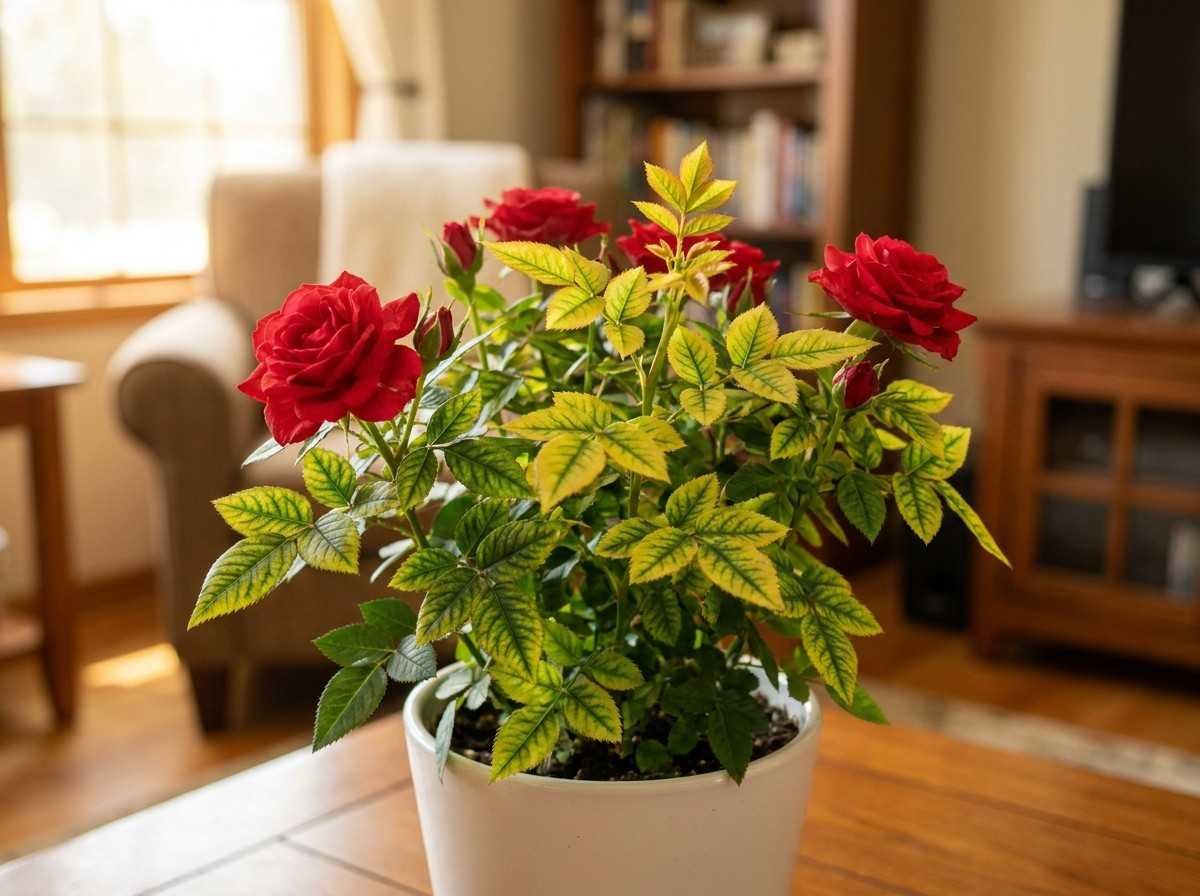
Iron deficiency is often caused not by a lack of iron in the soil, but by a soil pH that’s too high (above 7.0), which locks iron into a form plants can’t absorb.
Fix It in Two Steps
- Short-term: Apply a chelated iron product directly to the soil or as a foliar spray. These are available at most garden stores and work within a few weeks.
- Long-term: Test your soil pH (inexpensive test kits are available everywhere from Amazon to your local Lowe’s). Roses prefer a pH of 6.0–6.5. If it’s too high, add sulfur to gradually lower it.
5. Nitrogen Deficiency: When Old Leaves Go Yellow First
Nitrogen is the nutrient responsible for lush, dark green growth. When roses don’t have enough of it, the plant pulls what little is available from older leaves and redirects it to new growth. The result? Older lower leaves turn pale yellow while new growth at the top looks relatively fine.
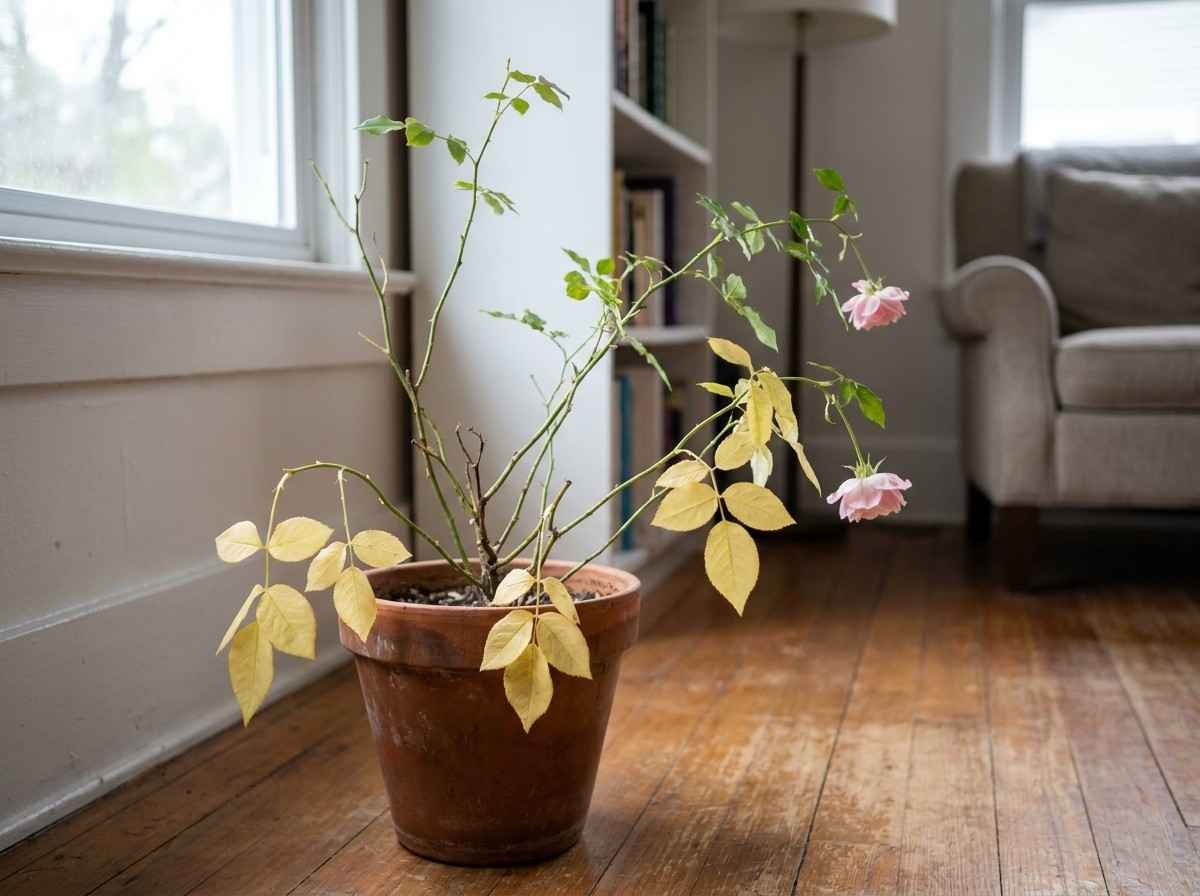
How to Fix Nitrogen Deficiency
- Apply a balanced rose fertilizer (like a 10-10-10 or a dedicated rose food) following the package directions
- Don’t over-fertilize — too much nitrogen can burn roots and cause a whole different set of problems
- Work in compost around the base of the plant annually to improve long-term soil health
I start feeding my roses in early spring with a slow-release fertilizer, then switch to a liquid feed every two weeks through August. That schedule has made a noticeable difference in leaf color and bloom count.
6. Spider Mites: Tiny Bugs Causing Big Damage
Spider mites are so small you almost need a magnifying glass to see them, but the damage they cause is unmistakable. They feed on the underside of rose leaves, sucking out the cell contents and leaving hundreds of tiny yellow speckles or stippling on the leaf surface.
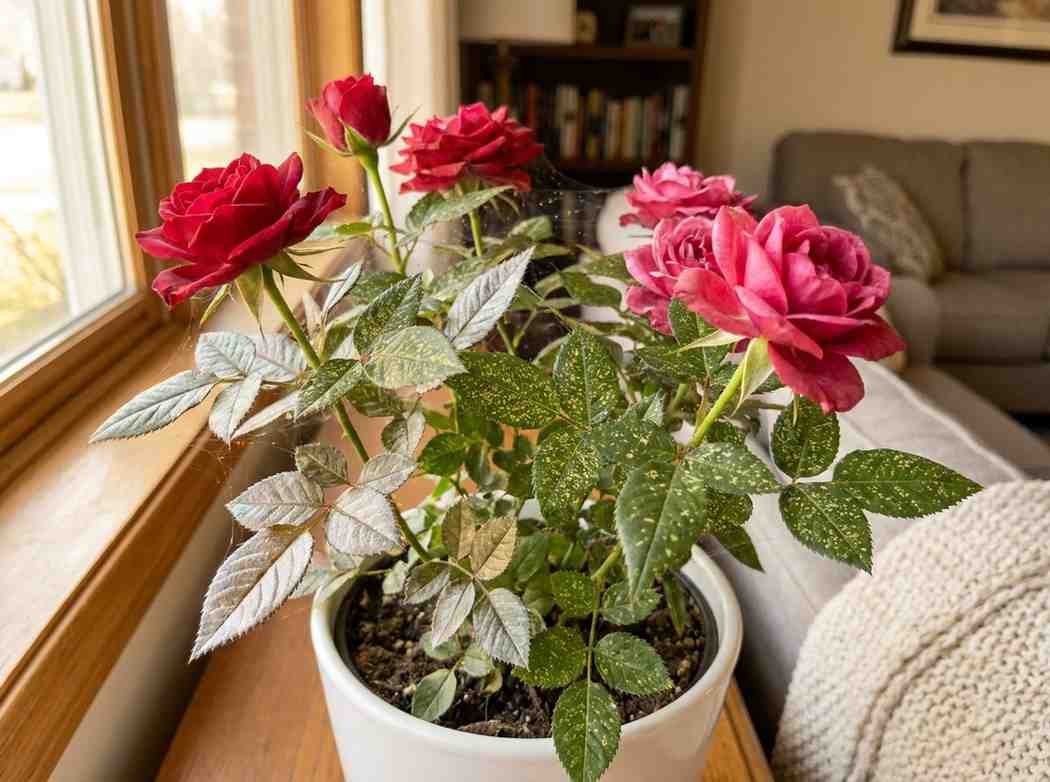
Signs of Spider Mites
- Fine yellow speckling or stippling on upper leaf surfaces
- Silvery or bronze sheen on heavily infested leaves
- Thin, delicate webbing under leaves or between stems
- Worse in hot, dry conditions — late summer is peak season
How to Get Rid of Spider Mites
- Start with a strong blast of water from your garden hose knocks a huge percentage of mites off immediately
- Apply neem oil spray in the evening (dilute according to product directions)
- For severe infestations, a dedicated miticide from your garden store will work faster
- Repeat treatment every 5–7 days for at least 3 applications to break the breeding cycle
7. Wrong Soil pH: The Invisible Problem
Roses are picky about soil pH. They thrive between 6.0 and 6.5. Outside that range — whether too acidic or too alkaline — they can’t absorb nutrients properly, and yellowing leaves are often the first sign.
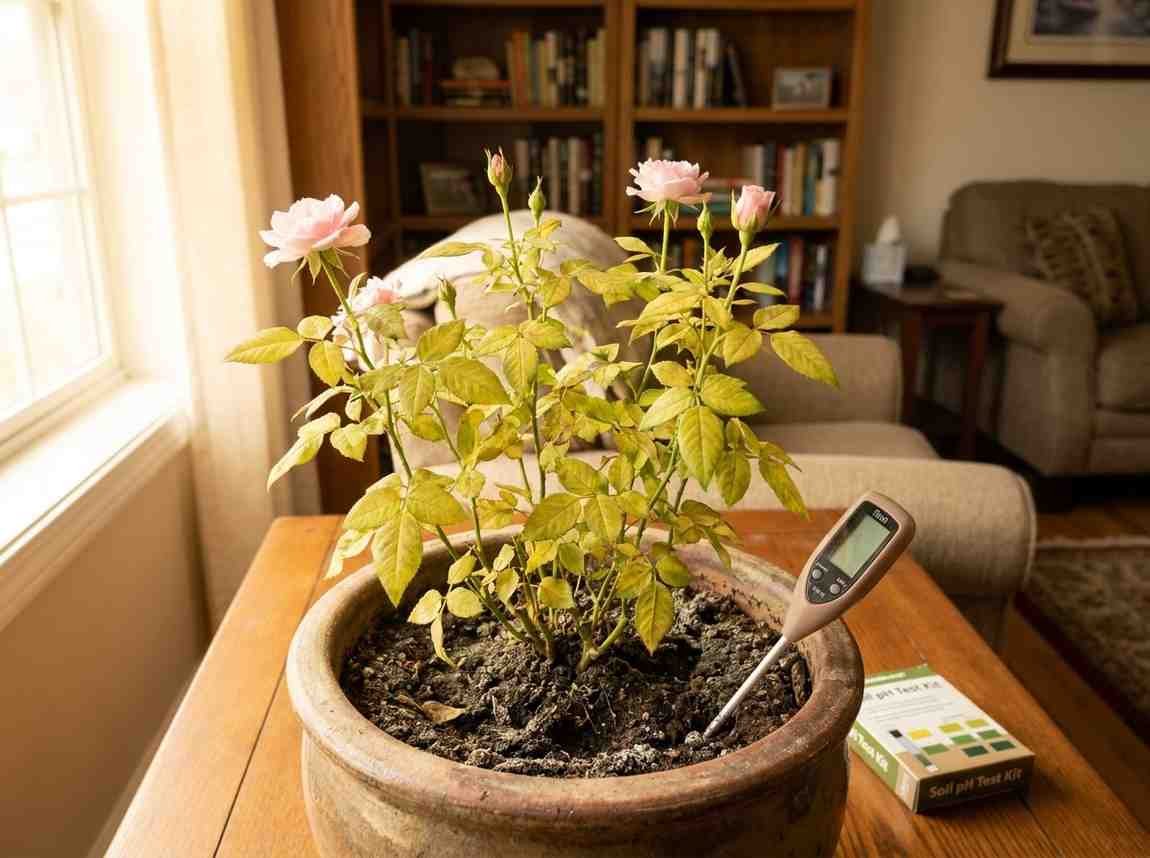
The frustrating part is that you can be feeding your rose perfectly and still have nutrient deficiencies if the pH is off. The nutrients are there; the plant just can’t access them.
| Soil pH | Effect on Roses | How to Adjust |
|---|---|---|
| Below 5.5 (too acidic) | Manganese toxicity, poor growth | Add garden lime (dolomitic) |
| 6.0–6.5 (ideal) | Optimal nutrient uptake | No adjustment needed |
| Above 7.0 (too alkaline) | Iron, manganese chlorosis | Add elemental sulfur or acidic mulch |
Pick up a soil test kit from your local garden center for about $10–$15, or send a sample to your state’s cooperative extension service for a full analysis. Your local county extension office often offers this service for free or at a very low cost.
8. Root Rot: When the Problem Starts Underground
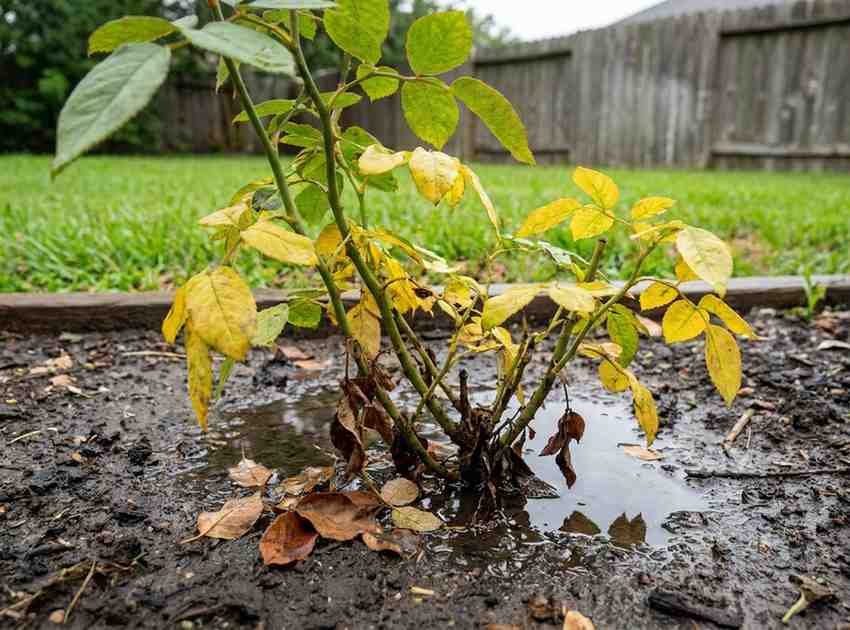
Root rot happens when fungal pathogens like Phytophthora or Fusarium attack waterlogged roots. Once established, it spreads quickly. The yellowing you see on the leaves is actually a symptom of roots that can no longer do their job.
Identifying Root Rot
- Rapid, widespread yellowing even though soil is moist
- Plant wilts despite being watered
- If you dig carefully around the base, roots appear brown, black, or mushy instead of firm and white
What to Do
- For container roses, remove the plant, trim all black/brown roots, let roots air dry for a few hours, and repot in fresh, well-draining potting mix
- For in-ground roses, improve drainage by amending soil or adding a French drain
- Apply a soil drench with a copper-based fungicide to help control the pathogen
- In severe cases, the plant may need to be replaced — sometimes it’s kinder to start fresh
9. Natural Seasonal Shedding: Sometimes Yellow Is Normal
Here’s something a lot of new rose growers don’t know: roses naturally drop older leaves throughout the growing season, especially the lower ones. If you notice a few yellow leaves near the base of a plant that is otherwise healthy and blooming, this is likely just normal shedding.
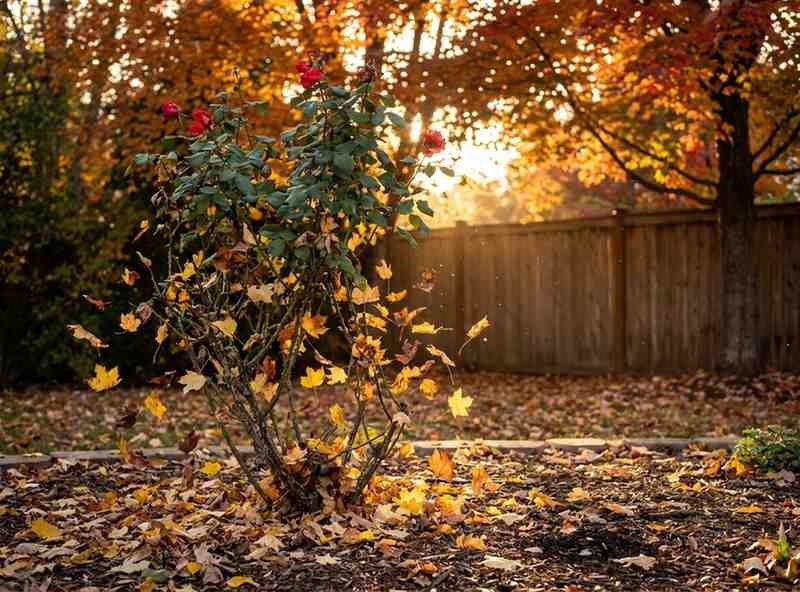
This becomes more pronounced in late fall as the plant prepares for dormancy. Don’t panic — just clean up the fallen leaves and carry on.
10. Too Much Direct Sunlight or Heat Stress
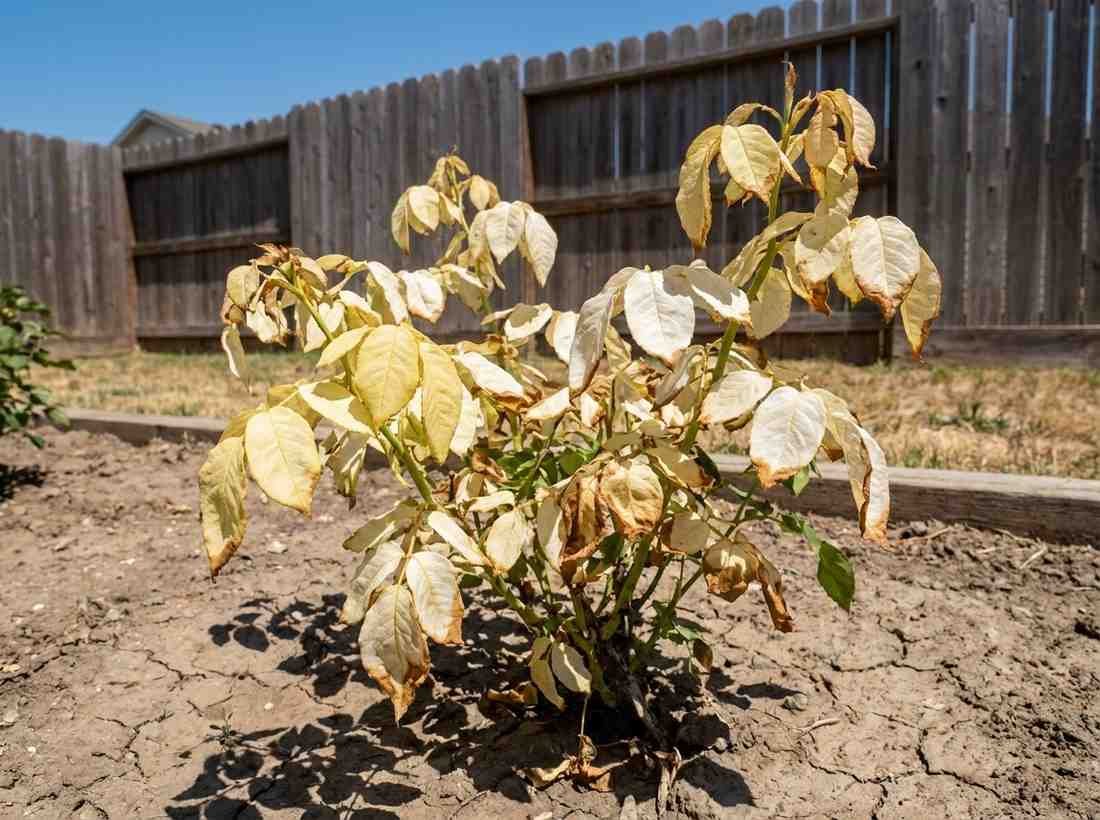
Yes, roses need full sun about 6 hours minimum per day. But in regions with brutal summer heat (Phoenix, Las Vegas, parts of Texas), afternoon sun from 2 p.m. onward can be genuinely scorching. Leaves may show bleached, yellowish patches, particularly on the side facing the afternoon sun.
Solutions for Heat Stress
- Plant roses where they get morning sun but are shaded from intense afternoon rays
- Apply a thick mulch layer (3 inches) around the base to keep roots cool
- Water deeply in the early morning so plants are fully hydrated going into the hot part of the day
11. Fertilizer Burn: Too Much of a Good Thing
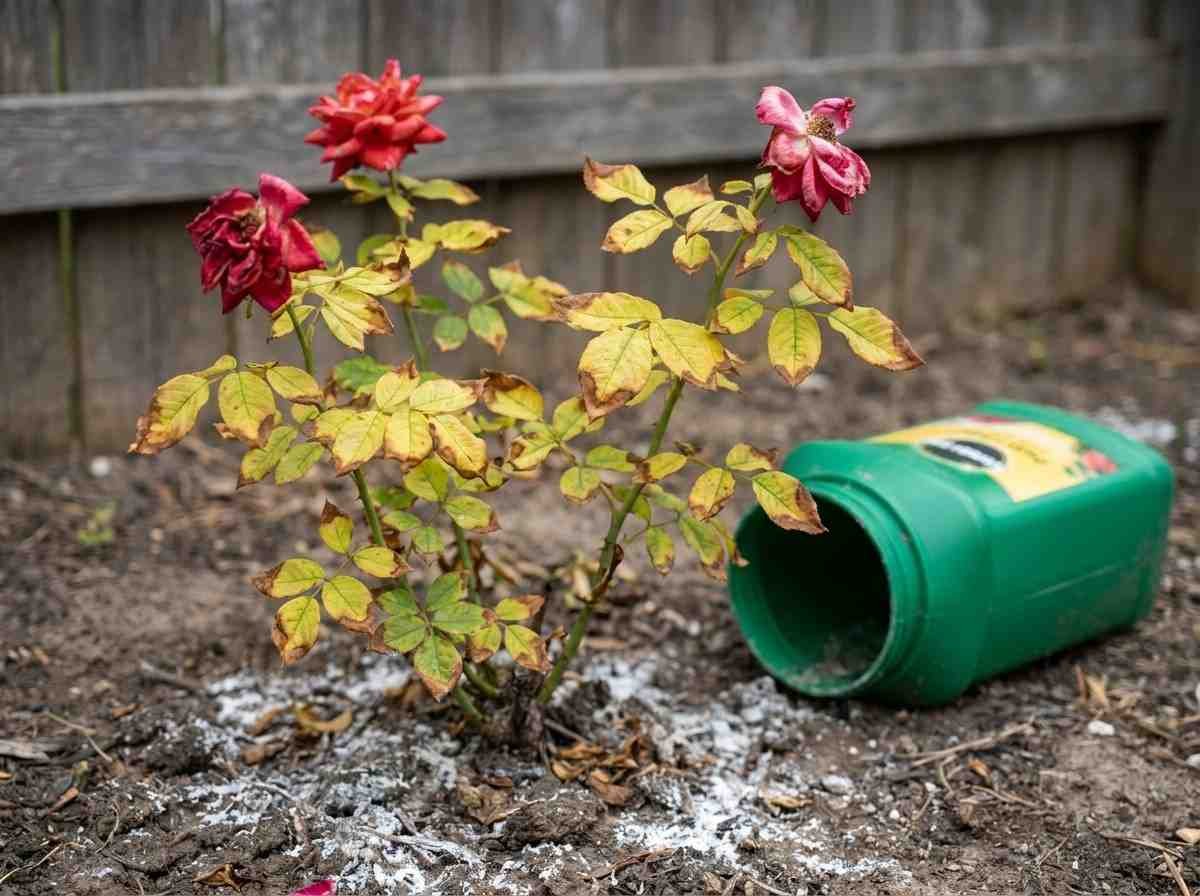
Dumping too much fertilizer or applying it to dry soil can burn the roots and cause sudden yellowing. This is especially common in early spring when people get excited and over-feed after winter. Granular fertilizers are more prone to causing burn if applied incorrectly.
How to Fix Fertilizer Burn
- Water the area deeply and repeatedly to flush excess fertilizer salts from the soil
- Hold off on any additional feeding for at least 4–6 weeks
- Going forward, always water your roses before applying granular fertilizer, and follow package rates carefully
My Personal Rose Care Routine (What Actually Works)
I’ve been growing normal roses and mini rose varieties in my backyard in North Carolina for going on seven years now. We get humid summers, plenty of rain, and the occasional late frost that throws everything off. Here’s the honest truth about what I do differently now versus when I started:
I stopped watering on a schedule and started watering based on what the plant and soil actually told me. I check the soil moisture before I water, period. I also switched from a sprinkler to a soaker hose, which completely eliminated the black spot problems I was dealing with every single summer.
I test my soil every other year, my county extension service mails me back a full report for $6, and it’s worth every penny. The year I discovered my pH had crept up to 7.2, I thought I had a nutrient problem. I didn’t. I just had alkaline soil locking out iron. A sulfur application fixed it in one season.
The other big change was being proactive about pests. I check the undersides of leaves every time I’m in the garden. It takes maybe two extra minutes and has saved me from full-blown spider mite infestations multiple times.
If you’re wondering why are my rose leaves turning yellow and you can’t pin it down, start with the basics: watering habits, soil drainage, and a soil pH test. Those three things cover probably 80% of all yellow-leaf cases I’ve seen and heard about.
How to Diagnose Yellow Leaves on Roses Step by Step
When the yellow leaves situation is confusing, use this simple diagnostic process:
- Look at which leaves are yellowing first. Older leaves = likely nitrogen deficiency or natural shedding. Newer leaves = likely iron deficiency or overwatering.
- Check the pattern of yellowing. Yellow between green veins = iron chlorosis. Uniform fade = nitrogen or overwatering. Yellow with black spots = black spot disease. Tiny speckling = spider mites.
- Feel the soil. Soggy = overwatering. Bone dry = underwatering.
- Check leaf undersides. Webbing or tiny moving dots = spider mites. White powder = powdery mildew.
- Think about recent changes. Did you fertilize recently? Change watering frequency? Have a lot of rain? These clues narrow it down fast.
Preventing Yellow Leaves: A Simple Maintenance Checklist
Prevention is always easier than treatment. Here’s what to build into your regular rose care routine:
- ✅ Water deeply at the base — never overhead sprinklers
- ✅ Apply 2–3 inches of mulch to retain moisture and regulate soil temperature
- ✅ Fertilize on a consistent schedule spring through late summer
- ✅ Test soil pH every 1–2 years and adjust as needed
- ✅ Inspect leaves weekly for early signs of disease or pests
- ✅ Clean up fallen leaves promptly to prevent fungal spores from overwintering
- ✅ Prune for good air circulation, crowded plants are more prone to disease
- ✅ Avoid working around plants when foliage is wet (spreads fungal disease)
Frequently Asked Questions
Q1: Should I remove yellow leaves from my rose plant?
Yes, you should remove yellow leaves, especially if disease is involved. Diseased leaves left on the plant or soil can spread fungal spores. Bag and discard them — never add them to your compost
Q2: Can yellow rose leaves turn green again?
Once a leaf turns fully yellow, it generally won’t recover to full green. However, once you fix the underlying problem — whether it’s a nutrient deficiency, watering issue, or disease — new healthy growth will emerge and the plant will bounce back over the following weeks.
Q3: Is Epsom salt good for yellow rose leaves?
Epsom salt (magnesium sulfate) can help if yellowing is caused by magnesium deficiency. However, it won’t fix yellowing caused by overwatering, disease, or iron deficiency. Misusing it can actually worsen soil imbalances, so identify the cause before adding any amendment to your garden.
Q4: Why are my rose leaves turning yellow after I just planted them?
Transplant shock is very common in newly planted roses. The plant is adjusting to its new environment, and temporary yellowing for the first few weeks is normal. Keep it consistently watered, avoid fertilizing until it’s established, and it should recover on its own within a month or so.
Q5: How often should I water roses to prevent yellow leaves?
Most roses in the U.S. do well with about 1 inch of water per week during cooler months, and up to 2 inches during hot summer weeks. Water deeply and infrequently rather than a little every day, and always check soil moisture before watering to avoid both under and overwatering problems.
About the Author: Sarah Mitchell is a home gardener based in North Carolina with over seven years of hands-on experience growing hybrid teas, climbers, and shrub roses. She writes about practical, no-fuss gardening tips based on real backyard experience.