
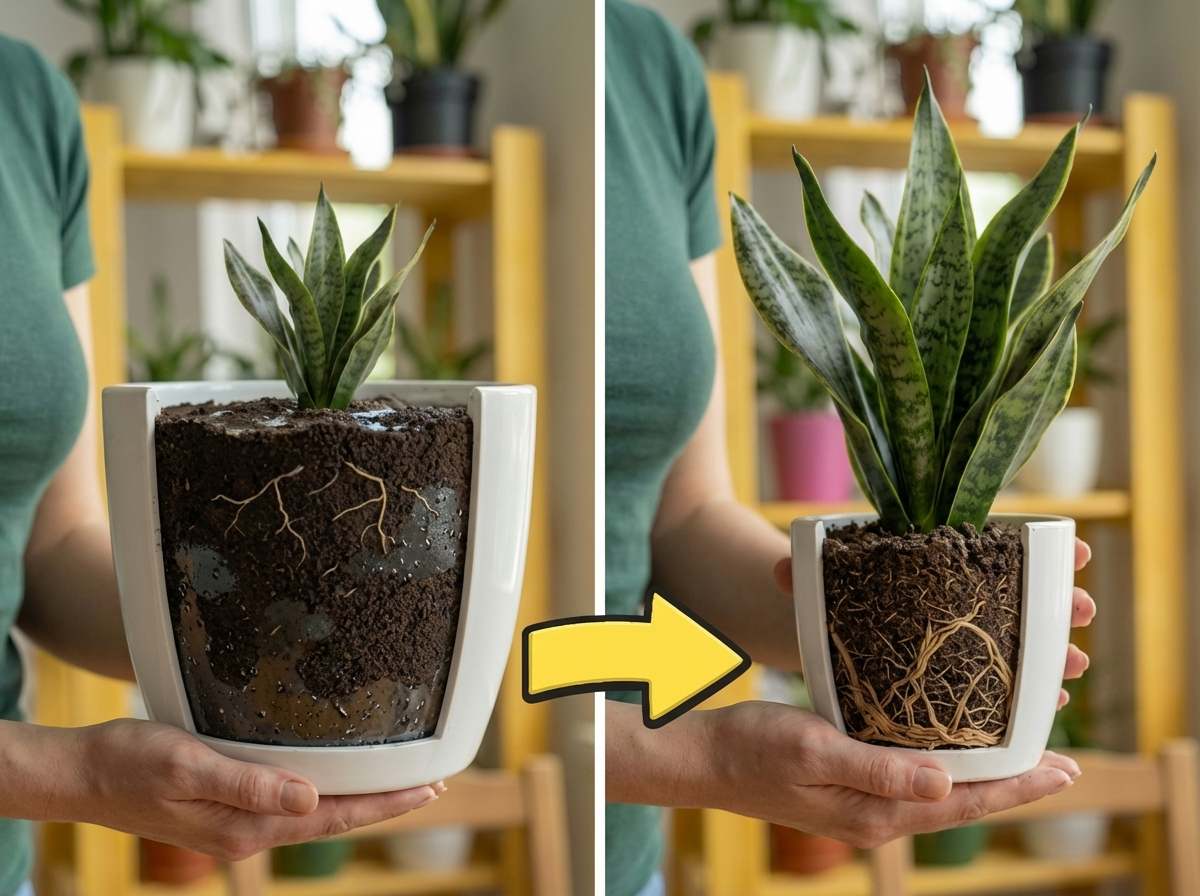
Choosing the right pot size for Snake Plant (Sansevieria houseplant) is one of the most overlooked decisions in indoor gardening. In many U.S. homes, people focus heavily on aesthetics—matching pots with decor—while ignoring how pot size directly affects plant health.
At first glance, it seems logical to give your plant more space so it can “grow freely.” However, snake plants behave differently from most houseplants. Their growth pattern is slow, controlled, and highly dependent on root conditions. When the pot size is wrong, even a healthy plant can stop growing, develop root problems, or look thin and unattractive.
This article explains, in practical terms, how pot size actually influences your snake plant—and how to choose the right one for long-term success.
Why Pot Size for Snake Plant Matters
Snake plants grow through underground structures called rhizomes, which spread sideways and produce new shoots (pups). Because of this, the environment around the roots becomes more important than the visible leaves.
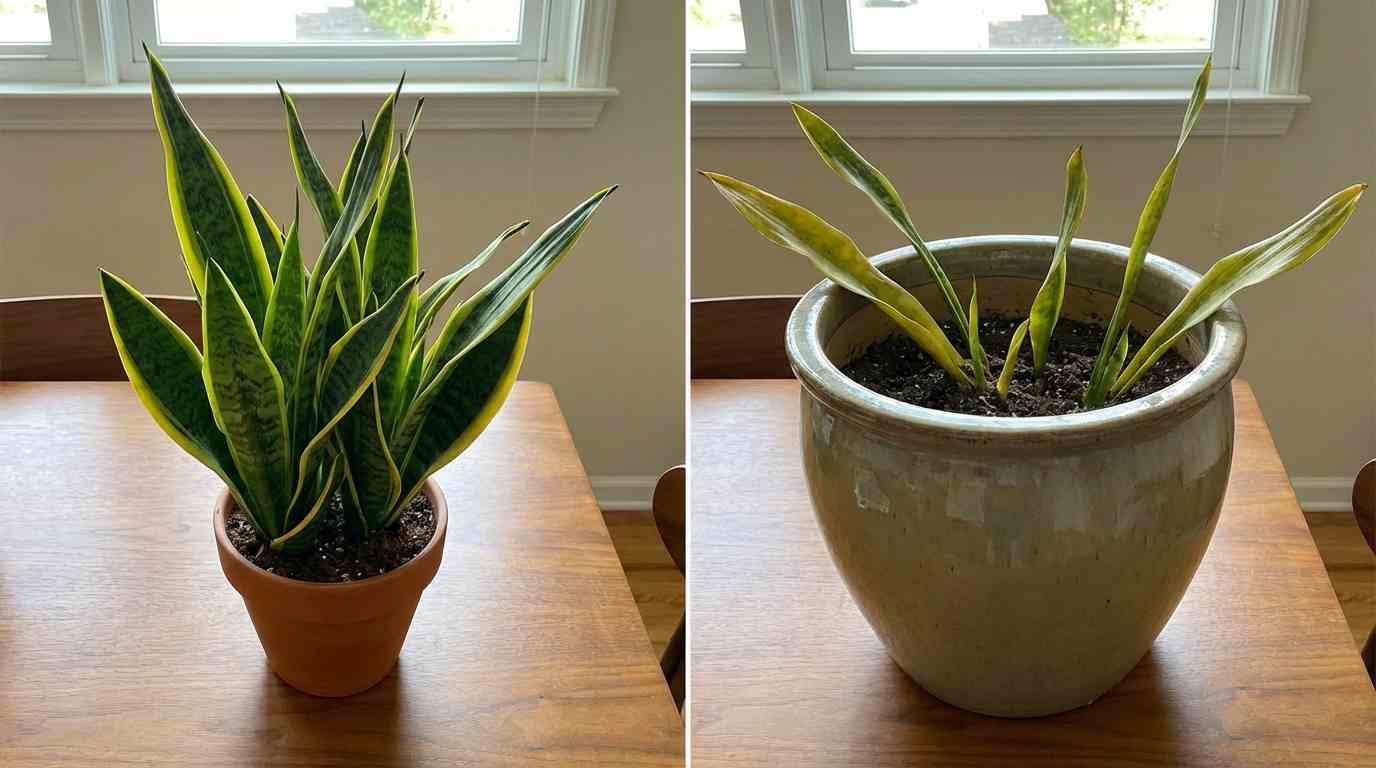
A pot that is too large holds excess soil, and that soil retains water longer than necessary. Over time, this creates a damp environment where roots struggle to breathe. On the other hand, a slightly snug pot creates mild stress that encourages the plant to produce new shoots, making it look fuller and healthier.
In simple terms, pot size controls how the plant allocates its energy—either toward root expansion or visible growth.
The Common Mistake: Choosing a Bigger Pot
Many beginners in the U.S. repot their snake plant into a much larger container right after buying it. The intention is good, but the result is often the opposite of what they expect.
When a plant sits in a large pot, several things happen:
- The soil retains moisture for a longer period
- Roots remain surrounded by wet soil
- Oxygen levels in the root zone decrease
- Root rot begins gradually
You might not notice the damage immediately. In fact, the plant may look fine for weeks. But eventually, growth slows down, leaves lose firmness, and the plant stops producing new shoots. In short this mistake will kill your snake plant slowly.
A better approach is to think of pot size not as extra space, but as a controlled environment.
The Correct Approach: Slightly Root-Bound Growth
Snake plants perform best when their roots are slightly confined. This does not mean the plant should be cramped or unhealthy. Instead, the roots should feel gently snug within the container.
When roots sense limited space, the plant responds by producing new shoots rather than expanding endlessly underground. This is what creates a dense, bushy appearance.
To achieve this balance, follow a simple rule:
- Choose a pot that is only 1–2 inches wider than the root ball
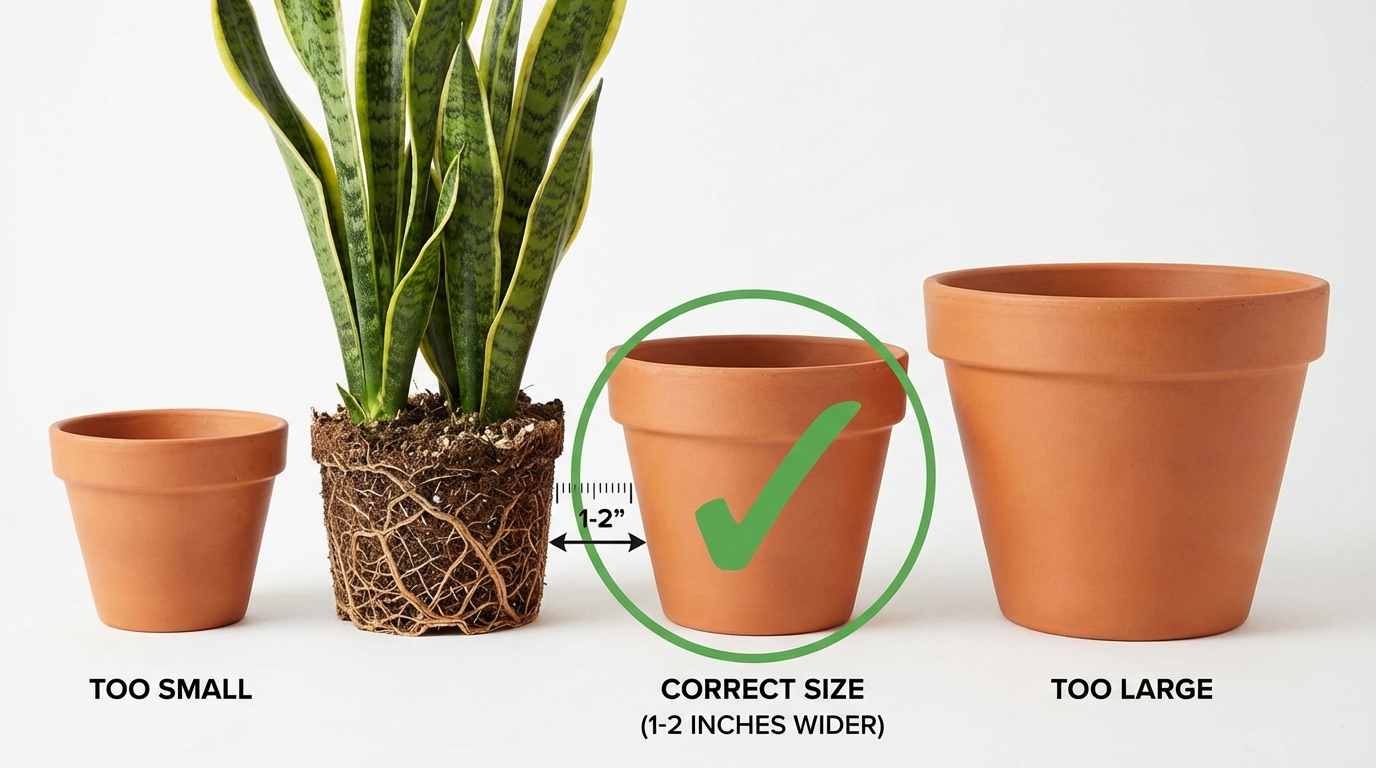
This small difference ensures that:
- The soil dries at a healthy rate
- Roots receive enough oxygen
- New growth is encouraged
Ideal Pot Size for Snake Plant Reference Table
| Plant Height | Root Ball Width | Recommended Pot Size | Growth Behavior |
|---|---|---|---|
| 6–10 inches | 3–4 inches | 4–5 inches | Compact, starter growth |
| 10–20 inches | 5–6 inches | 6–8 inches | Balanced indoor growth |
| 20–36 inches | 7–9 inches | 8–10 inches | Stable and structured |
| 36+ inches | 10+ inches | 10–12 inches | Mature plant support |
This table works well for most indoor environments across the U.S., where temperature and humidity are relatively controlled.
Understanding Pot Shape
Another important factor is the shape of the pot. Snake plants naturally spread horizontally rather than growing deep into the soil. Because of this, a wide pot is generally more effective than a deep one.
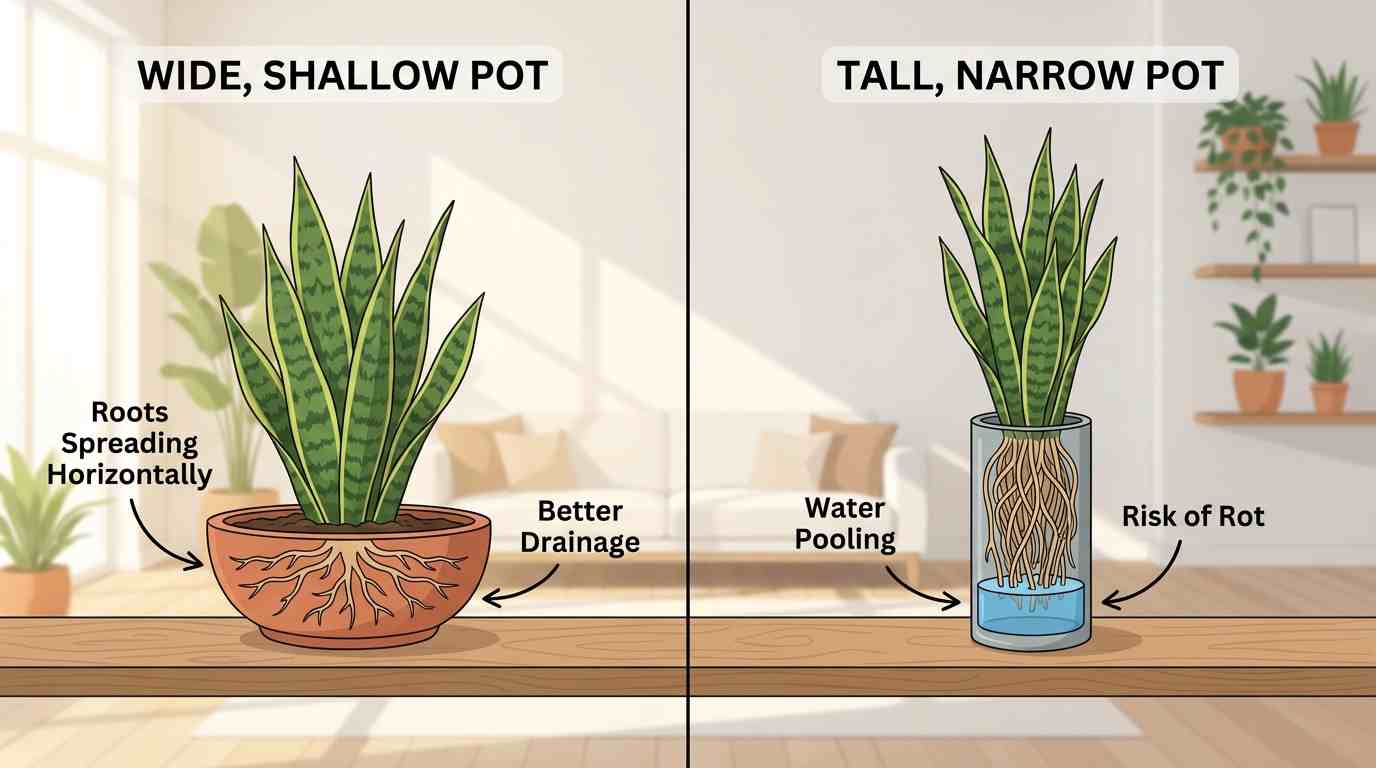
A deep pot can trap excess moisture at the bottom, which increases the risk of root rot. In contrast, a wider pot allows the roots to spread naturally while maintaining better airflow.
For best results:
- Use pots that are wider than they are deep
- Ensure proper drainage holes at the bottom
- Avoid narrow, tall containers unless drainage is excellent
The Role of Drainage
Even the perfect pot size will fail if drainage is poor. Water that cannot escape the pot will accumulate at the bottom, creating a saturated environment that damages roots.
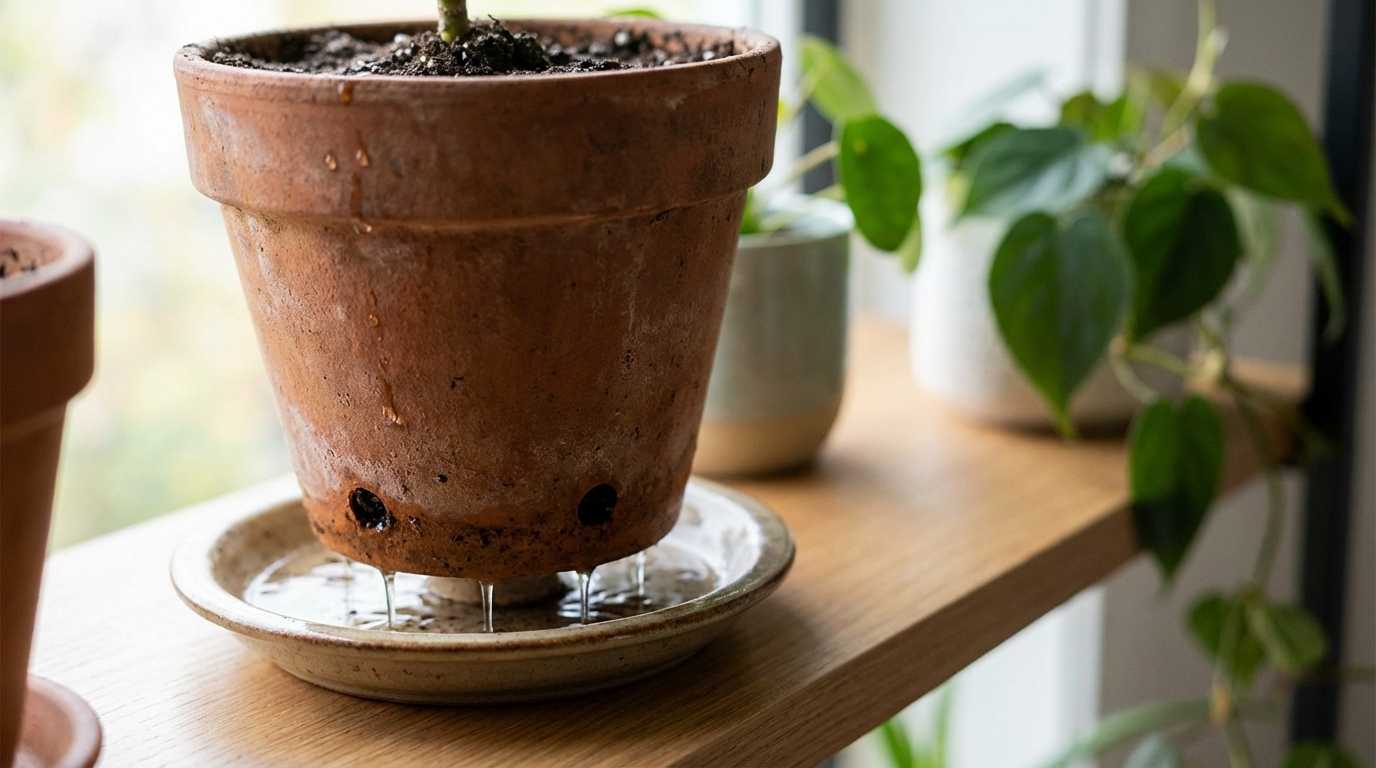
Good drainage ensures that:
- Excess water flows out quickly
- Soil remains airy and breathable
- Roots stay healthy
If your decorative pot does not have drainage holes, consider using a nursery pot inside it. This allows you to remove the plant easily for watering and prevents water buildup.
Choosing the Right Pot Material
Pot material also plays a role in how moisture behaves inside the container. While size is the primary factor, material can enhance or reduce its effectiveness.
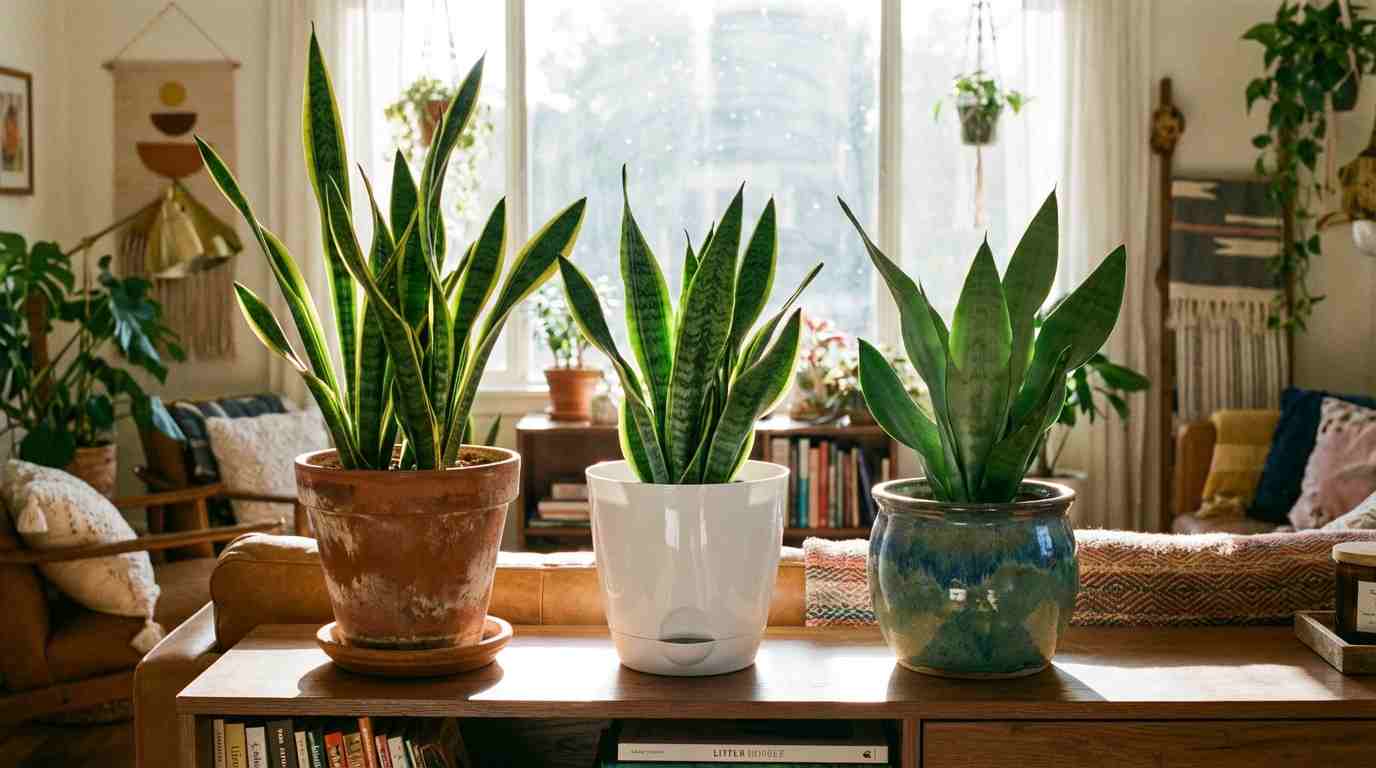
Terracotta pots are a popular choice in the U.S. because they allow moisture to evaporate through their walls. This helps prevent overwatering and keeps the soil balanced.
Plastic pots, on the other hand, retain moisture longer. They are lightweight and convenient, but require more careful watering habits.
Ceramic pots offer a balance between aesthetics and function, but only if they include proper drainage.
However, if you wish to grow the Snake Plant in water without any soil (hydroponically), you can also use a glass container for this purpose.
When to Repot Your Snake Plant
Repotting should not be done frequently. In fact, snake plants prefer stability and can thrive for years in the same pot.
You should consider repotting only when:
- Roots start emerging from drainage holes
- The plant becomes top-heavy and unstable
- Soil dries out too quickly after watering
- Growth has noticeably slowed
In most cases, repotting every 2–3 years is sufficient.
Repotting Process
Repotting does not need to be complicated, but it should be done carefully to avoid stressing the plant.
- Gently remove the plant from its current pot
- Loosen excess soil around the roots
- Inspect for any damaged or rotting roots
- Place the plant into a slightly larger pot
- Add fresh, well-draining soil
- Water lightly after a few days
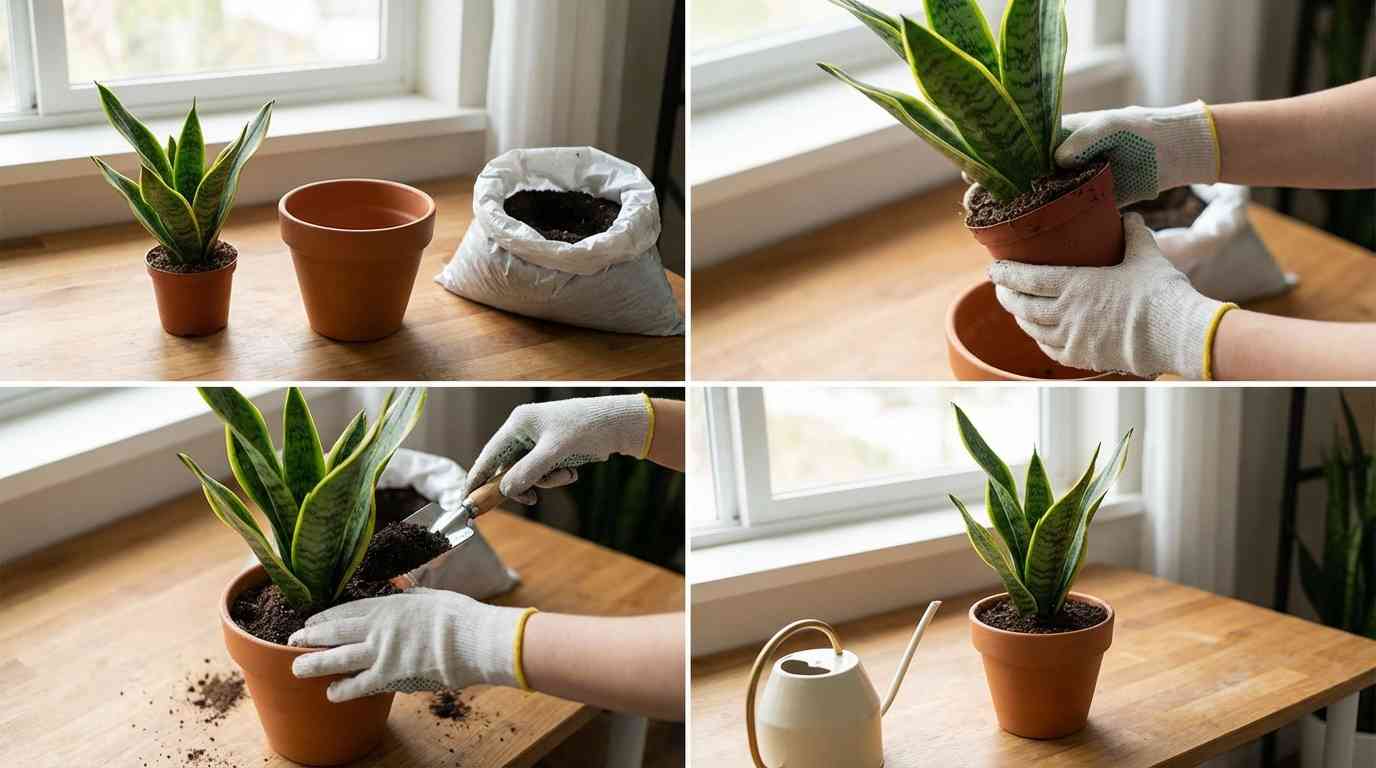
Allowing the plant to settle before watering helps reduce transplant shock.
Common Mistakes to Avoid
Many problems with snake plants can be traced back to a few simple mistakes. Understanding these can save time and prevent damage.
- Choosing a pot that is too large
- Using soil that retains too much moisture
- Watering too frequently after repotting
- Repotting during winter when growth is slow
- Ignoring drainage requirements
USA Indoor Environment Considerations
Different regions in the United States have varying indoor conditions, which can influence pot selection.
In dry climates like Arizona or Nevada, soil tends to dry quickly. In such cases, slightly larger pots may be acceptable.
In humid areas like Florida or Texas, moisture stays in the soil longer. Smaller pots with breathable materials work better.
In colder regions, plant growth slows during winter. It is best to avoid repotting during this time and wait for the growing season.
How Pot Size Affects Appearance
Pot size does not just affect plant health—it also changes how the plant looks.
A smaller pot encourages dense growth, resulting in a bushier appearance. Leaves appear closer together, and the plant looks full.
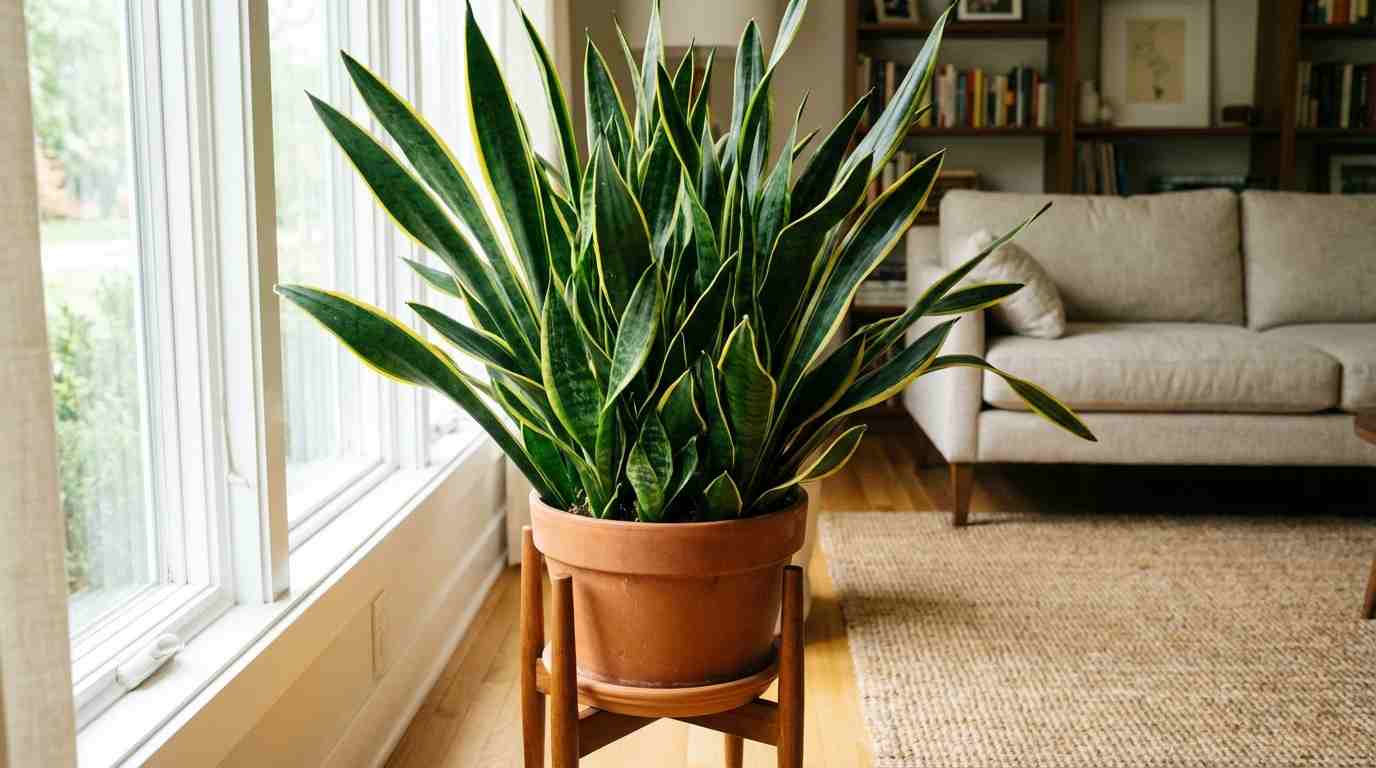
A larger pot may lead to wider spacing between leaves, making the plant look sparse or uneven.
If your goal is a decorative, full-looking plant, controlling pot size is one of the most effective techniques.
Expert Insight
Professional indoor gardeners rarely use oversized pots. Instead, they focus on balance providing just enough space for growth without encouraging excess moisture retention.
They also prioritize:
- Proper drainage
- Consistent lighting
- Minimal disturbance to roots
This approach leads to healthier plants that grow steadily over time.
Final Takeaway
The most important thing to remember is simple:
A slightly tight pot creates a healthier snake plant than a large one.
By choosing the right size, you:
- Reduce the risk of root rot
- Encourage new growth
- Improve the plant’s overall appearance
Quick Summary
- Keep pot size only 1–2 inches larger than roots
- Use well-draining soil and proper containers
- Avoid frequent repotting
- Adjust based on your indoor environment
- Focus on balance, not extra space
With the right pot size and a bit of patience, your snake plant will not only survive—it will thrive, becoming a strong, dense, and visually appealing part of your indoor space.