
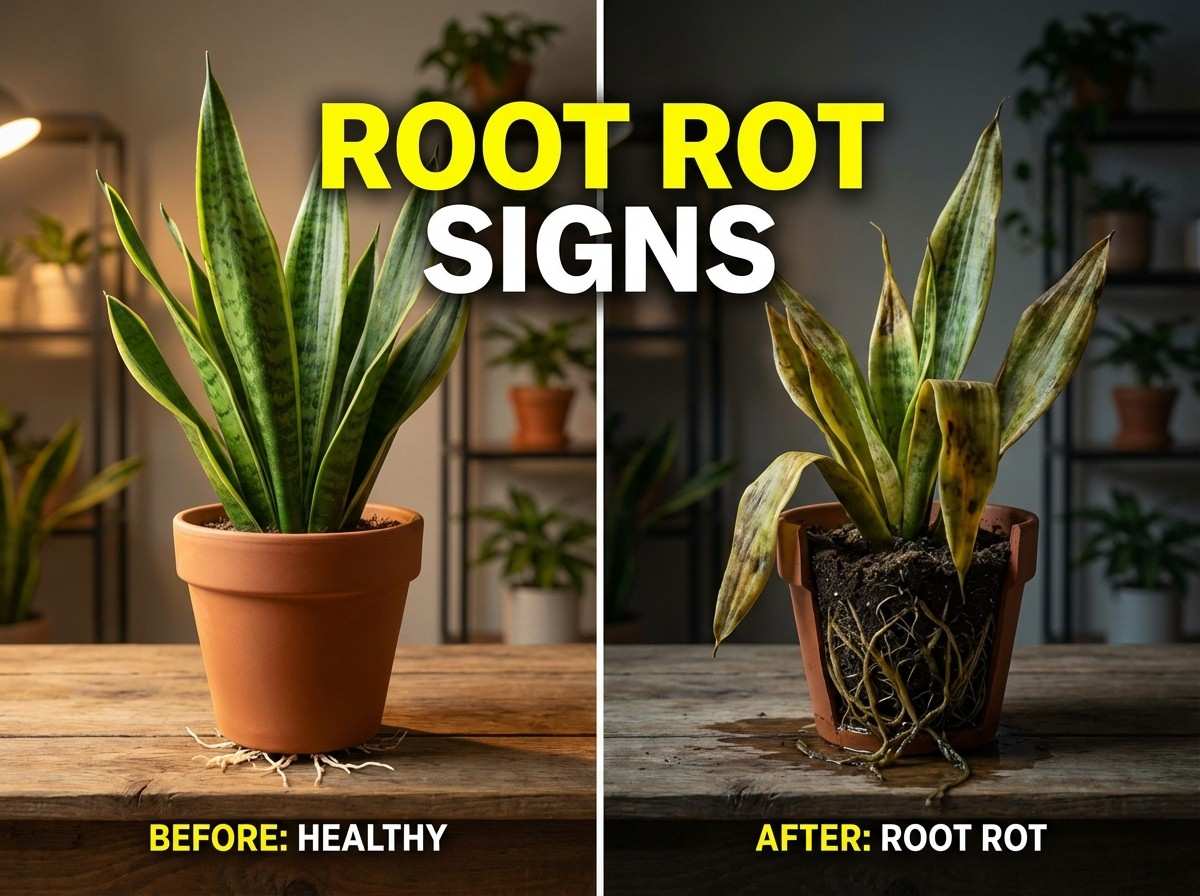
Snake plants are known for being tough and low-maintenance, which is why they are one of the most popular indoor plants. But even these hardy plants can suffer from root rot if conditions are not right. The problem is that root rot often starts below the surface, making it difficult to notice until the damage becomes serious.
From my experience, most people don’t realize their snake plant is in trouble until the leaves start collapsing or turning yellow. By that point, the roots have already been affected for days or even weeks. The key is to recognize early signs and act quickly.
What Is Root Rot?
Root rot is a condition where the roots begin to decay due to excess moisture and lack of oxygen. When soil stays wet for too long, roots cannot breathe properly, and this leads to fungal or bacterial growth.
In snake plants, this usually happens because of overwatering or poor drainage. Since snake plants store water in their leaves, they do not need frequent watering, and excess moisture becomes a major problem.
Early Snake Plant Root Rot Signs
Identifying early signs of snake plant root rot can save your plant before the damage spreads. At this stage, the plant may still look mostly healthy, but small changes start appearing if you pay close attention.
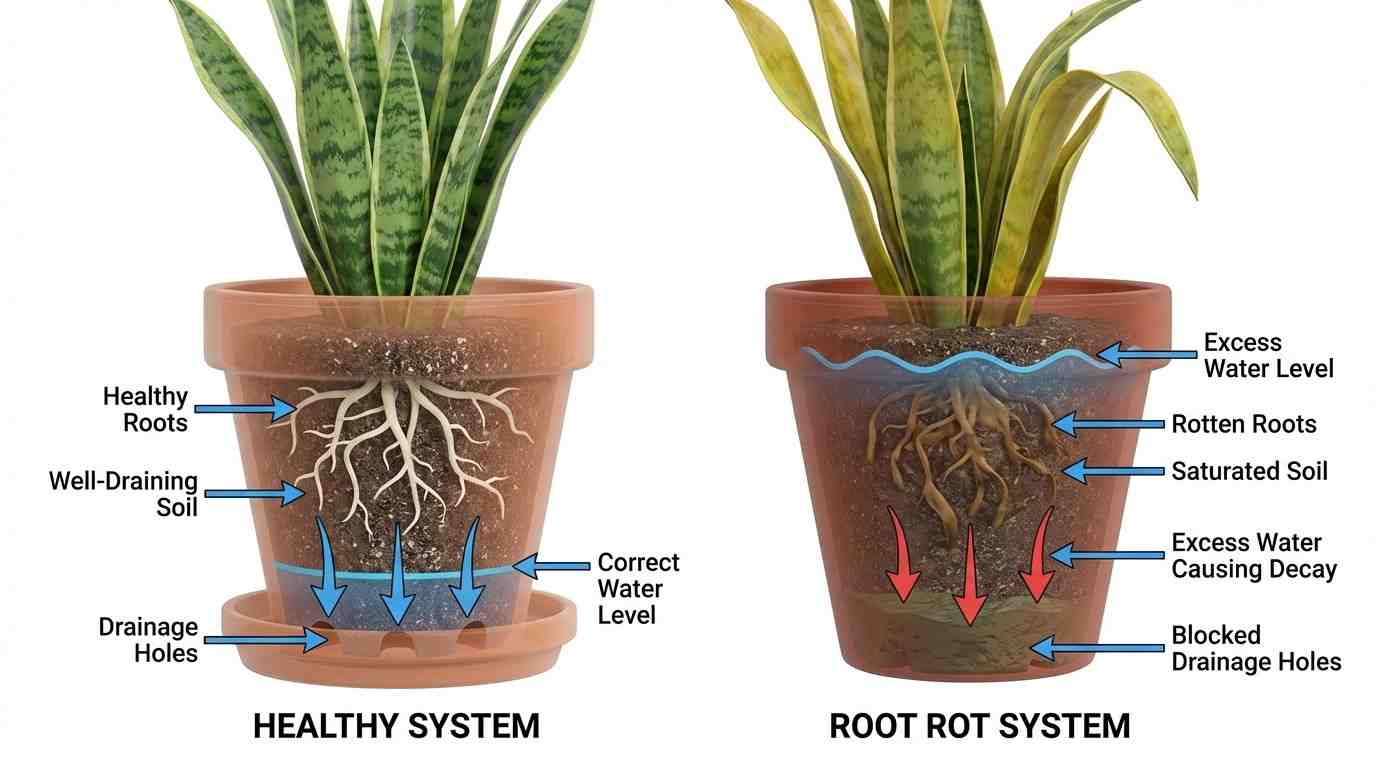
These early symptoms are often subtle, but once you know what to look for, they become easier to detect and fix.
Before we dive into the recovery process, let’s look at the physical red flags that indicate your plant’s roots are struggling for oxygen in waterlogged soil.
Sign #1. Mushy, Pliable Leaves
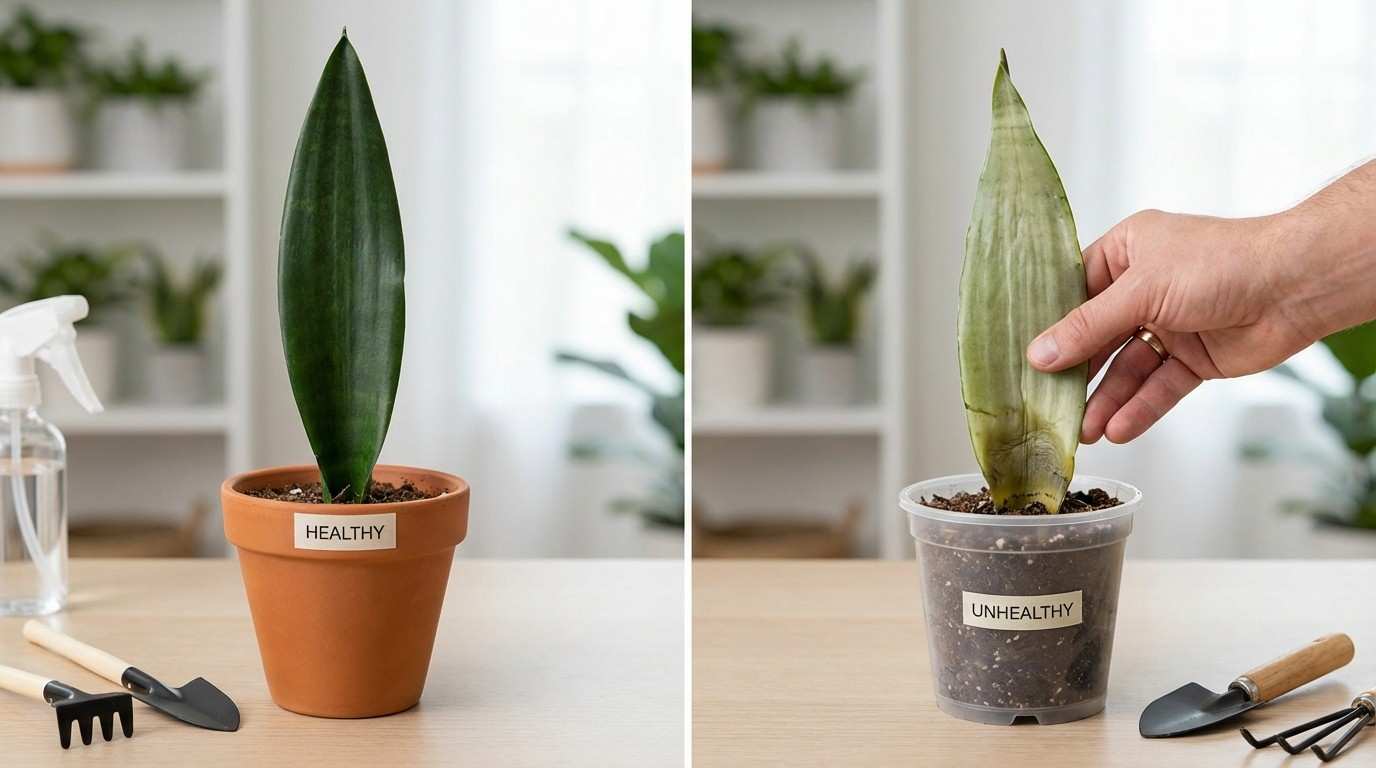
Healthy leaves should be turgid and stiff. If the base of the leaf feels soft, watery, or “mushy” to the touch, the internal cells are collapsing due to excess moisture.
Sign #2. Yellowing or Browning from the Base Up
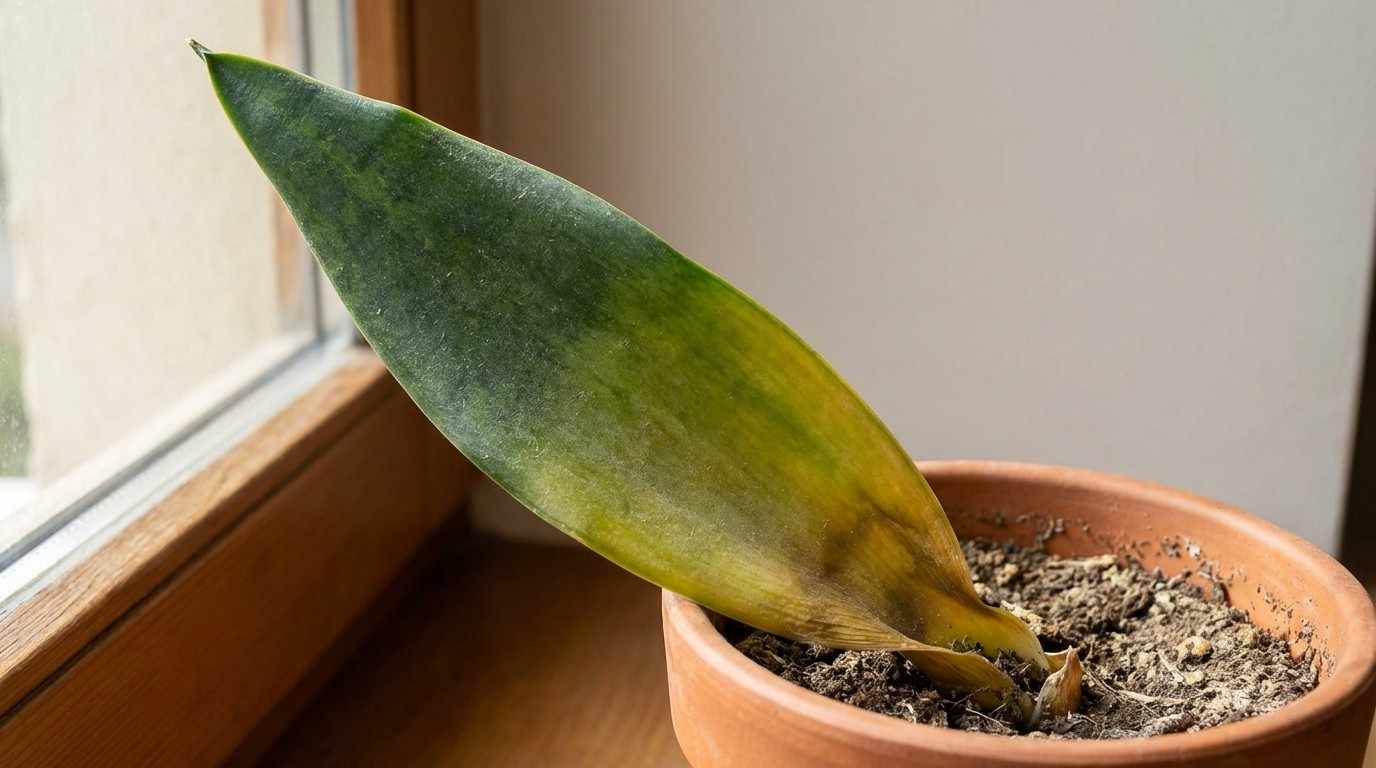
Unlike natural aging where an outer leaf might dry out, root rot causes a distinct discolored yellowing that starts at the soil line and moves upward.
Sign #3. A Pungent, Sour Smell
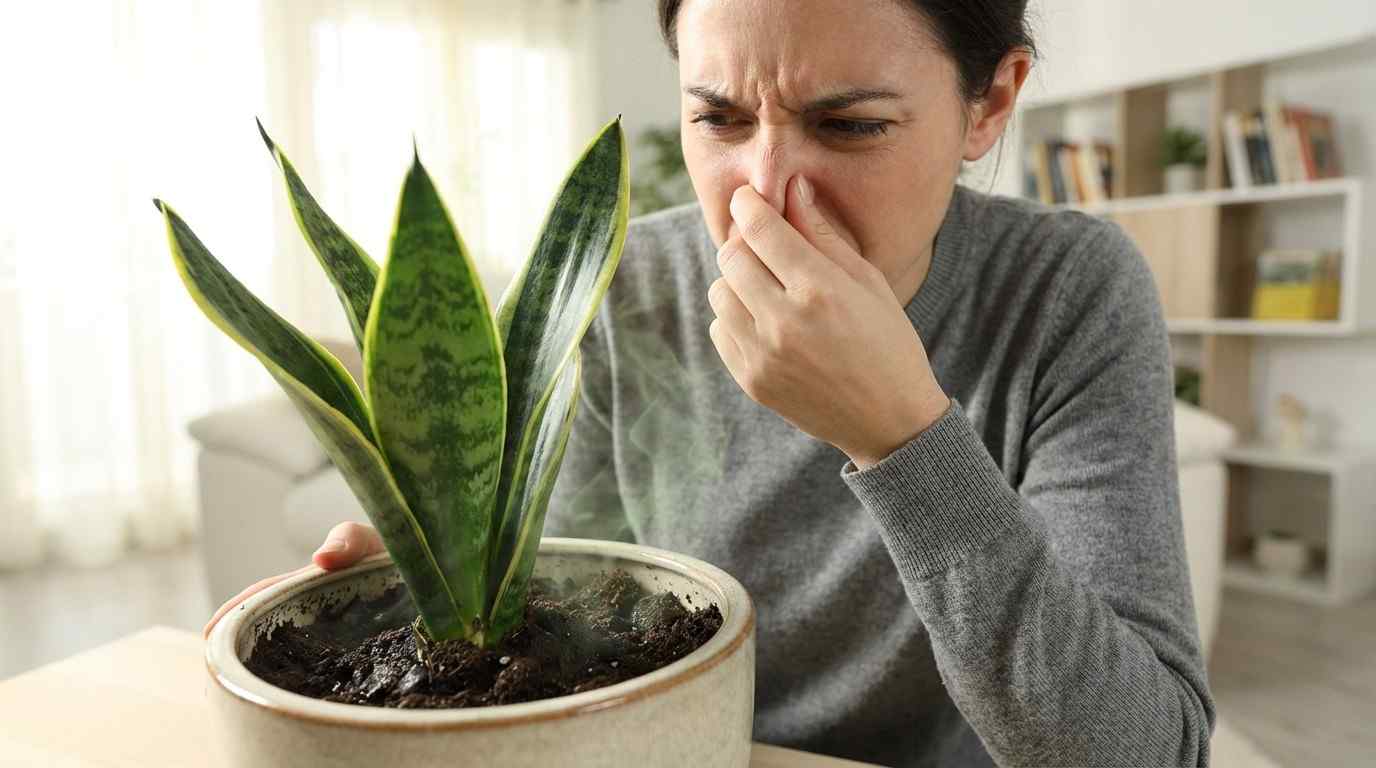
If you lean in close to the soil and catch a whiff of a swampy, rotting odor, that is the smell of anaerobic bacteria thriving in the absence of oxygen.
Sign #4. Leaning or Falling Over
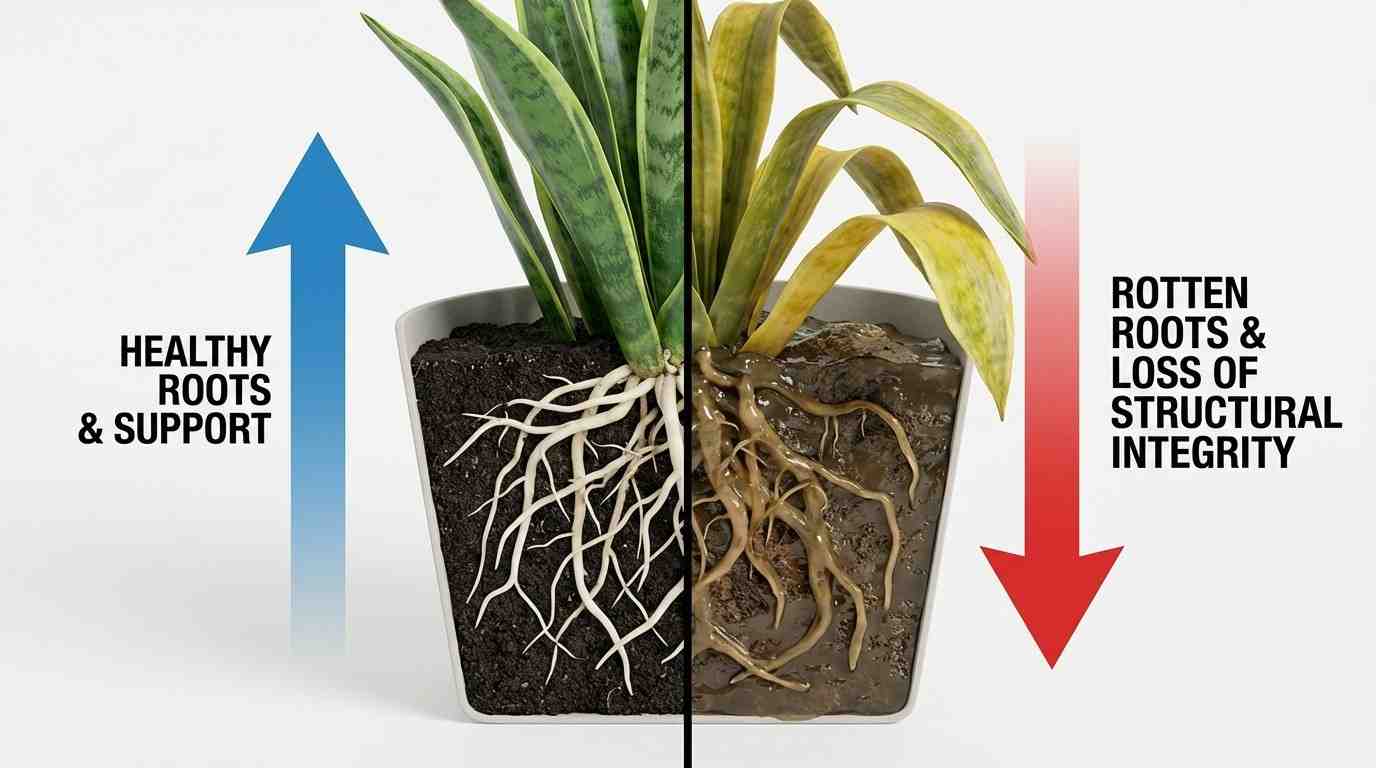
Since the roots act as anchors, once they rot away, the plant loses its structural integrity. If your Snake Plant is suddenly “flopping” over, its foundation is gone.
Sign #5. Stunted Growth During Spring
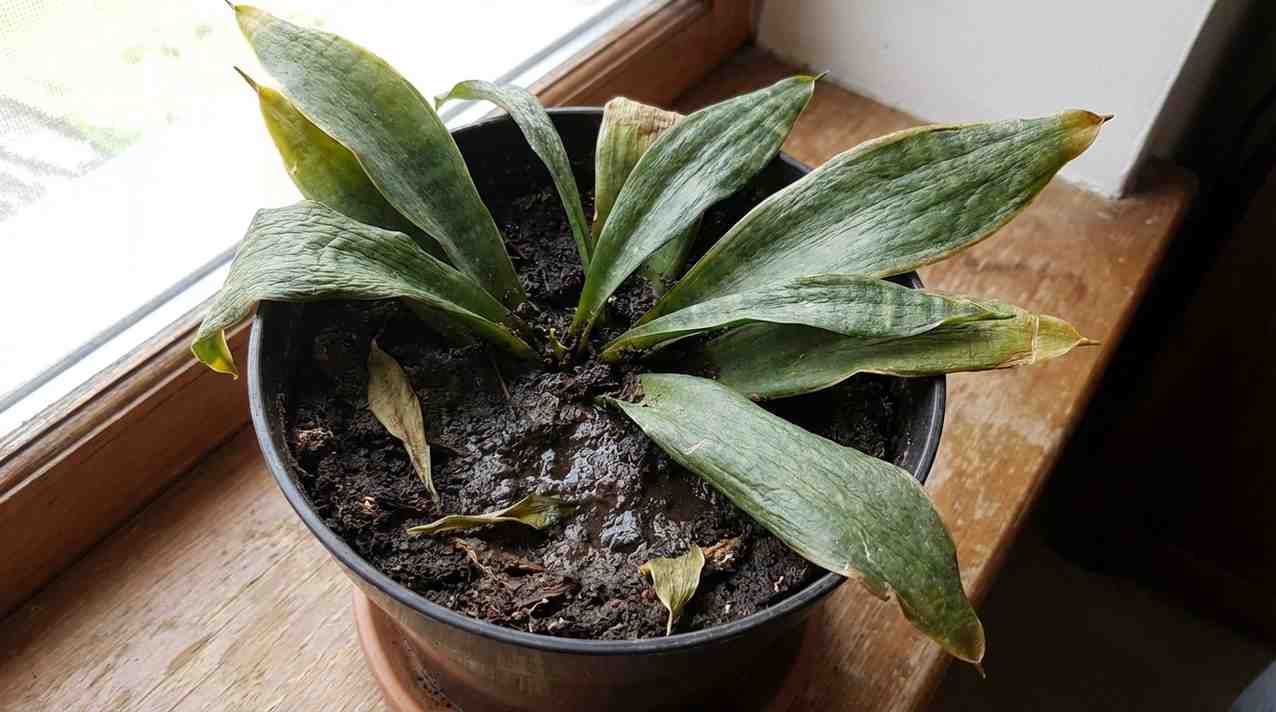
If it’s the growing season and your plant hasn’t put out a single new shoot or looks shriveled despite being in “wet” soil, the roots are no longer functioning.
Also Read: These Mistakes Killing Your Snake Plant
Advanced Root Rot Signs (Serious Stage)
If snake plant root rot is not addressed early, it progresses quickly and starts affecting the entire plant. At this stage, visible damage becomes more obvious, and recovery becomes more difficult.
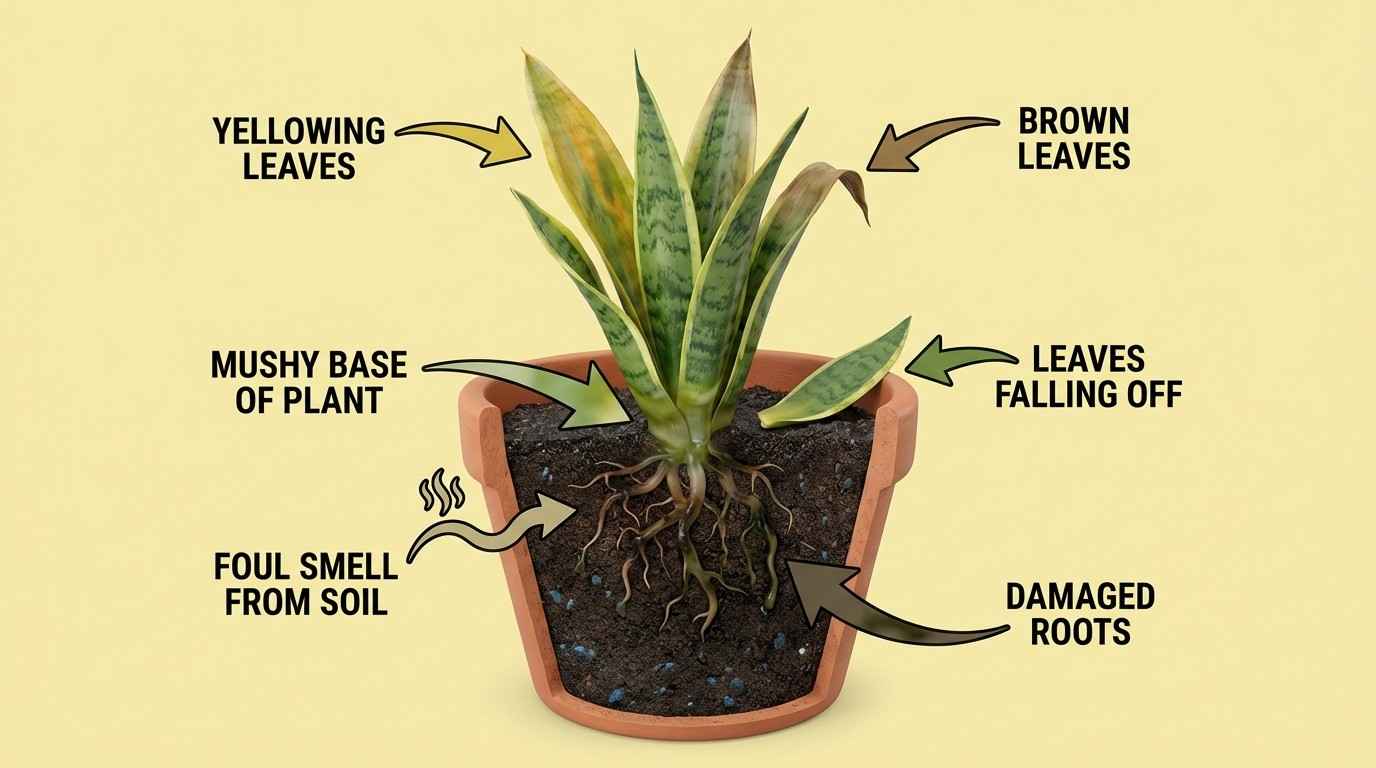
These signs indicate that the roots are already damaged and the plant is struggling to survive.
When you see these symptoms, immediate action is necessary to prevent complete plant loss.
- Leaves turning yellow or brown rapidly
- Base of the plant becoming mushy
- Foul smell coming from soil
- Leaves falling off easily
Main Causes of Root Rot (Quick Overview)
Understanding the cause of snake plant root rot is essential for both treatment and prevention. Most cases are not random and usually result from a few common mistakes in care.
The table below gives a quick overview of the main causes and how they affect your plant.
| Cause | Effect on Plant | Risk Level |
|---|---|---|
| Overwatering | Roots suffocate and rot | High |
| Poor drainage | Water stays in soil | High |
| Wrong soil mix | Retains excess moisture | Medium |
| Low light | Slower drying of soil | Medium |
Problem 1: Overwatering
Overwatering is the most common cause of snake plant root rot in snake plants. Many people water on a fixed schedule without checking the soil, which leads to excessive moisture.
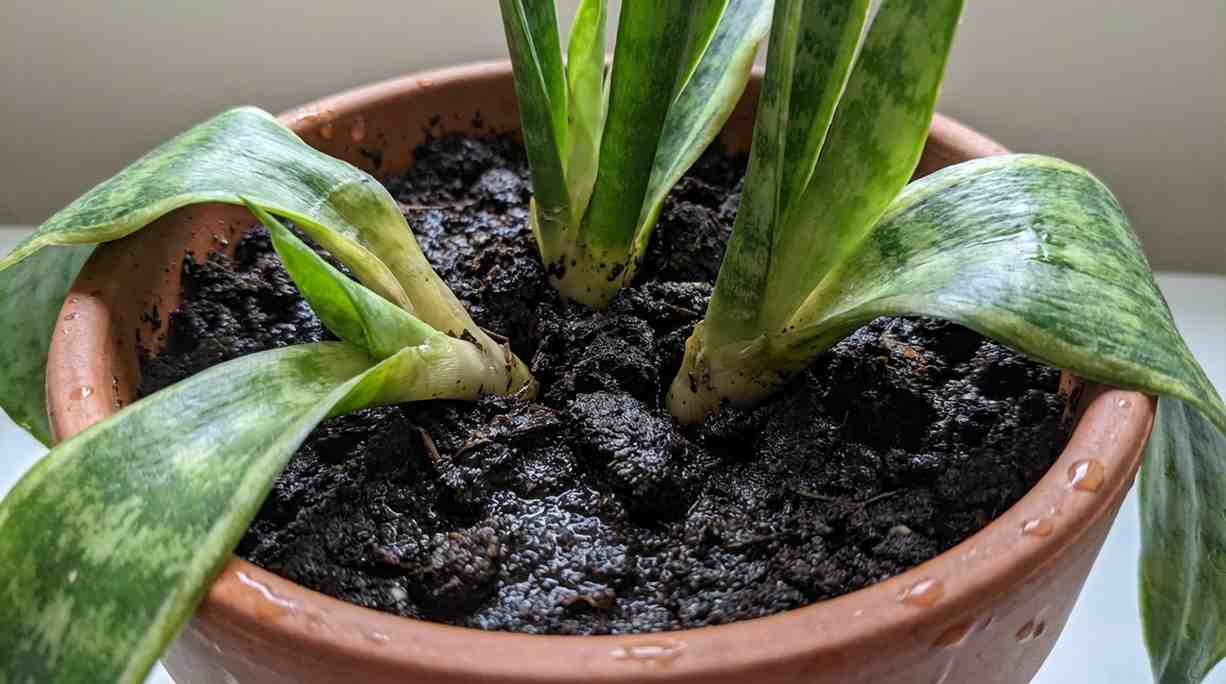
From my own experience, I used to water my snake plant once a week, thinking it was safe. Within a few weeks, I noticed the leaves becoming soft, and when I checked the roots, they were already rotting.
Overwatering creates a condition where roots remain constantly wet, preventing oxygen from reaching them and encouraging fungal growth.
- Soil remains wet for several days
- Leaves become soft and droopy
- Base of plant feels weak
- Growth stops or slows down
Problem 2: Poor Drainage
Even if you water correctly, poor drainage can still cause root rot. If the pot does not allow excess water to escape, moisture builds up at the bottom and damages the roots.
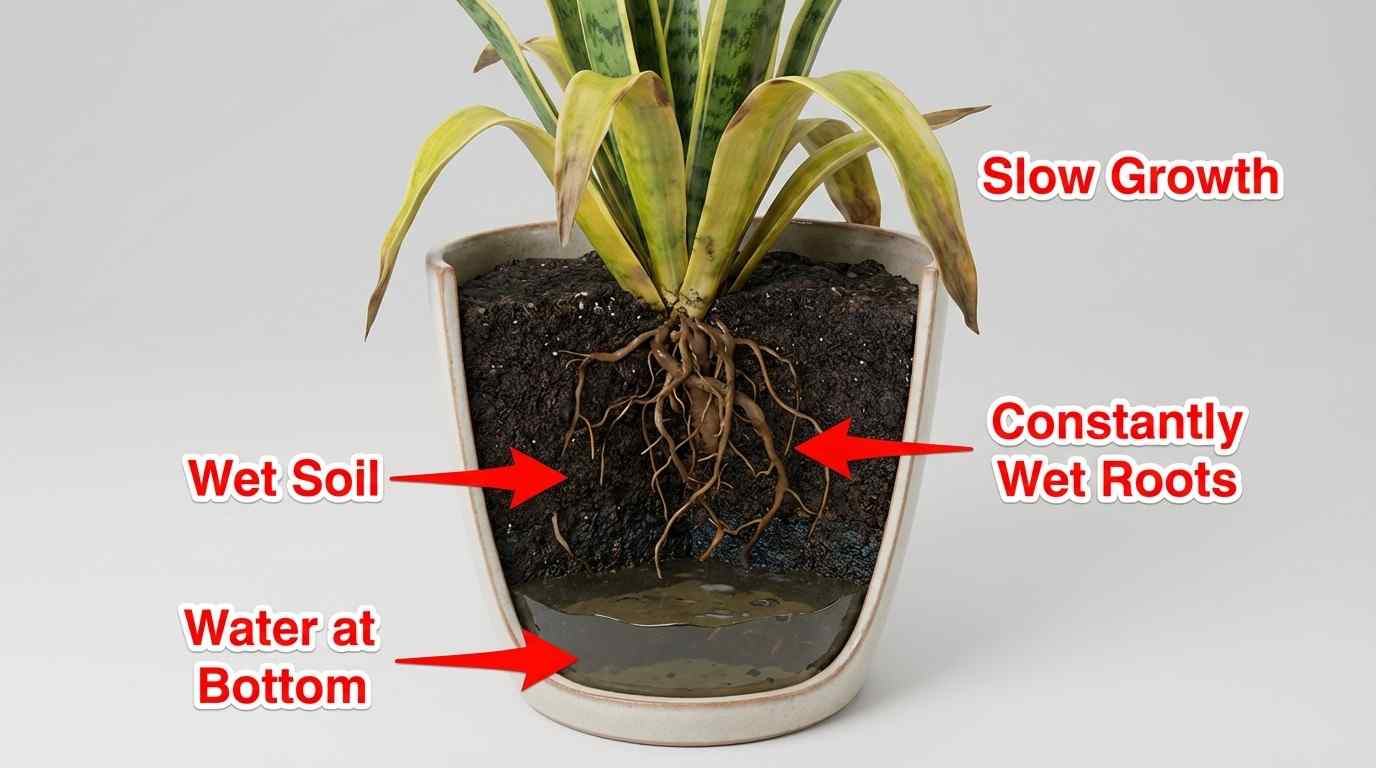
This is a common issue with decorative pots that do not have drainage holes. Water collects inside and creates a perfect environment for root decay.
Drainage is just as important as watering frequency, and ignoring it can quickly lead to problems.
- Water collects at bottom of pot
- Soil feels soggy even after days
- Roots stay constantly wet
- Plant shows slow decline
Problem 3: Wrong Soil Mix
Soil plays a major role in how water behaves around the roots. Using heavy or dense soil can trap moisture and prevent proper airflow.
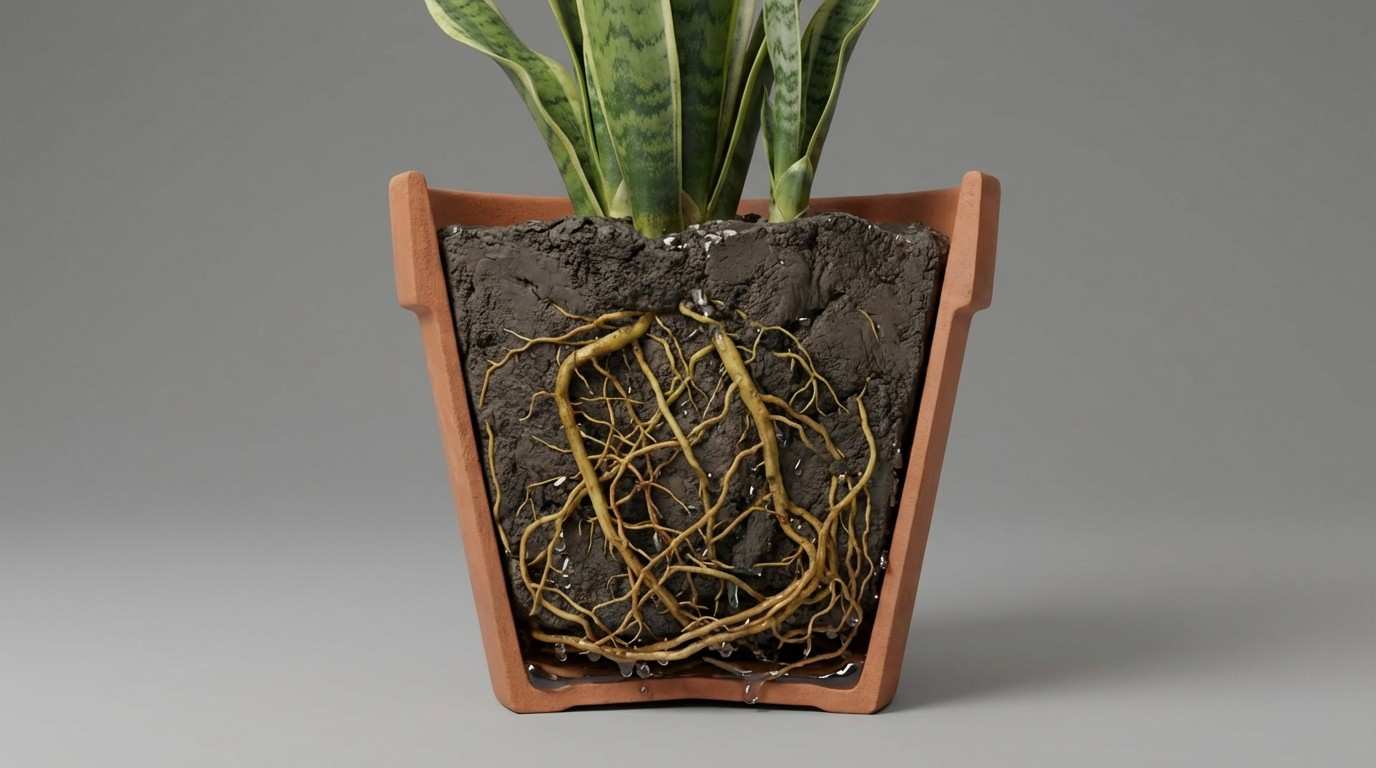
Snake plants need a well-draining soil mix that allows water to pass through quickly while retaining just enough moisture.
If the soil is too compact, roots remain in wet conditions for too long, increasing the risk of rot.
- Soil feels heavy and compact
- Water drains very slowly
- Roots lack airflow
- Increased risk of fungal growth
How to Check Root Rot (Step-by-Step)
If you suspect root rot, the only reliable way to confirm it is by checking the roots directly. This might feel uncomfortable if you have never removed a plant from its pot before, but it is a necessary step.
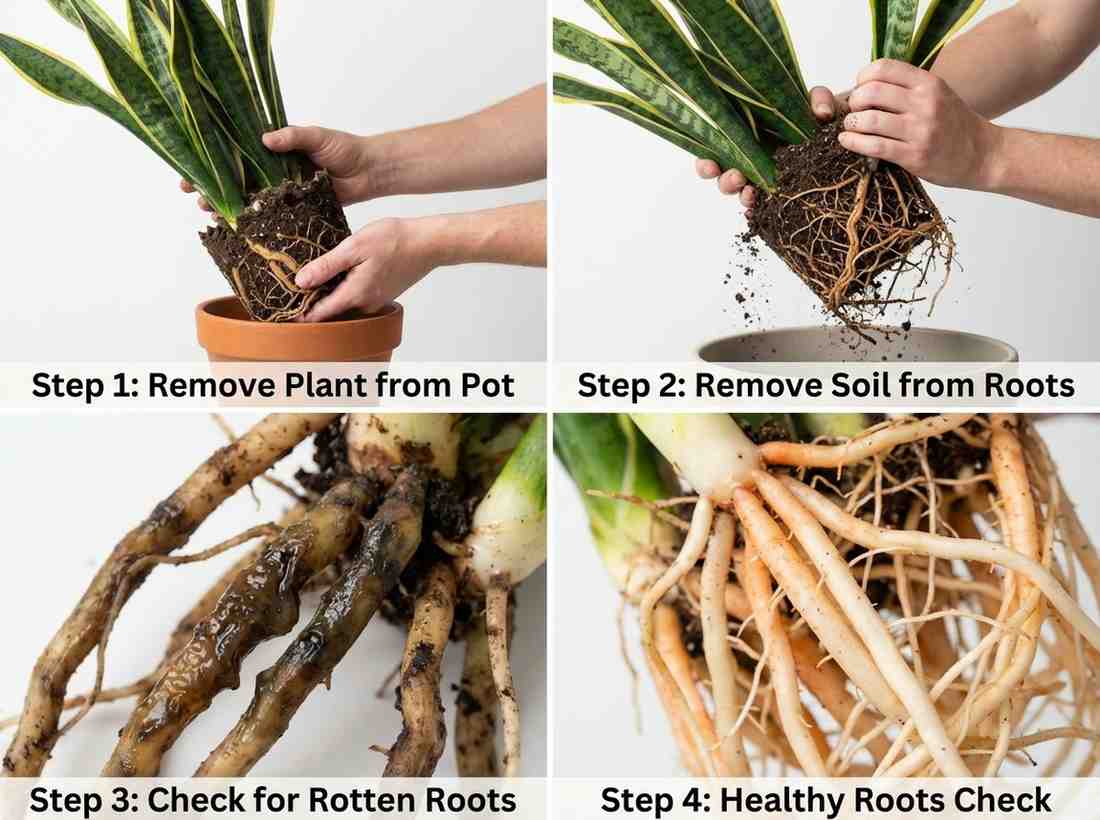
From my experience, many plants that look fine on the surface already have damaged roots underneath. Checking early can save the plant before it gets worse.
Follow these steps carefully to inspect your plant without causing additional stress or damage.
- Step 1. Gently remove the plant from the pot
- Step 2. Shake off excess soil from roots
- Step 3. Look for black, brown, or mushy roots
- Step 4. Healthy roots should be firm and white
How to Fix Root Rot Fast
Once snake plant root rot is confirmed, quick action is critical. The longer you wait, the more damage spreads, and the harder it becomes to save the plant.
The goal is to remove all damaged parts and give the plant a fresh, healthy environment to recover.
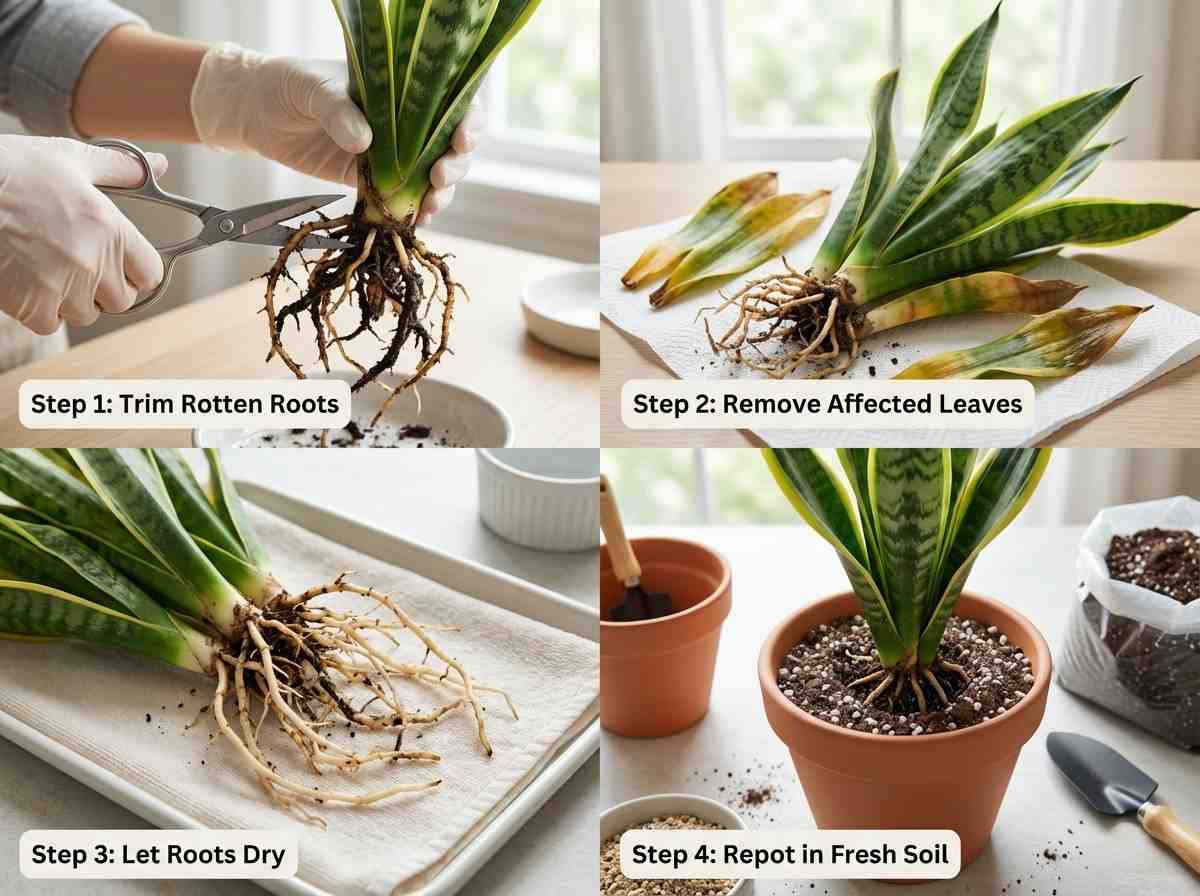
This process may seem drastic, but it is often the only way to stop the rot and save the plant.
- Step 1. Trim all rotten roots using clean scissors
- Step 2. Remove affected leaves if necessary
- Step 3. Let roots dry for a few hours
- Step 4. Repot in fresh, well-draining soil
Best Soil Mix to Prevent Root Rot
After treating root rot, using the right soil mix is essential to prevent the problem from returning. The wrong soil will quickly recreate the same conditions.
A proper mix allows water to drain quickly while still providing enough moisture for the plant.
Creating a balanced soil mix is one of the most effective long-term solutions.
- Use cactus or succulent soil mix
- Add perlite for better drainage
- Include sand for aeration
- Avoid heavy garden soil
Correct Watering Method
Watering correctly is the most important factor in preventing root rot. Many people follow a fixed schedule, but snake plants require a more flexible approach.
From my experience, switching from scheduled watering to checking soil moisture made the biggest difference in plant health.
Understanding when to water is more important than how often you water.
- Water only when soil is completely dry
- Use less water during low light conditions
- Reduce watering in colder months
- Avoid frequent light watering
Choosing the Right Pot Size
The type of pot you use directly affects drainage and moisture levels. Many problems start with using decorative pots that do not support proper water flow.
Choosing the right container can prevent root rot even if your watering is not perfect.
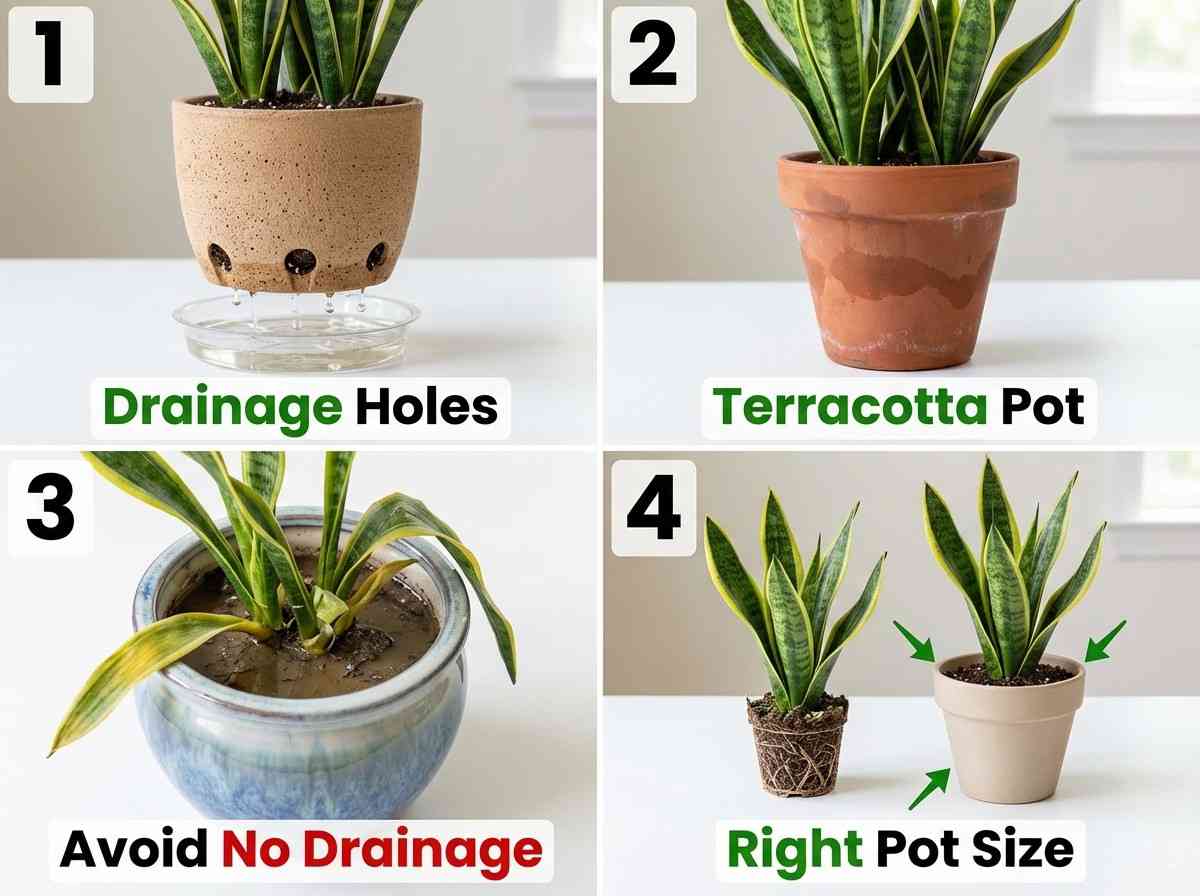
A good pot helps maintain balance between moisture and airflow.
- Use pots with drainage holes
- Terracotta pots help absorb excess moisture
- Avoid sealed or non-draining containers
- Choose appropriate pot size
My Personal Experience with Root Rot
One of my snake plants started showing soft leaves and slow growth, but I ignored the signs at first. I thought it just needed more water, which made the problem worse.
When I finally checked the roots, most of them were already dark and mushy. I had to cut off nearly half the root system to save the plant.
After repotting in a better soil mix and adjusting my watering habits, the plant slowly recovered. New roots started forming within a few weeks, and growth became stable again.
This experience taught me that root rot is usually caused by simple mistakes, and once you correct them, recovery is possible.
Advanced Tips to Prevent Root Rot
Once your plant recovers, prevention becomes the main focus. A few small adjustments in your care routine can completely eliminate the risk of root rot.
These techniques are simple but highly effective when applied consistently.
Instead of reacting to problems, these tips help you avoid them entirely.
- Check soil moisture before watering
- Ensure proper airflow around plant
- Avoid overcrowding plants
- Use well-draining soil consistently
Final Thoughts
Root rot is one of the most common problems in snake plants, but it is also one of the easiest to prevent once you understand the causes. Most issues come down to overwatering, poor drainage, or improper soil.
The key is to observe your plant regularly and respond early to any warning signs. Small changes in care can make a big difference in plant health.
With the right approach, your snake plant can recover from root rot and grow strong again. Once you learn how to manage watering and soil properly, this problem becomes easy to avoid in the future.