
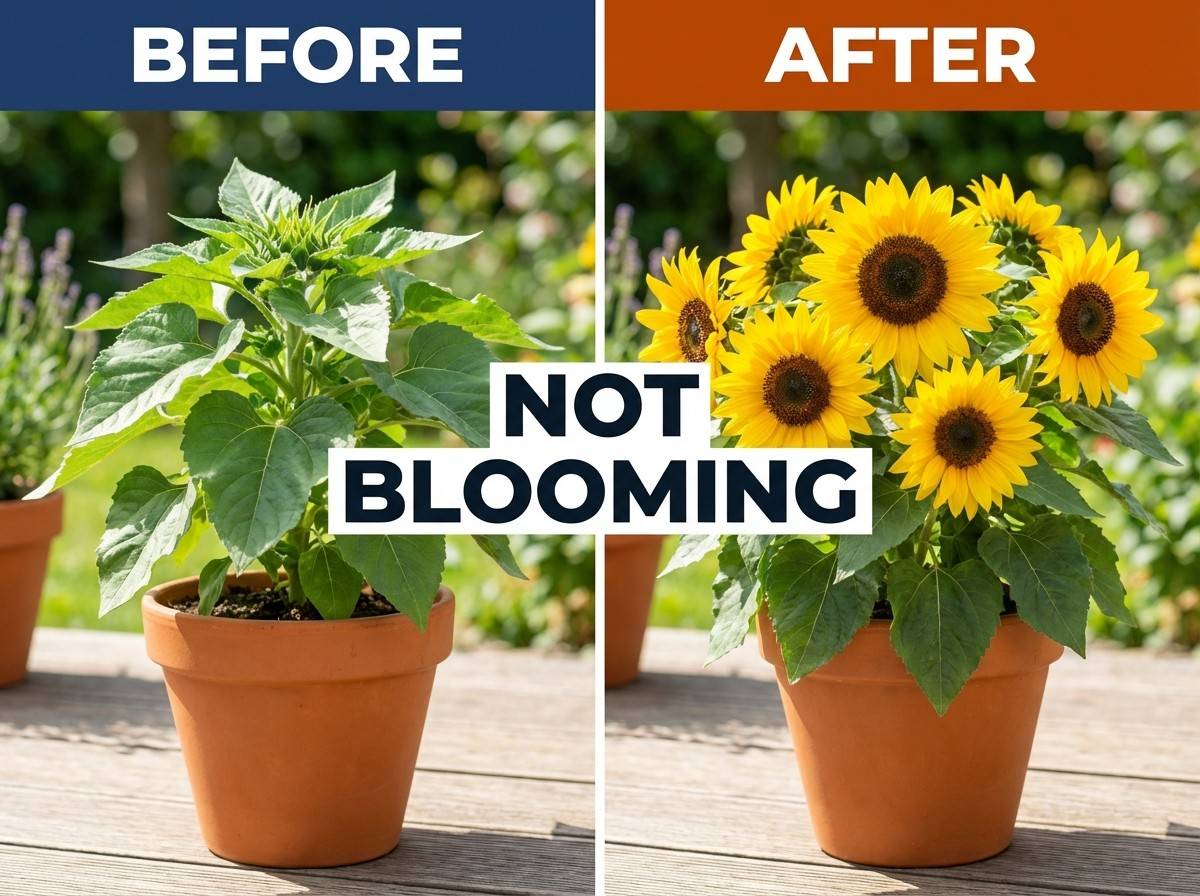
I remember staring at my plant and wondering why my dwarf sunflower not blooming despite healthy leaves and steady growth. It looked strong, green, and full of life but no flowers. After testing a few changes, I finally understood what it needed.
At first glance, dwarf sunflowers seem incredibly easy to grow. They sprout quickly, grow fast, and look healthy early on. But blooming is a completely different stage. Many growers get stuck here plants grow, but flowers never appear.
If your plant looks fine but refuses to bloom, it’s usually not because of one major mistake. Instead, it’s a combination of subtle environmental factors that affect the plant’s flowering trigger.
Understanding the Bloom Trigger
One thing I learned the hard way is that flowering is not automatic. Dwarf sunflowers need a “trigger” to shift from leafy growth to blooming.
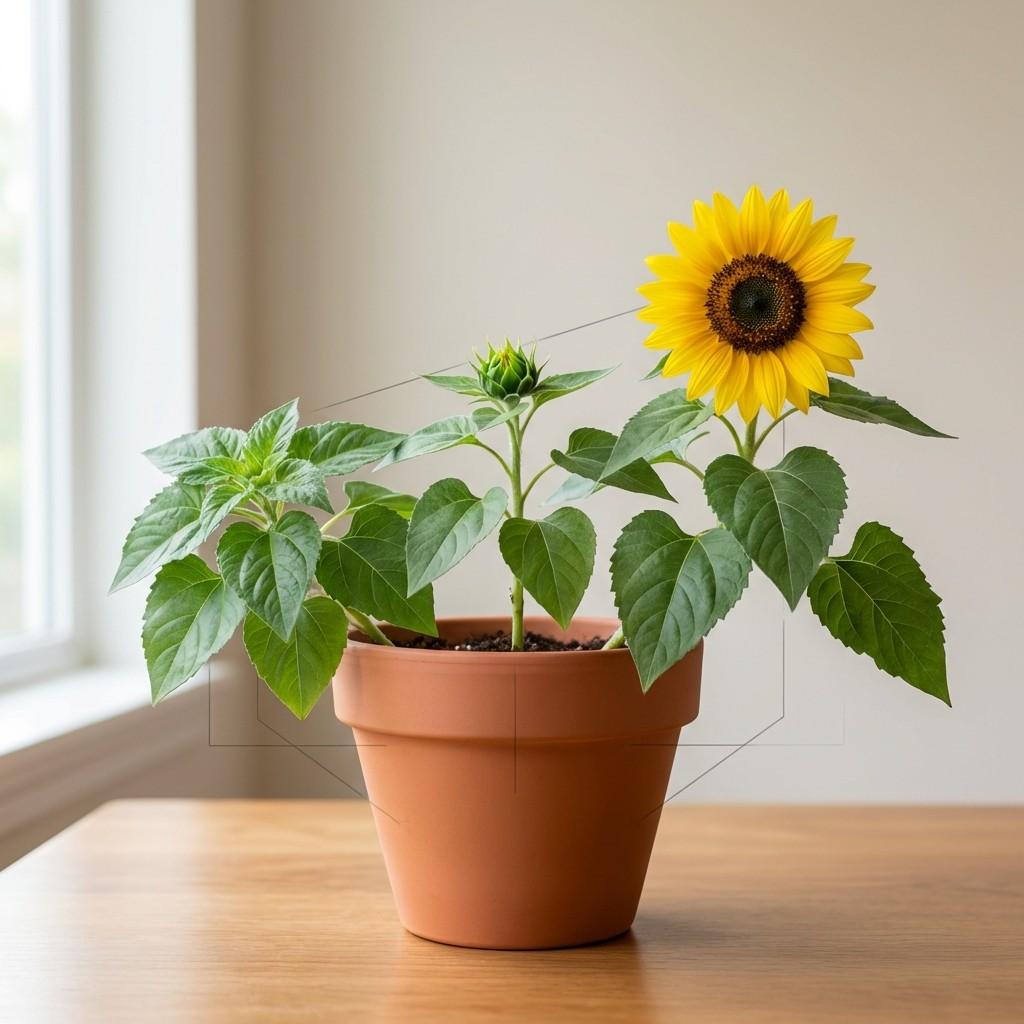
This trigger depends on light intensity, root maturity, stress balance, and internal plant signals—not just basic care.
That’s why your plant may look perfectly healthy but still not bloom.
Quick Diagnostic Table
Before diving deeper, use this table to quickly identify what might be stopping your plant from flowering.
| Symptom | Likely Cause | Effect on Blooming |
|---|---|---|
| Healthy leaves, no buds | Too much nitrogen | Leaf growth only |
| Tall but no flowers | Low light intensity | No bloom trigger |
| Slow growth | Root restriction | Delayed flowering |
| Leaves curling | Heat stress | Energy loss |
9 Reason of Dwarf Sunflower Not Blooming in Pots
Many gardeners feel confused when their dwarf sunflower grows healthy leaves but refuses to bloom. Everything seems right, yet flowers never appear, making the plant look incomplete and disappointing.
If your dwarf sunflower not blooming is frustrating you, don’t worry. The actual reasons and simple fixes are explained below, helping you understand what’s missing and how to trigger blooming quickly.
Reason 1: Too Much Nitrogen
This is one of the most overlooked reasons. If your plant is getting too much nitrogen, it will focus only on growing leaves instead of producing flowers.
I made this mistake when I used a general-purpose fertilizer. The plant became huge and lush—but never bloomed.
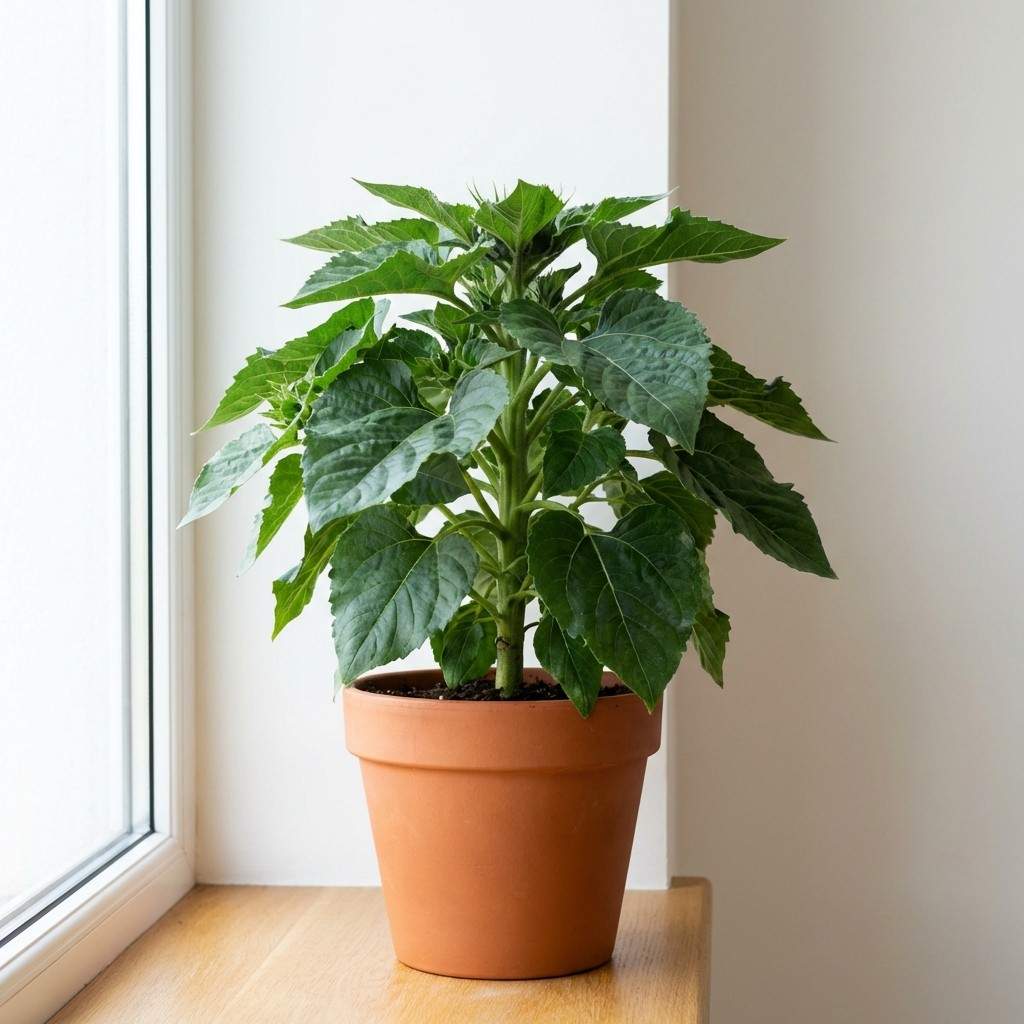
This creates a “growth trap” where the plant keeps producing foliage without switching to flowering mode.
- Leaves look dark green and healthy
- Plant grows fast but no buds
- Stem becomes thick but inactive
- No signs of flowering stage
How to Fix High Nitrogen
To shift the plant toward blooming, you need to reduce nitrogen and increase phosphorus.
This change signals the plant to stop focusing on leaves and start producing flowers.
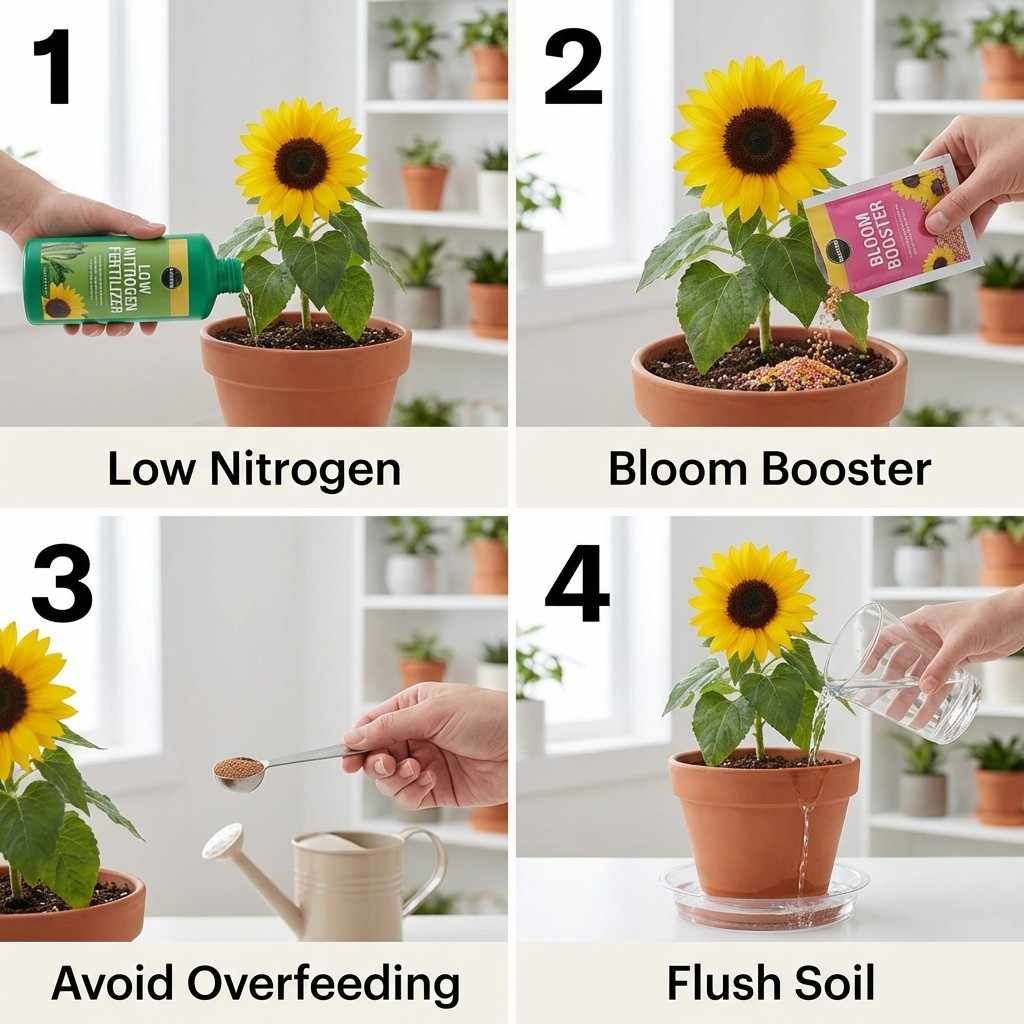
Even a small adjustment can make a noticeable difference.
- Use low-nitrogen fertilizer
- Switch to bloom booster (high phosphorus)
- Avoid frequent feeding
- Flush soil once if overfed
Reason 2: Light Intensity
Most people think giving 6–8 hours of light is enough. But dwarf sunflowers need strong, direct light—not just long hours.
I once kept my plant near a bright window, assuming it was enough. It wasn’t. After moving it to direct sunlight, buds started forming within days.
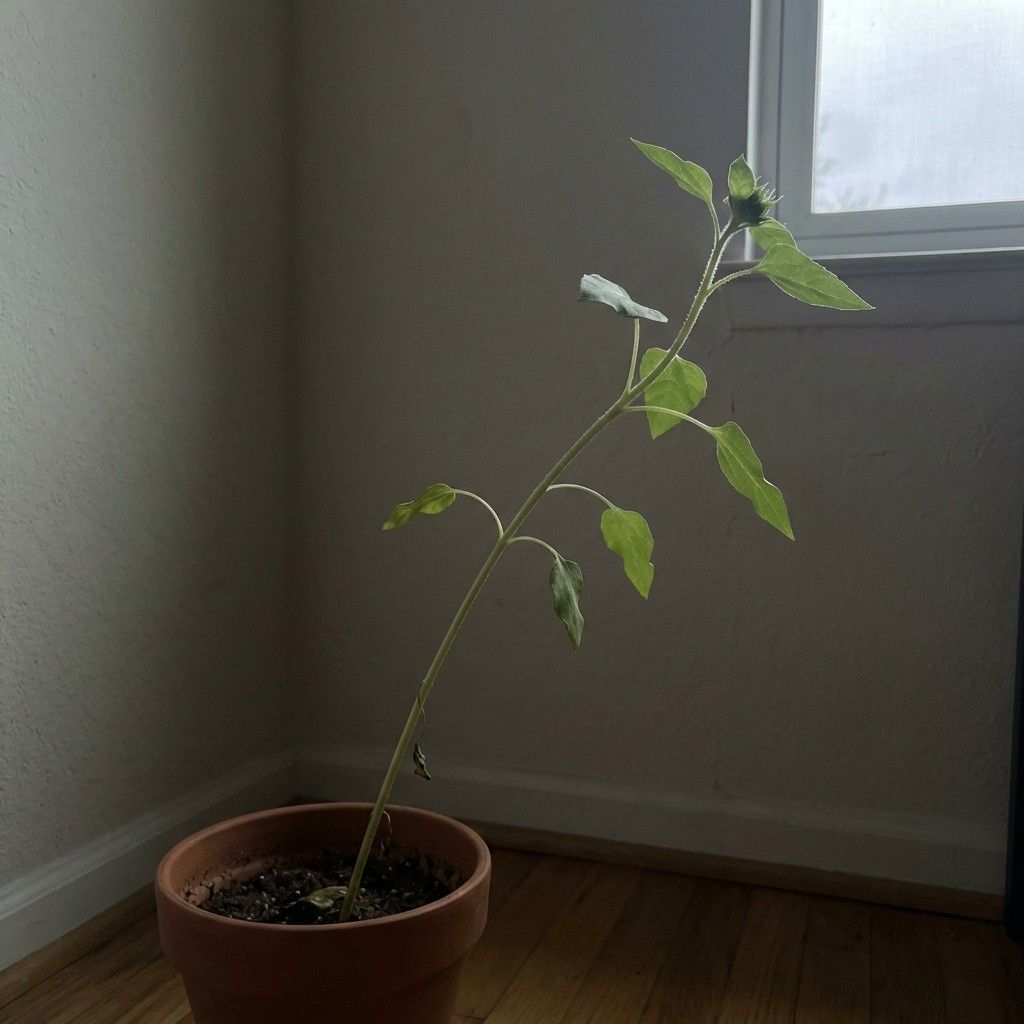
Intensity matters more than duration.
- Plant stretches toward light
- Stem becomes weak
- No bud formation
- Growth looks uneven
How to Fix light intensity
Improving light intensity is often the fastest way to trigger blooming.
The plant needs strong energy to initiate flower production.
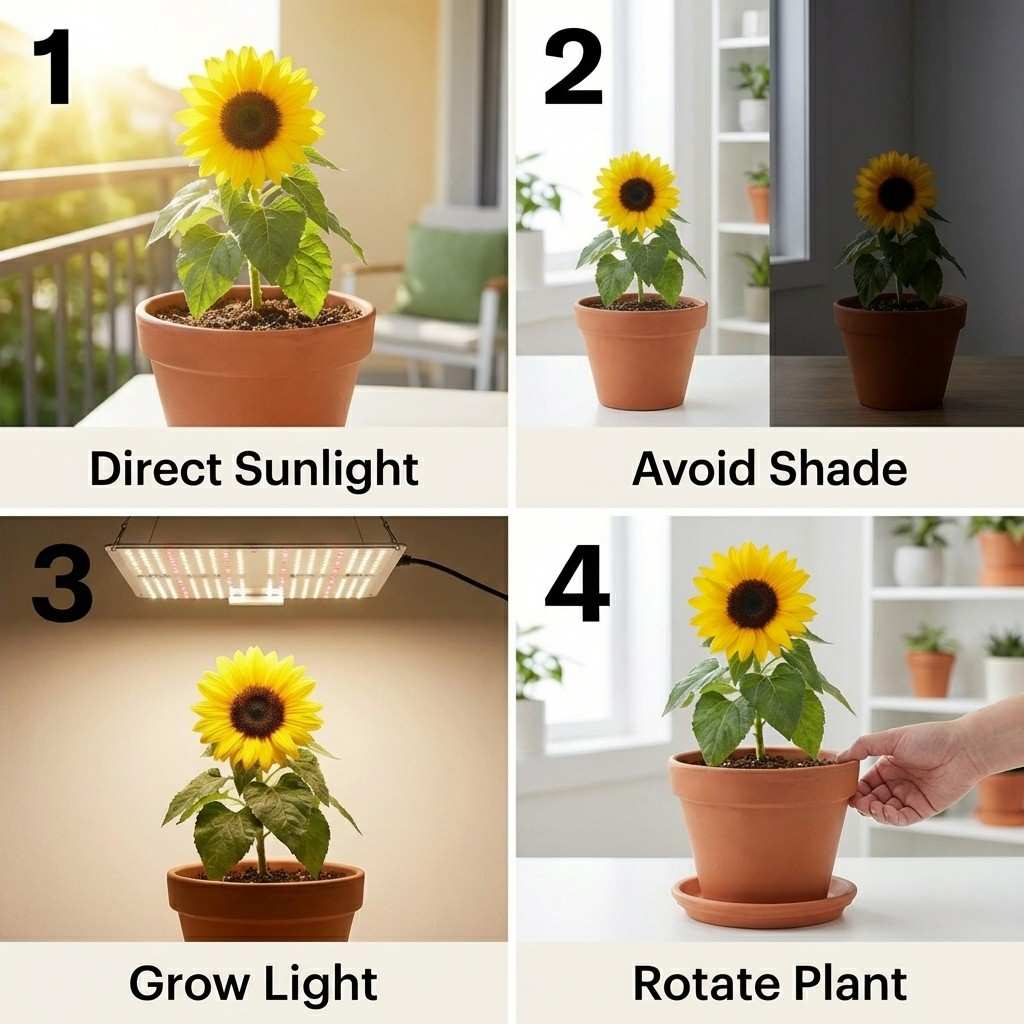
Placement is everything.
- Provide direct sunlight for several hours
- Avoid shaded indoor corners
- Use high-intensity grow lights if needed
- Rotate plant regularly
Reason 3: Root Maturity
Dwarf sunflowers don’t bloom until their root system is mature enough. If roots are underdeveloped, the plant delays flowering.
I noticed this when one of my plants stayed small for too long. Once roots expanded properly, it suddenly started forming buds.
This is a natural growth stage, not a problem—but it can be slowed by conditions.
- Plant looks young for too long
- No bud formation
- Growth seems paused
- Roots not fully developed
How to Fix It
You can’t force root maturity instantly, but you can support it.
Better root conditions lead to faster blooming.
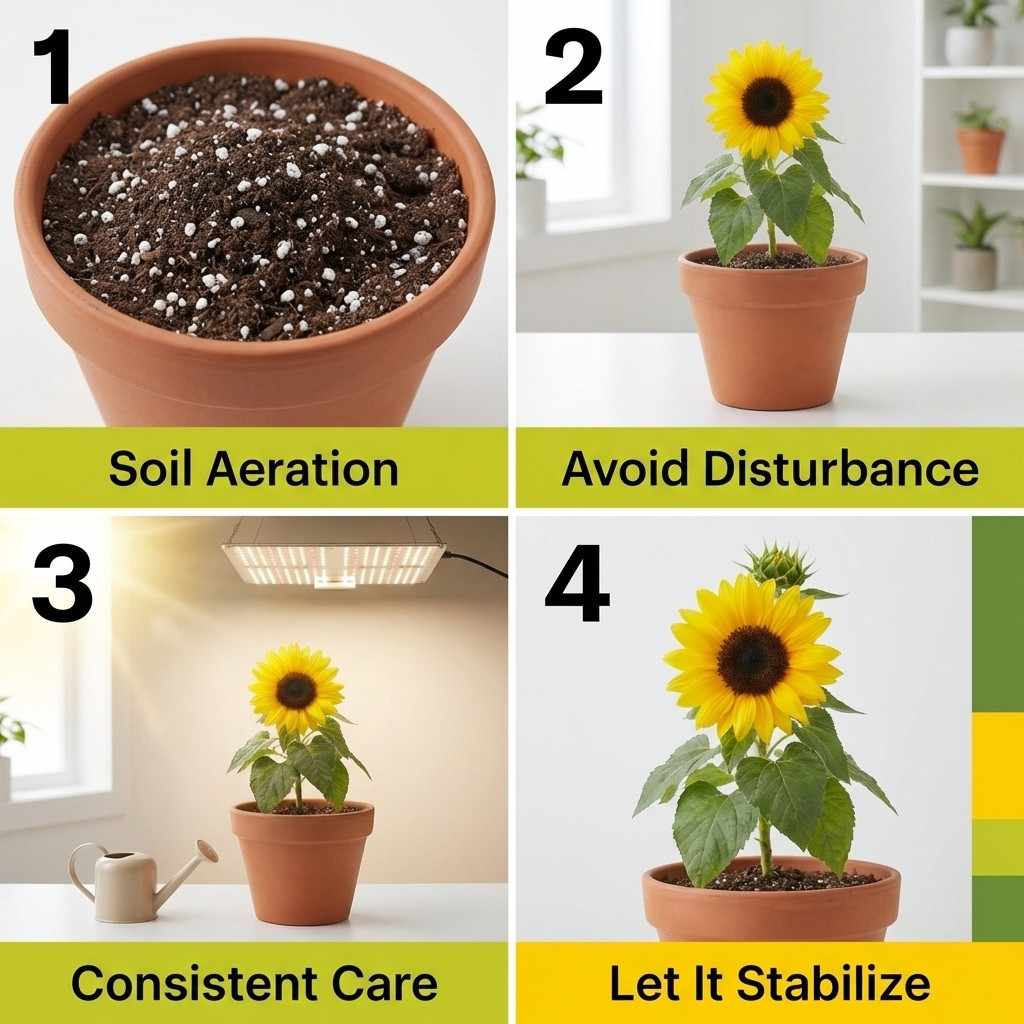
Patience plus the right setup works best.
- Ensure proper soil aeration
- Avoid frequent disturbance
- Maintain consistent care
- Allow plant to stabilize
Reason 4: Temperature Fluctuations
Temperature swings can confuse the plant’s internal signals. Dwarf sunflowers prefer stable warmth.
I once placed a pot near a window where temperature changed constantly. Growth was fine, but flowering never started.
Consistency matters more than extremes.
- Bud formation stops
- Leaves curl or droop
- Growth becomes irregular
- Plant looks stressed
How to Fix It
Creating a stable environment helps the plant transition into flowering mode.
Even small adjustments can improve results.

Avoid sudden changes.
- Keep plant in stable temperature zone
- Avoid cold drafts or heat spikes
- Maintain consistent indoor conditions
- Monitor environment regularly
Reason 5: Energy Imbalance
This might sound surprising, but sometimes your plant is simply too comfortable. When conditions are perfect for leaf growth, the plant has no reason to shift into flowering mode.
I noticed this when I gave my plant consistent water, mild light, and regular feeding. It grew beautifully—but never bloomed.
Plants often need a slight “push” to trigger flowering.
- Healthy plant but no buds
- Continuous leaf growth
- No change in growth phase
- Delayed flowering cycle
How to Fix Energy Imbalance
Creating a slight controlled stress can help trigger blooming. This signals the plant to complete its life cycle.
The goal is not to harm the plant, but to shift its focus.
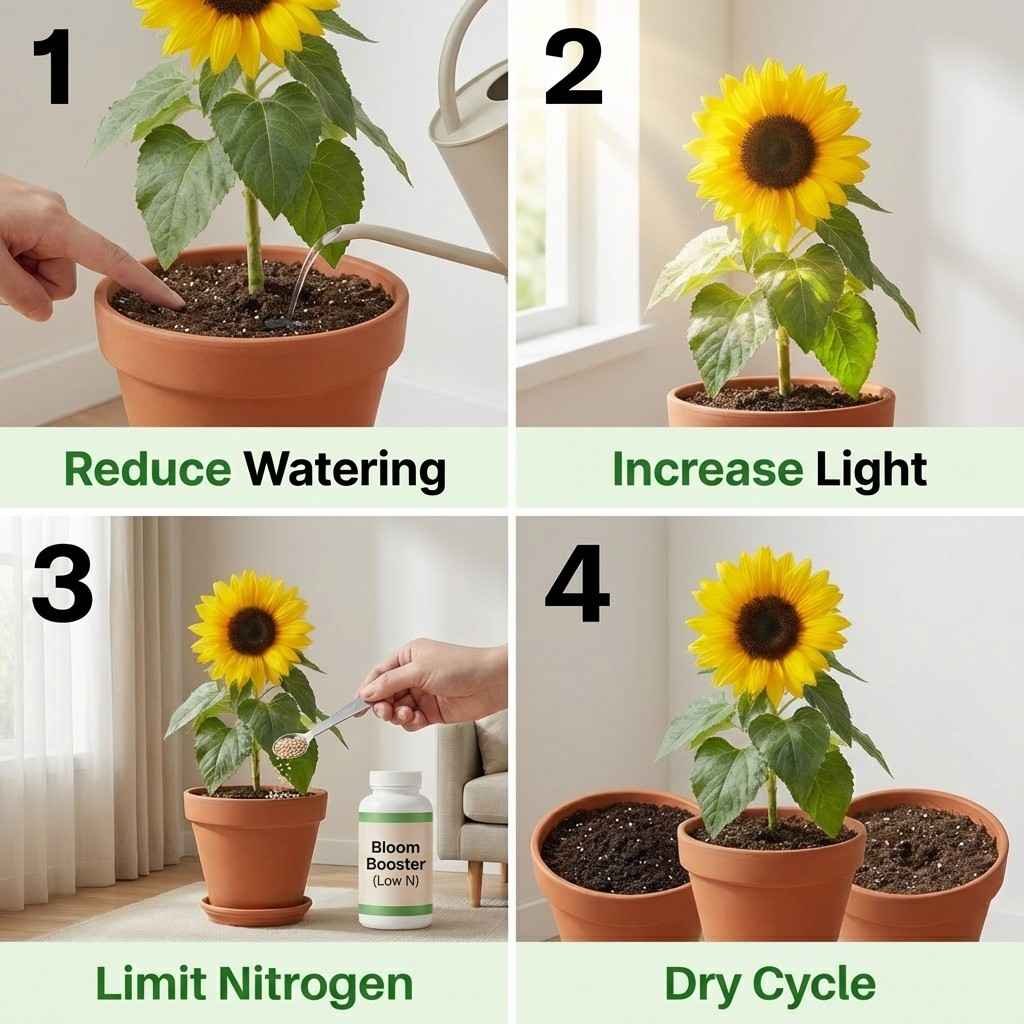
This technique works surprisingly well.
- Slightly reduce watering frequency
- Increase light exposure
- Limit nitrogen feeding
- Allow mild drying cycles
Reason 6: Incorrect Photoperiod Signals
Dwarf sunflowers respond to light cycles. Even if they are not strictly photoperiod-dependent, irregular light exposure can confuse their internal clock.
In my case, inconsistent lighting—some days bright, some days dull—delayed blooming significantly.
Plants need consistency to trigger flowering.
- No bud formation
- Unpredictable growth pattern
- Delayed flowering
- Weak plant signals
How to Fix It
Providing consistent light exposure helps stabilize the plant’s internal rhythm.
This improves the chances of blooming.

Routine matters here.
- Maintain consistent daily light hours
- Avoid moving plant frequently
- Use timer-based grow lights if needed
- Keep light schedule stable
Reason 7: Nutrient Imbalance
It’s not just about lacking nutrients—imbalance matters too. Too much nitrogen and too little phosphorus can completely stop flowering.
After switching to a bloom-focused fertilizer, I saw buds forming much faster.
The right nutrients act as a signal for flowering.
- Strong leaves but no flowers
- Delayed blooming stage
- Unbalanced growth
- Poor bud development
Best Fertilizer for Blooming
To encourage flowering, use a fertilizer with higher phosphorus content. This supports bud formation and flower development.
Timing is important.
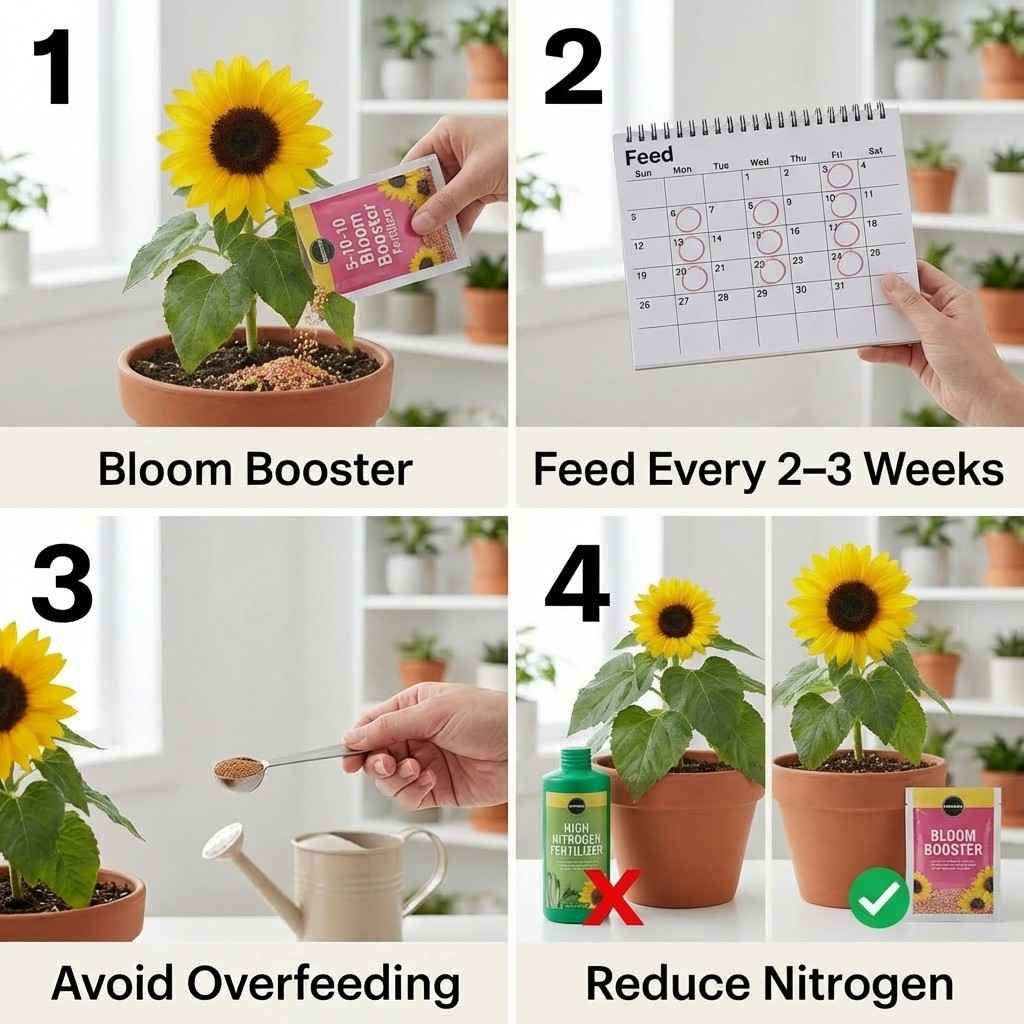
Less is more when feeding.
- Use bloom booster fertilizer (like 5-10-10)
- Feed once every 2–3 weeks
- Avoid overfeeding
- Reduce nitrogen-heavy fertilizers
Reason 8: Crowded Growth or Competition
If multiple plants are growing too close together, they compete for light and nutrients. This can delay or completely stop flowering.
I once planted two dwarf sunflowers in the same pot. They grew fine—but neither bloomed properly.
Spacing matters more than most people think.
- Plants grow unevenly
- Weak stems
- No flowering
- Competition for resources
How to Fix It
Giving each plant enough space allows it to develop fully and bloom properly.
This reduces competition.
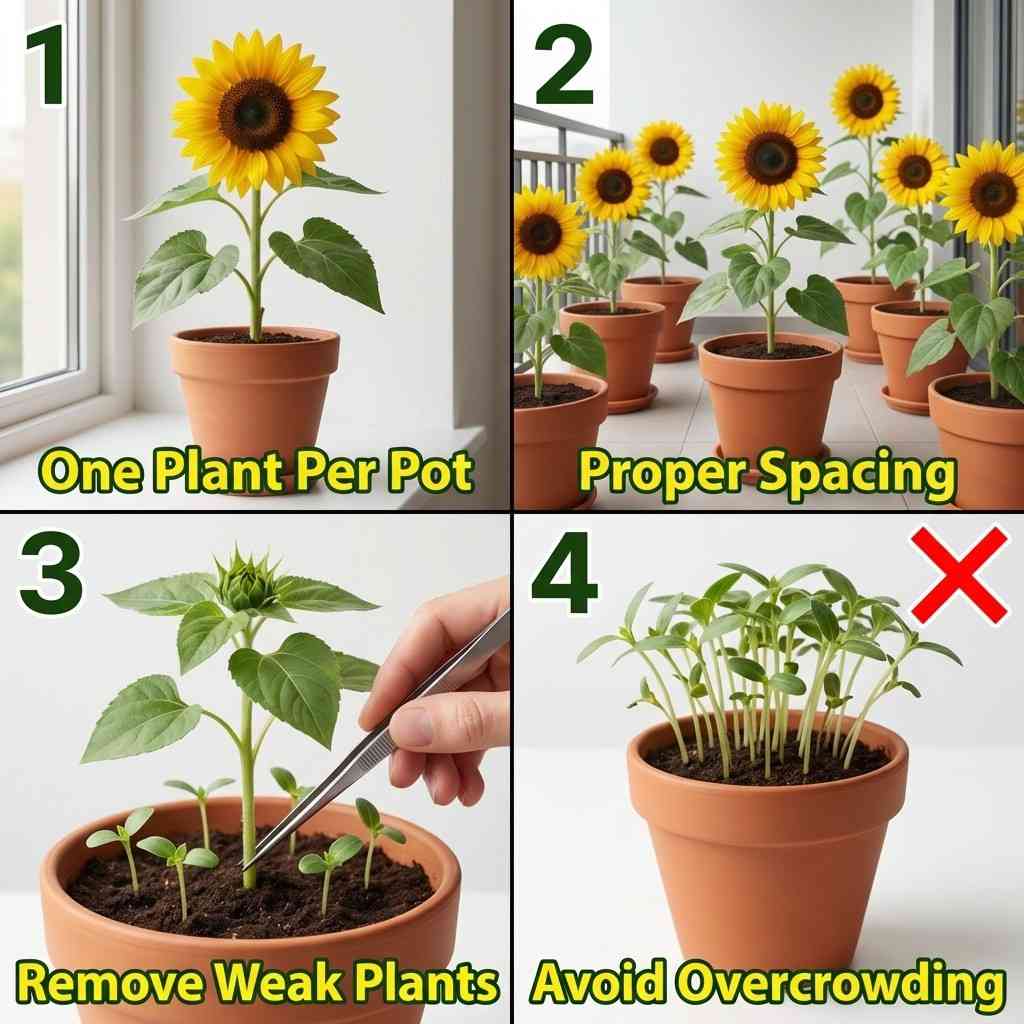
Better spacing improves results.
- Use one plant per pot
- Ensure proper spacing
- Remove weaker plants if needed
- Avoid overcrowding
Reason 9: Genetic or Seed Quality Issues
Sometimes, the issue is not your care routine at all. Low-quality seeds or unstable hybrids may fail to bloom properly.
I experienced this once with a cheap seed pack. The plant grew well but never flowered, no matter what I tried.
Quality matters more than people realize.
- Healthy plant but no buds ever
- Unusual growth pattern
- Delayed lifecycle
- No response to fixes
How to Fix It
If all conditions are correct and the plant still doesn’t bloom, consider starting fresh with better seeds.
This saves time and effort.
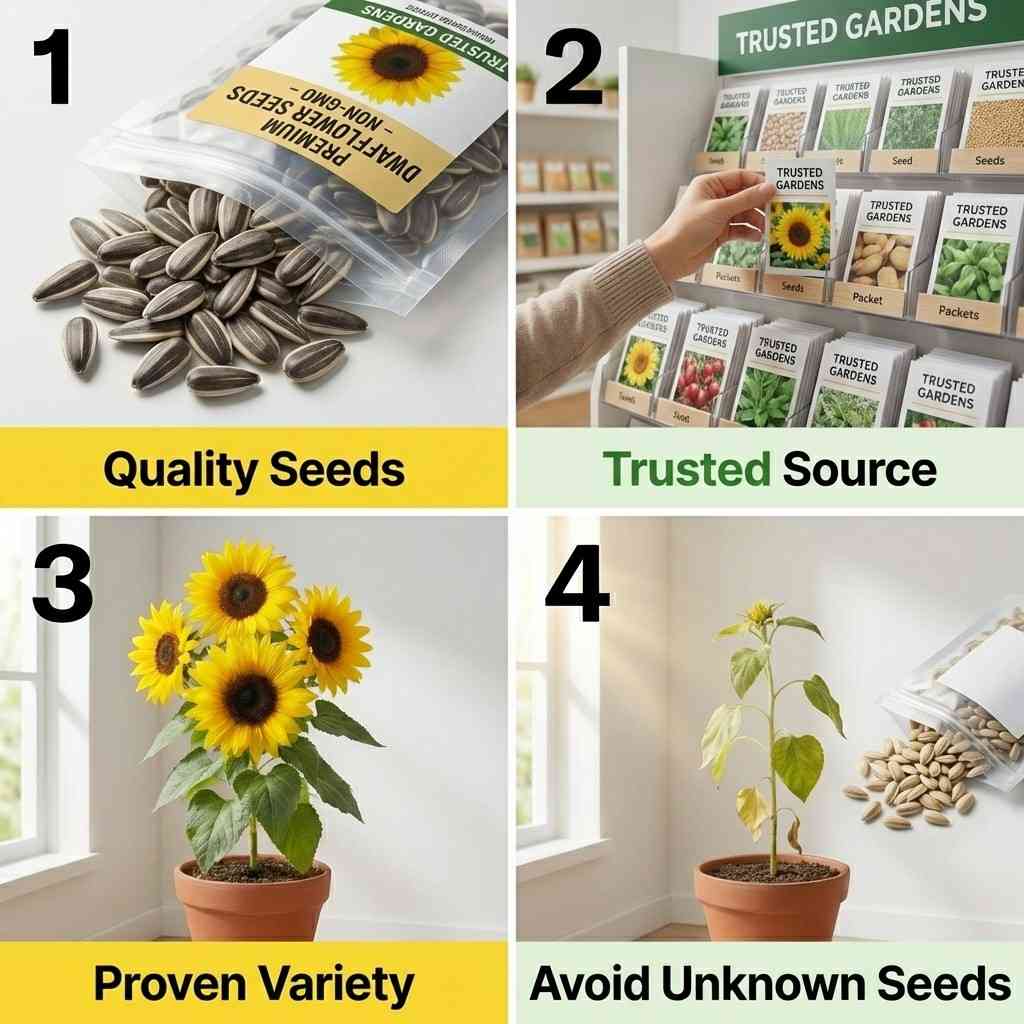
Reliable seeds make a big difference.
- Use high-quality seeds
- Choose trusted sources
- Select proven varieties
- Avoid unknown hybrids
Quick Bloom Fix Summary
| Problem | Cause | Solution |
|---|---|---|
| No buds | Too much nitrogen | Switch fertilizer |
| Weak growth | Low light | Increase intensity |
| Delayed bloom | Immature roots | Allow growth time |
| No flowering | Poor seed quality | Use better seeds |
| Irregular growth | Temperature fluctuation | Stabilize environment |
A Quick Note on Varieties
Some dwarf sunflower varieties bloom faster than others. Compact types like Teddy Bear or Sunspot tend to flower earlier, while some hybrids take longer.
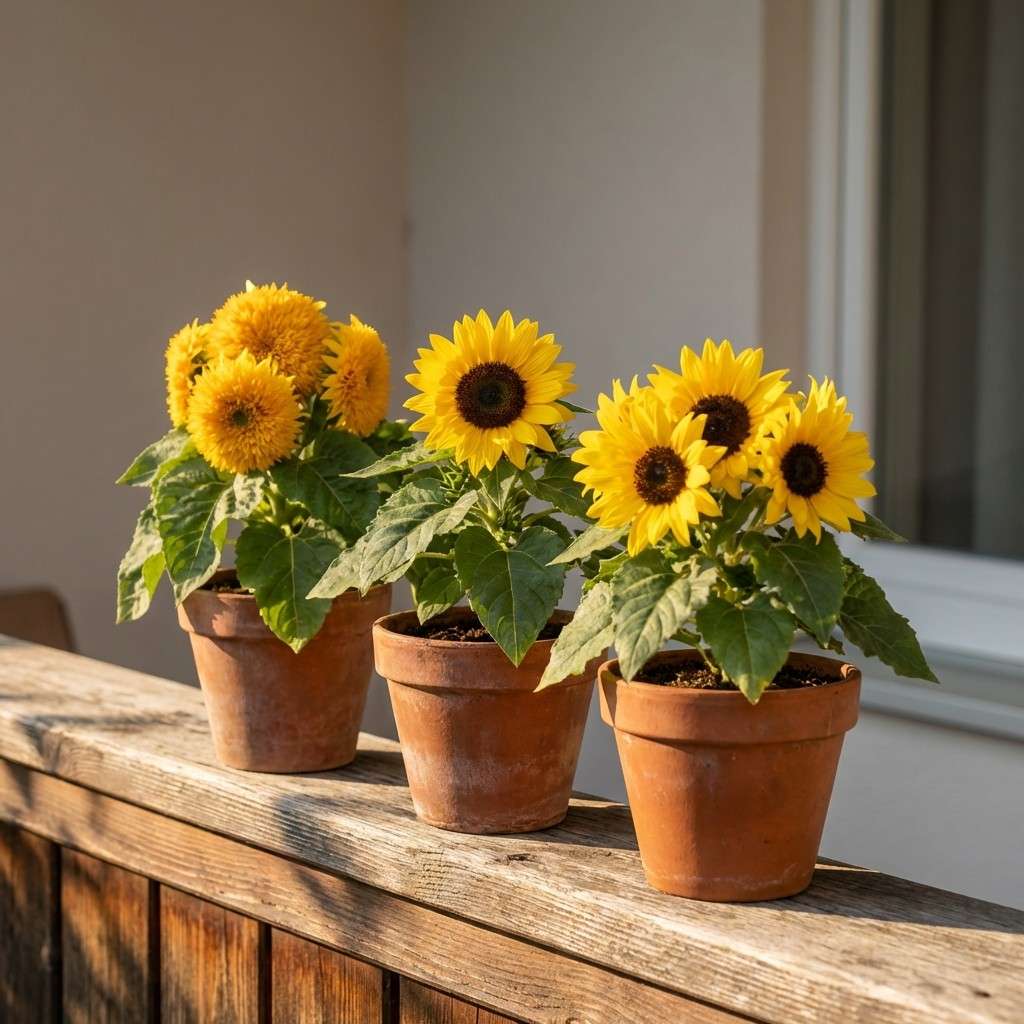
Understanding your variety can help set realistic expectations and improve your growing strategy
My Personal Experience (Real Turning Point)
The biggest breakthrough for me came when I stopped focusing only on watering and started adjusting light and nutrients. Once I reduced nitrogen and increased sunlight, buds started forming within days.
That moment made it clear—flowering is not random. It’s triggered by the right signals.
Once you understand those signals, everything becomes easier.
Frequently Asked Questions (FAQ)
Why is my dwarf sunflower growing but not flowering?
This usually happens due to excess nitrogen, low light intensity, or lack of flowering signals.
How long does it take for dwarf sunflower to bloom?
Typically 6–8 weeks, but delays can occur if conditions are not ideal.
Can I force my sunflower to bloom?
You can encourage blooming by improving light, adjusting nutrients, and creating slight stress.
Does fertilizer help in blooming?
Yes, especially phosphorus-rich fertilizers that support flower development.
What is the most common mistake?
Using too much nitrogen fertilizer, which promotes leaves instead of flowers.
Final Thoughts
If your dwarf sunflower not blooming, don’t assume it’s a failure. In most cases, the plant just needs the right signals to shift into flowering mode.
Focus on light intensity, nutrient balance, and environmental consistency. These small changes can completely transform your results.
Once the plant receives the correct signals, blooming becomes natural.