
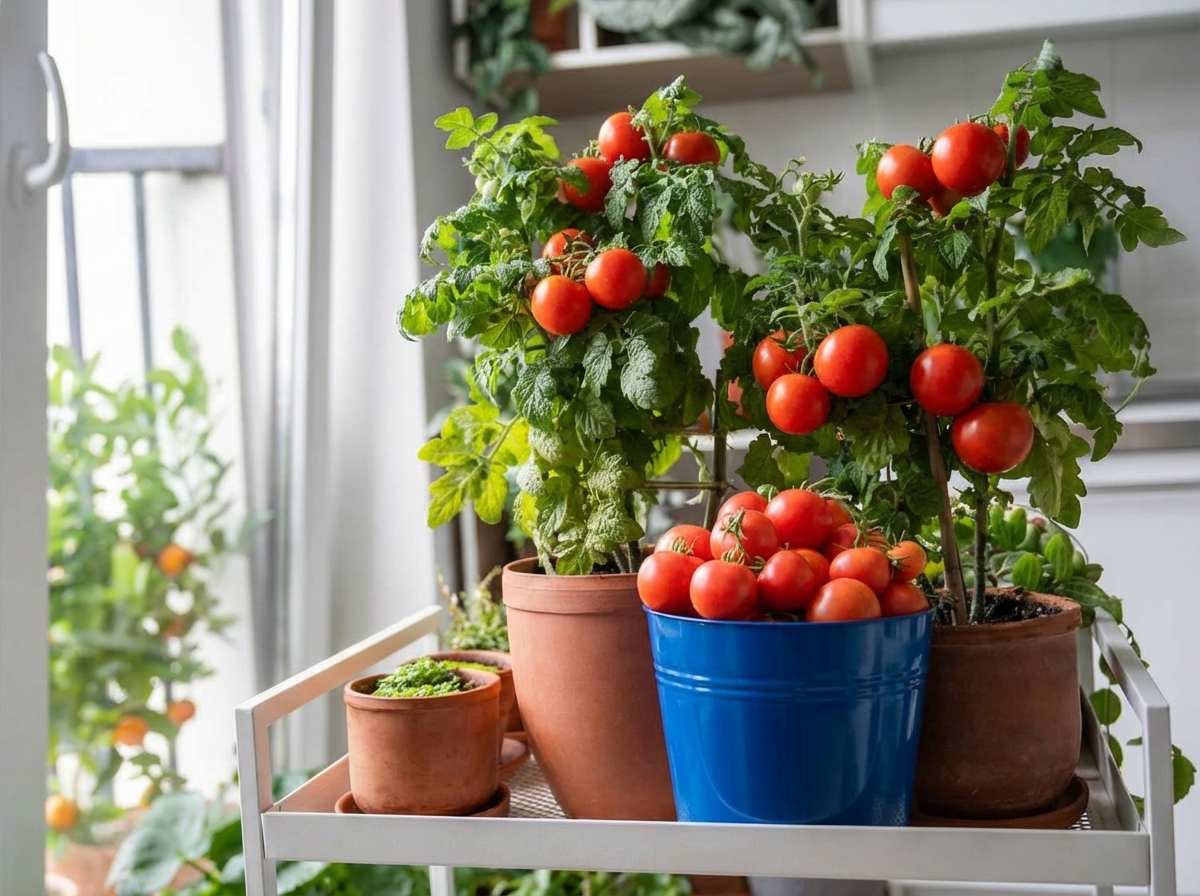
Growing tomatoes indoors is one of the most rewarding gardening experiences—but it also comes with a common frustration: healthy plants that never produce fruit.
If you’ve ever had lush green tomato plants indoors with flowers that simply fall off, the issue is usually not nutrients or light. It’s pollination.
Outdoors, tomatoes rely on wind and natural movement to transfer pollen. Indoors, that natural process is missing. The good news is that you don’t actually need traditional pollination if you understand how to create a self-pollinating indoor setup.
In this guide, you’ll learn exactly how to grow tomatoes indoors and still get consistent fruit—without depending on bees or manual pollination every time.
Why Indoor Tomatoes Fail to Produce Fruit
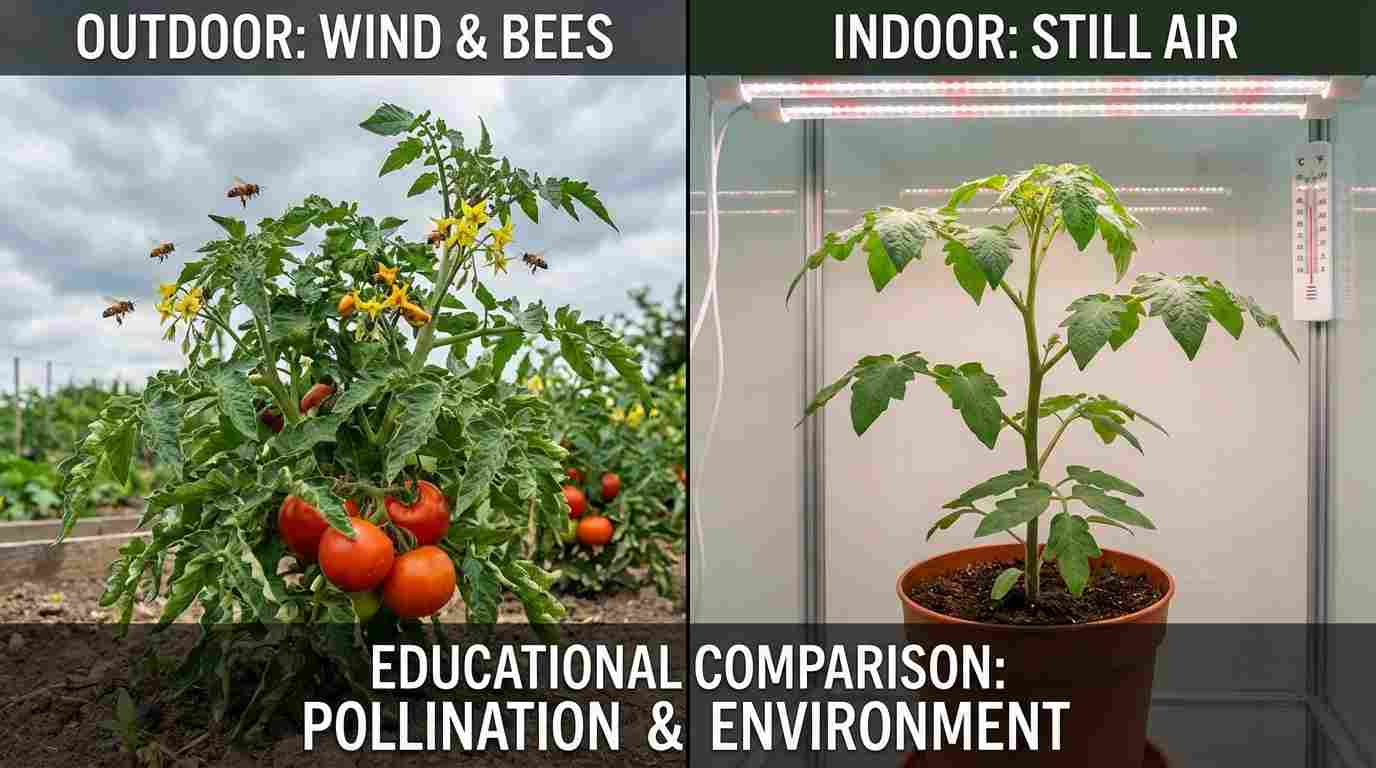
Tomato plants are naturally self-pollinating, meaning each flower contains both male and female parts. However, they still need movement or vibration to release pollen.
In outdoor conditions:
- Wind shakes the plant
- Bees vibrate the flowers
- Temperature and airflow support pollen release
Indoors, these factors are missing. As a result:
- Flowers bloom but don’t set fruit
- Pollen stays trapped
- Blossoms fall off
This is why many indoor growers struggle despite doing everything else correctly.
Understanding the Self-Pollinating Concept
Before building the setup, it’s important to understand what “self-pollinating” really means.
Tomatoes don’t need cross-pollination from another plant. They just need pollen transfer within the same flower.
So instead of relying on insects, your goal is to:
- Simulate natural vibration
- Maintain proper airflow
- Create ideal environmental conditions
Once you do this, your indoor tomatoes can produce fruit consistently.
Step 1: Choose the Right Tomato Variety
Not all tomato plants perform well indoors.
For a successful self-pollinating setup, choose compact and fast-growing varieties.
Best Indoor Varieties:
- Cherry tomatoes
- Dwarf tomato plants
- Determinate varieties
These plants:
- Require less space
- Produce faster
- Adapt better to controlled environments
From my experience, cherry tomatoes are the easiest to grow indoors and respond best to indoor pollination methods.
Step 2: Set Up Proper Lighting
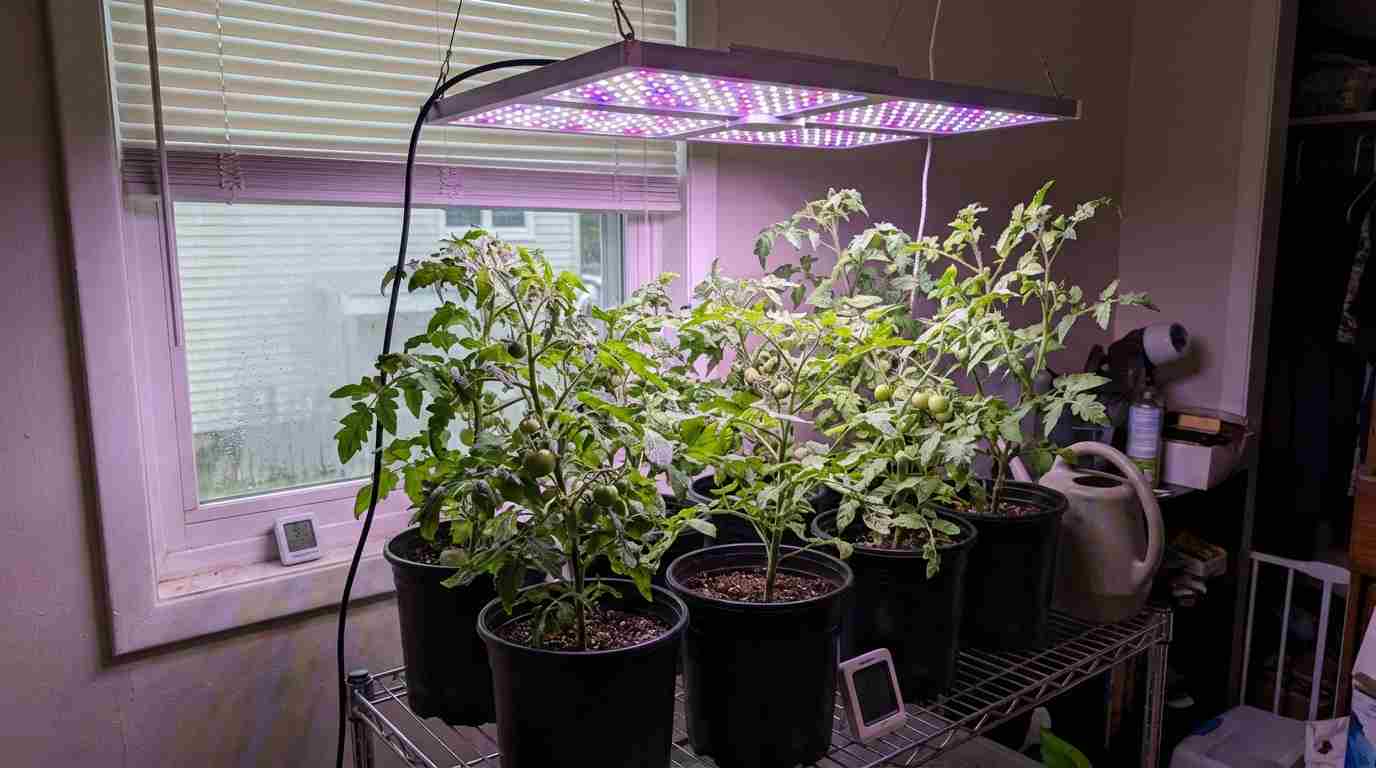
Light is the foundation of indoor tomato growth.
Tomatoes need strong light to:
- Develop flowers
- Support fruit production
What Works Best:
- Full-spectrum LED grow lights
- 12–16 hours of light daily
Keep the light positioned close enough to provide intensity but not so close that it burns the plant.
Without proper lighting, even a perfect pollination setup won’t produce results.
Step 3: Maintain Ideal Temperature and Humidity
Environmental conditions directly affect pollination success.
Ideal Temperature:
- 65–80°F
Ideal Humidity:
- Moderate (not too dry, not too humid)
If the air is too humid:
- Pollen becomes sticky
- It won’t transfer properly
If it’s too dry:
- Flowers may dry out and drop
Maintaining balance is critical.
Step 4: Create Airflow (The Key to Self-Pollination)
Airflow is one of the most overlooked factors in indoor gardening.
In nature, wind helps shake the plant and release pollen. Indoors, you need to replicate that.
How to Do It:
- Place a small fan near your plants
- Keep it on low speed
- Run it for a few hours daily
This gentle movement:
- Mimics natural wind
- Helps pollen release
- Strengthens plant stems
In my setup, adding a simple fan made a noticeable difference in fruit production.
Step 5: Use the Vibration Technique
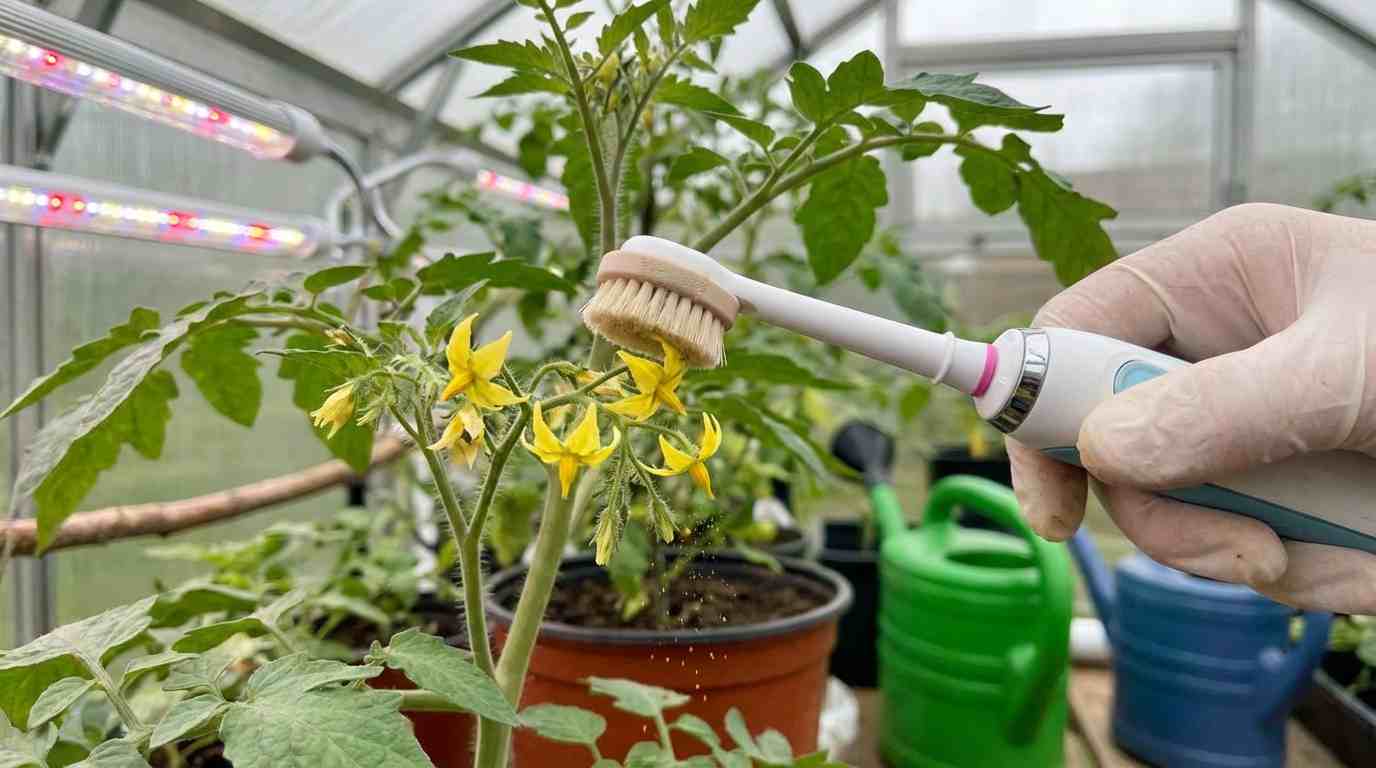
This is the closest alternative to natural pollination.
Even though you’re creating a self-pollinating environment, a small amount of vibration can dramatically improve results.
Methods:
- Gently shake the plant
- Tap the flower clusters lightly
- Use an electric toothbrush near flowers
This releases pollen inside the flower and increases fruit set.
You don’t need to do this constantly—just once a day during flowering is enough.
Step 6: Optimize Plant Spacing and Structure
Indoor plants need proper spacing for airflow and light penetration.
If plants are too crowded:
- Air circulation decreases
- Pollination efficiency drops
- Risk of disease increases
Keep plants spaced so that:
- Leaves don’t overlap excessively
- Air can move freely
Pruning lower leaves also helps improve airflow.
Step 7: Support the Plant Properly
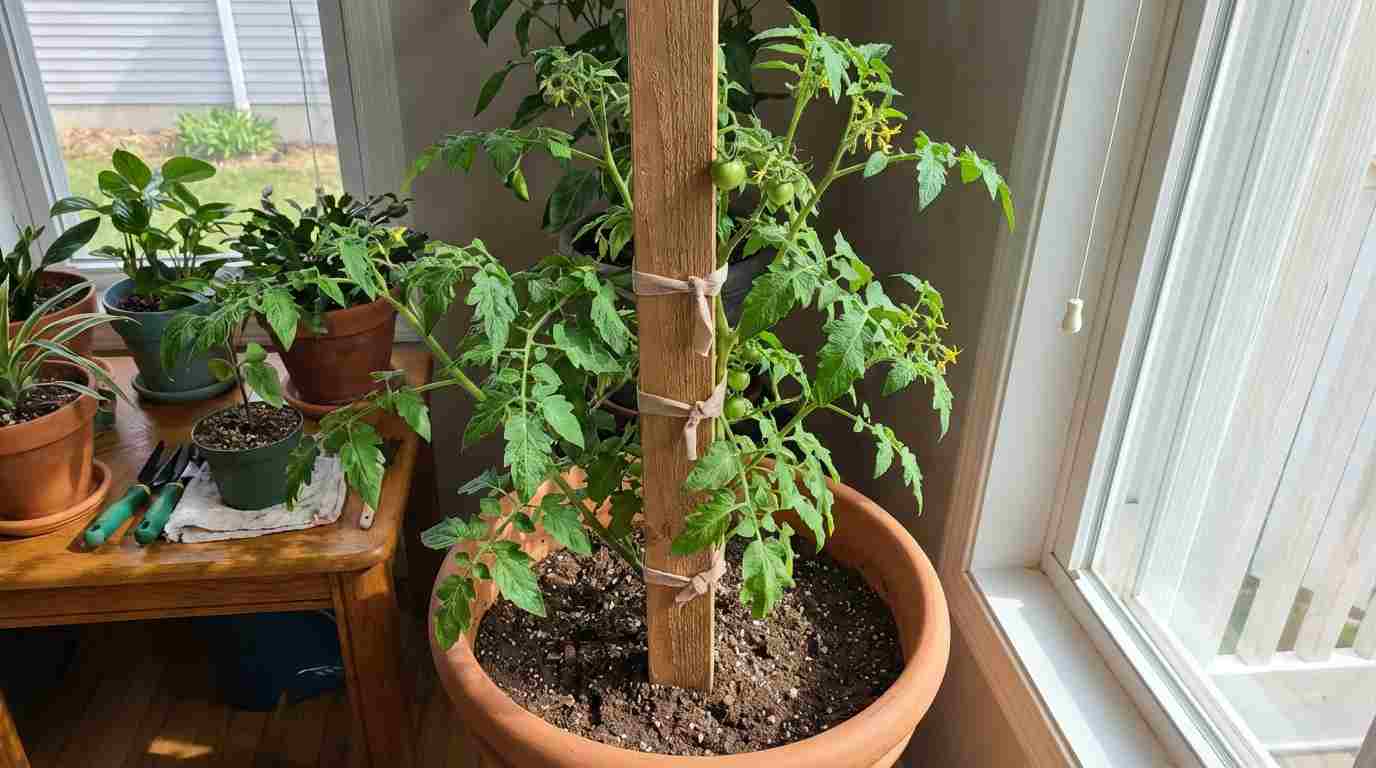
Tomatoes grow quickly and need support.
Use:
- Stakes
- Cages
- Vertical supports
Proper support ensures:
- Better exposure to light
- Improved airflow
- Easier pollination
Step 8: Feed the Plant Correctly
Nutrition plays a role in flowering and fruiting.
If your plant lacks nutrients:
- Flowers may not develop properly
- Fruit production will be low
Feeding Tips:
- Use balanced fertilizer initially
- Switch to phosphorus-rich feed during flowering
Avoid over-fertilizing, especially with nitrogen, as it promotes leaves instead of fruits.
Step 9: Watering the Right Way
Watering directly impacts plant health and pollination success.
Best Approach:
- Keep soil consistently moist
- Avoid overwatering
- Ensure proper drainage
Too much water leads to root issues, while too little causes stress and flower drop.
Common Mistakes That Prevent Indoor Pollination
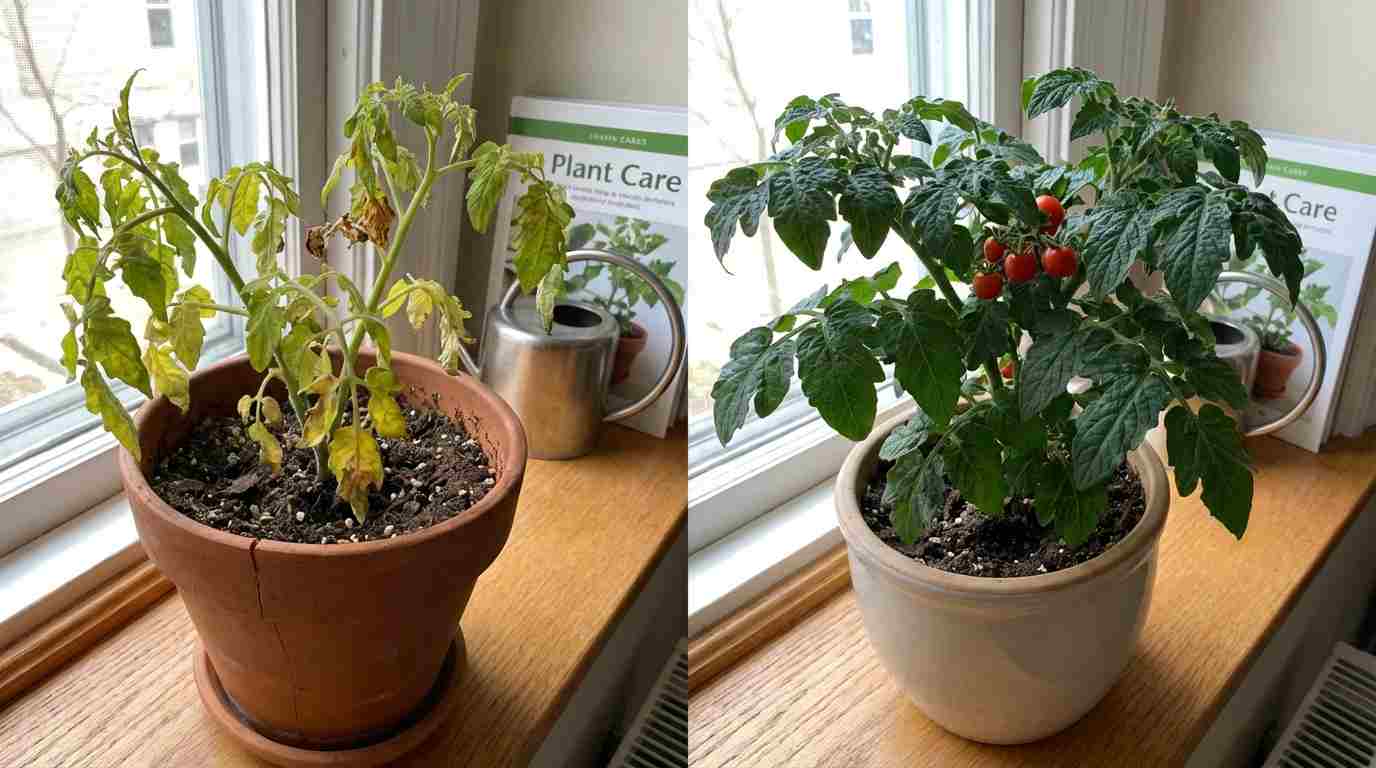
Even with a good setup, small mistakes can stop fruit production.
1. No Air Movement
Without airflow, pollen doesn’t release.
2. Weak Lighting
Insufficient light leads to poor flowering.
3. High Humidity
Sticky pollen cannot transfer.
4. Ignoring Flower Stage
Pollination must happen when flowers are open.
5. Overfeeding Nitrogen
Too many leaves, fewer fruits.
My Personal Experience: What Actually Works
I Grown many indoor Vegetables but When I first tried growing tomatoes indoors, I had strong plants but zero fruit.
I focused on watering and nutrients, thinking that was the issue. But nothing changed.
The breakthrough came when I introduced two simple changes:
- A small fan for airflow
- Light daily shaking of flowers
Within a couple of weeks, flowers started turning into fruits.
That’s when I realized indoor tomato growing isn’t about more effort—it’s about the right conditions.
Advanced Tips for Maximum Yield
Once your basic setup is working, you can improve results further.
1. Timing Matters
Pollinate during mid-day when flowers are fully open.
2. Consistent Routine
Maintain stable light, temperature, and airflow.
3. Rotate Plants
Ensure even light exposure.
4. Remove Weak Flowers
This helps the plant focus energy on stronger ones.
Do You Really Need Manual Pollination?
Not always.
If your setup includes:
- Good airflow
- Proper lighting
- Ideal humidity
Your plant can self-pollinate naturally.
Manual vibration simply improves success rate—it’s not always required.
Final Thoughts
Growing tomatoes indoors without traditional pollination is completely possible.
The key is understanding that tomatoes don’t need bees—they need the right environment.
Focus on:
- Airflow
- Light
- Temperature
- Gentle movement
Once these factors are in place, your plants will start producing fruit consistently.
From my experience, the biggest mistake is overcomplicating the process. Indoor tomato growing is not about doing more—it’s about doing the right things at the right time.
And once you get it right, you’ll realize something important:
You don’t need a garden or outdoor space to grow tomatoes—you just need the right setup.