
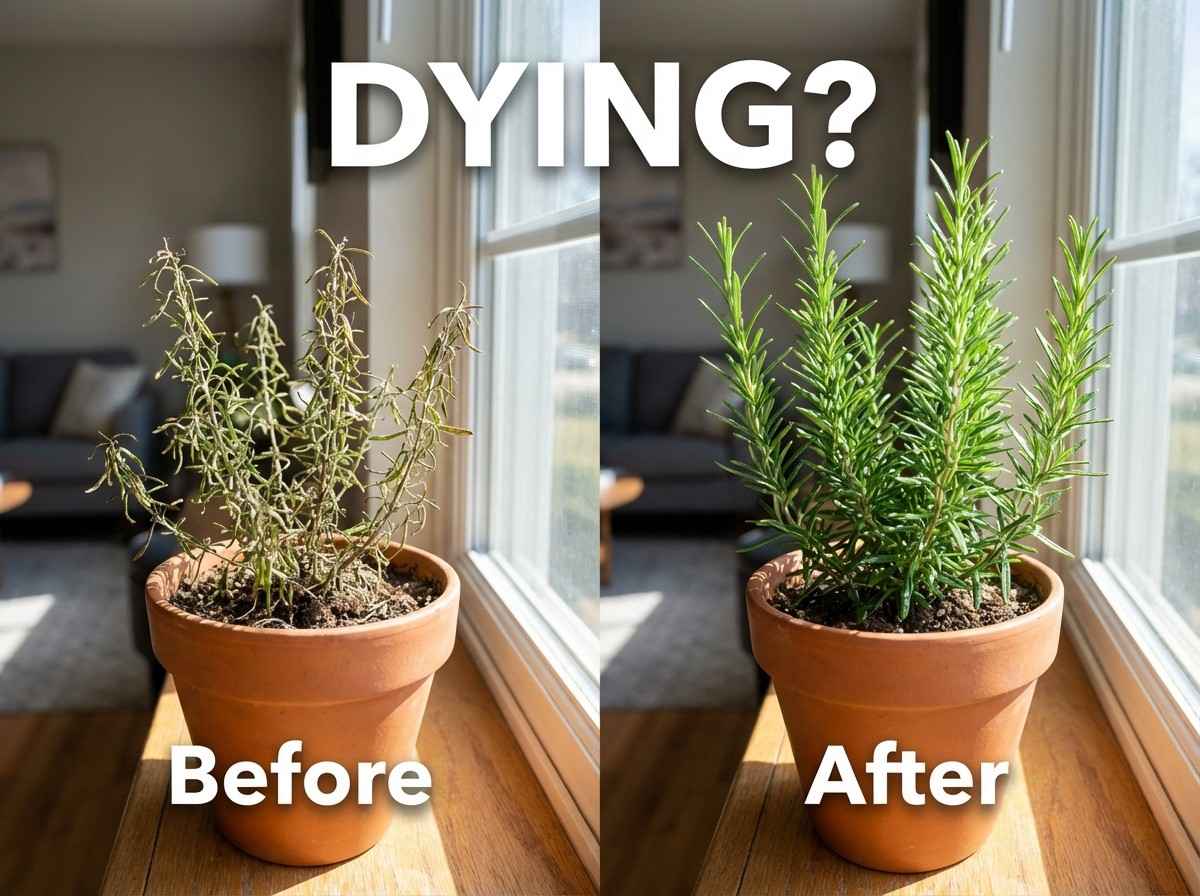
I still remember the moment I realized my rosemary plant is dying despite regular care. The leaves started drying, and growth slowed unexpectedly. After a few small changes in light, watering, and soil, I finally brought it back to life.
If your rosemary plant is dying indoors in a pot, you’re not alone. This is a common issue many people face, even when they think they are providing proper care. Rosemary has specific needs, and small imbalances can quickly affect its health.
Unlike many indoor herbs, rosemary requires strong light, well-draining soil, and controlled watering to survive and grow properly. When these conditions are not met, the plant begins to weaken, leading to dry leaves, slow growth, and overall decline.
Why Rosemary Plants Struggle Indoors
Rosemary is a hardy herb outdoors, but indoors it behaves very differently. It requires specific conditions that are often difficult to replicate inside a home environment.
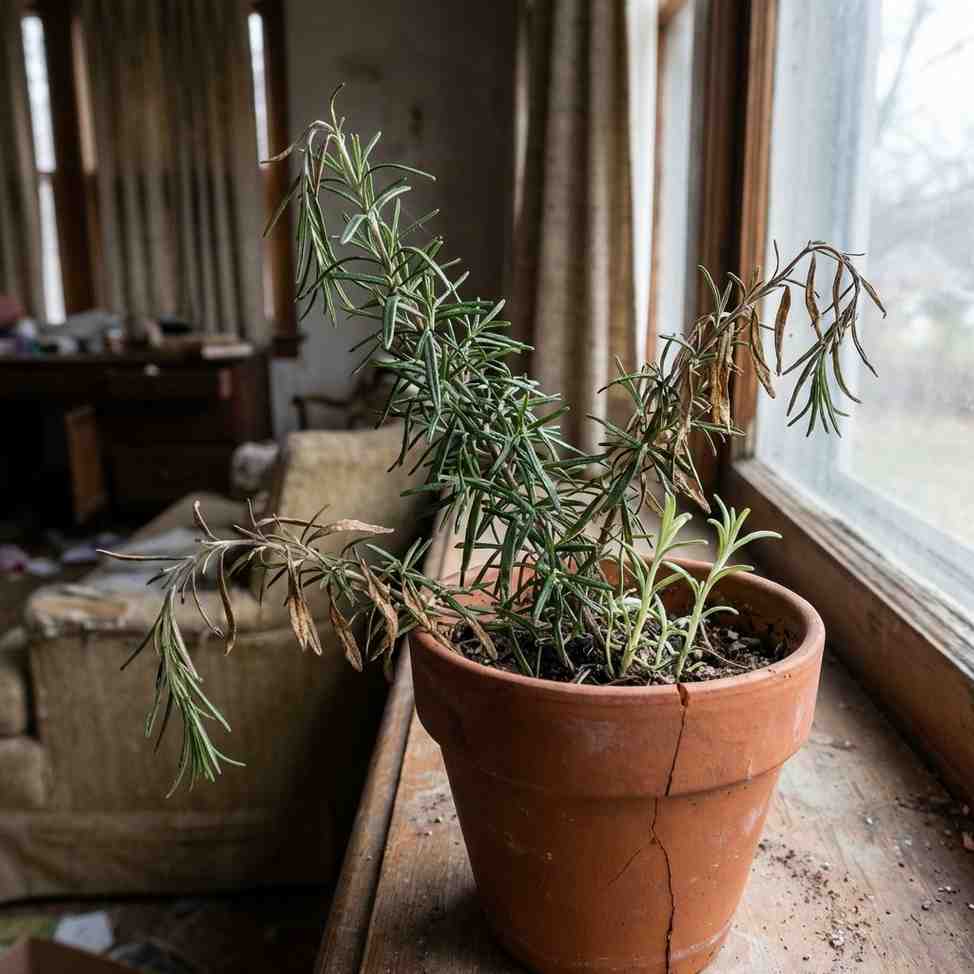
Unlike herbs like basil or mint that adapt quickly indoors, rosemary can be more sensitive to light, airflow, and watering mistakes. This is why many people notice their rosemary plant declining even when they think they are doing everything right.
If your rosemary plant is dying, it’s usually not one big mistake—it’s a combination of small issues that build up over time.
Quick Overview of Common Causes
Before diving into each issue, here’s a quick overview of the most common reasons why rosemary plants struggle indoors.
| Problem | Main Cause | Effect on Plant |
|---|---|---|
| Low light | Insufficient sunlight | Weak, leggy growth |
| Overwatering | Wet soil | Root rot |
| Poor drainage | Heavy soil | Root suffocation |
| Lack of airflow | Closed indoor space | Fungal issues |
Cause 1: Not Enough Light
Light is the most important factor for rosemary. Indoors, this is usually where things go wrong. Rosemary needs bright, direct light for several hours daily.
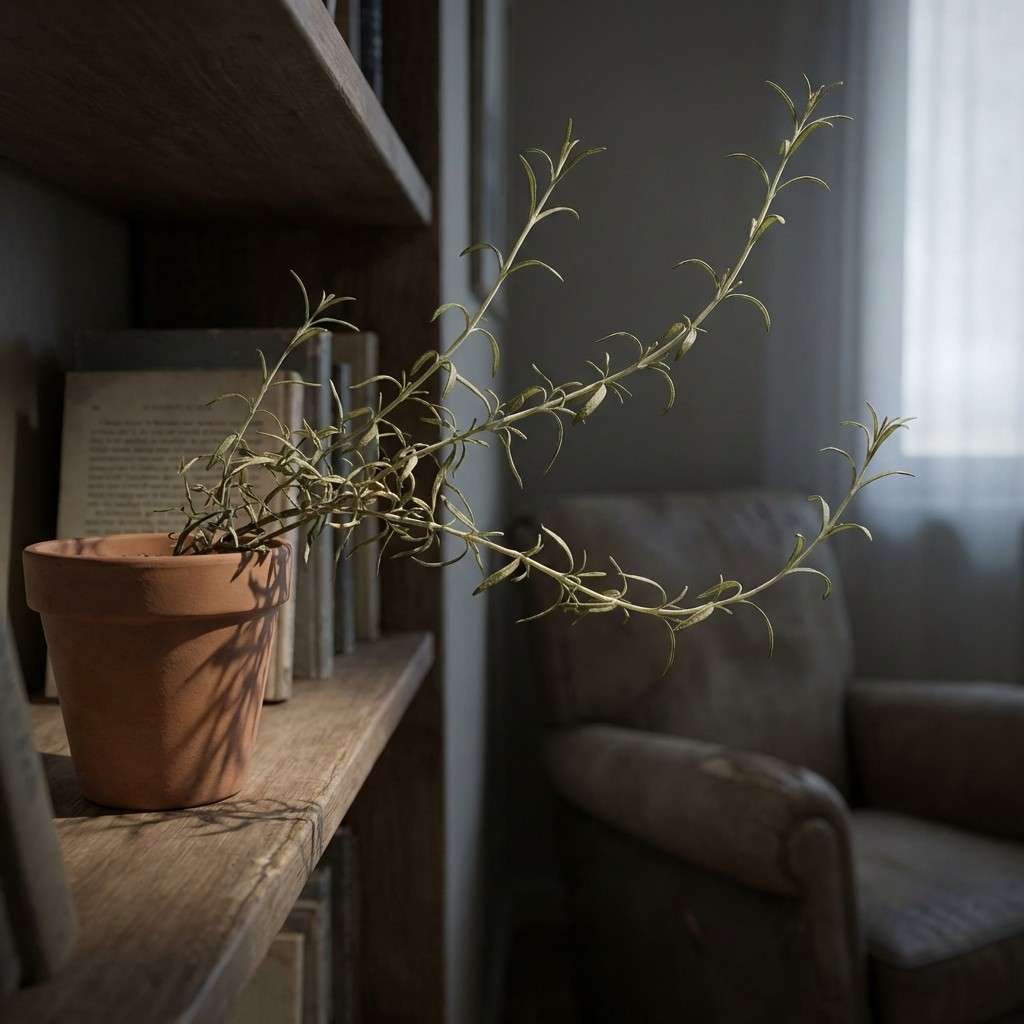
In my experience, placing the plant near a regular window was not enough. It looked fine for a few weeks, but then growth slowed, and the leaves became thin and weak.
Without enough light, the plant cannot produce enough energy to stay healthy.
- Leaves become thin and stretched
- Growth slows down significantly
- Plant looks pale or dull
- No new growth appears
How to Fix Light Issues
Improving light conditions can quickly revive a struggling rosemary plant. Even small adjustments can make a noticeable difference.
The goal is to provide consistent, strong light rather than occasional exposure.
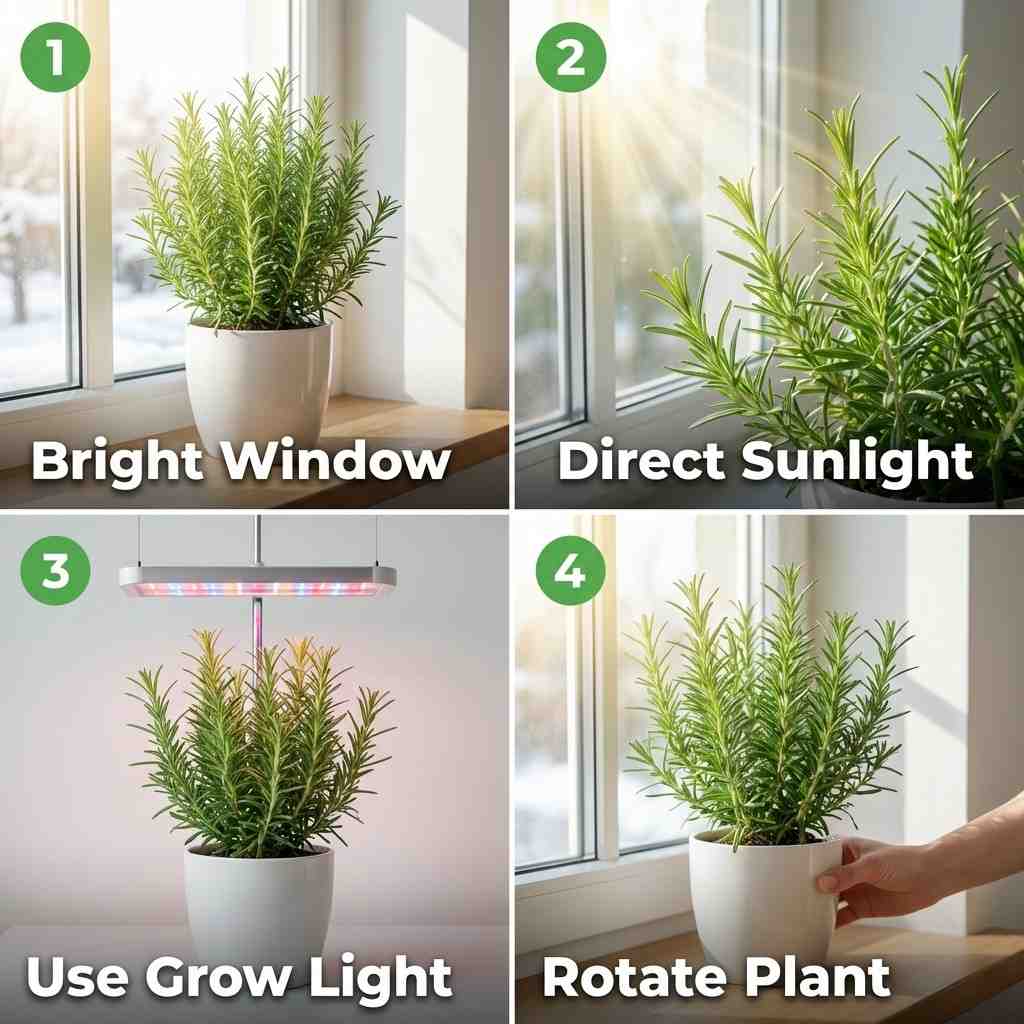
This is often the first fix you should try.
- Place plant near the brightest window
- Provide direct sunlight for several hours
- Use a grow light if natural light is limited
- Rotate the plant for even exposure
Cause 2: Overwatering
Overwatering is one of the most common reasons a rosemary plant is dying indoors. Unlike many indoor plants, rosemary prefers dry conditions.
I made this mistake early on. I assumed frequent watering would keep the plant healthy, but instead, the roots started weakening.
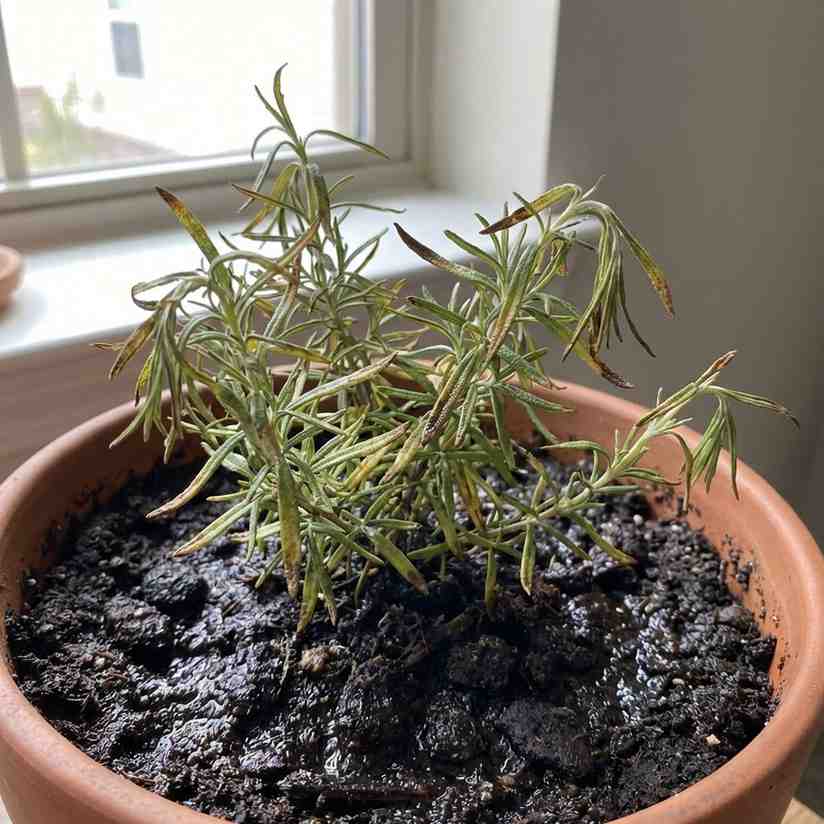
Too much water prevents oxygen from reaching the roots, leading to serious problems.
- Soil stays wet for too long
- Leaves turn yellow or brown
- Plant becomes weak
- Risk of root rot increases
How to Fix Overwatering
Fixing watering habits can quickly improve plant health. The key is to let the soil dry out completely before watering again.
Consistency matters more than frequency.
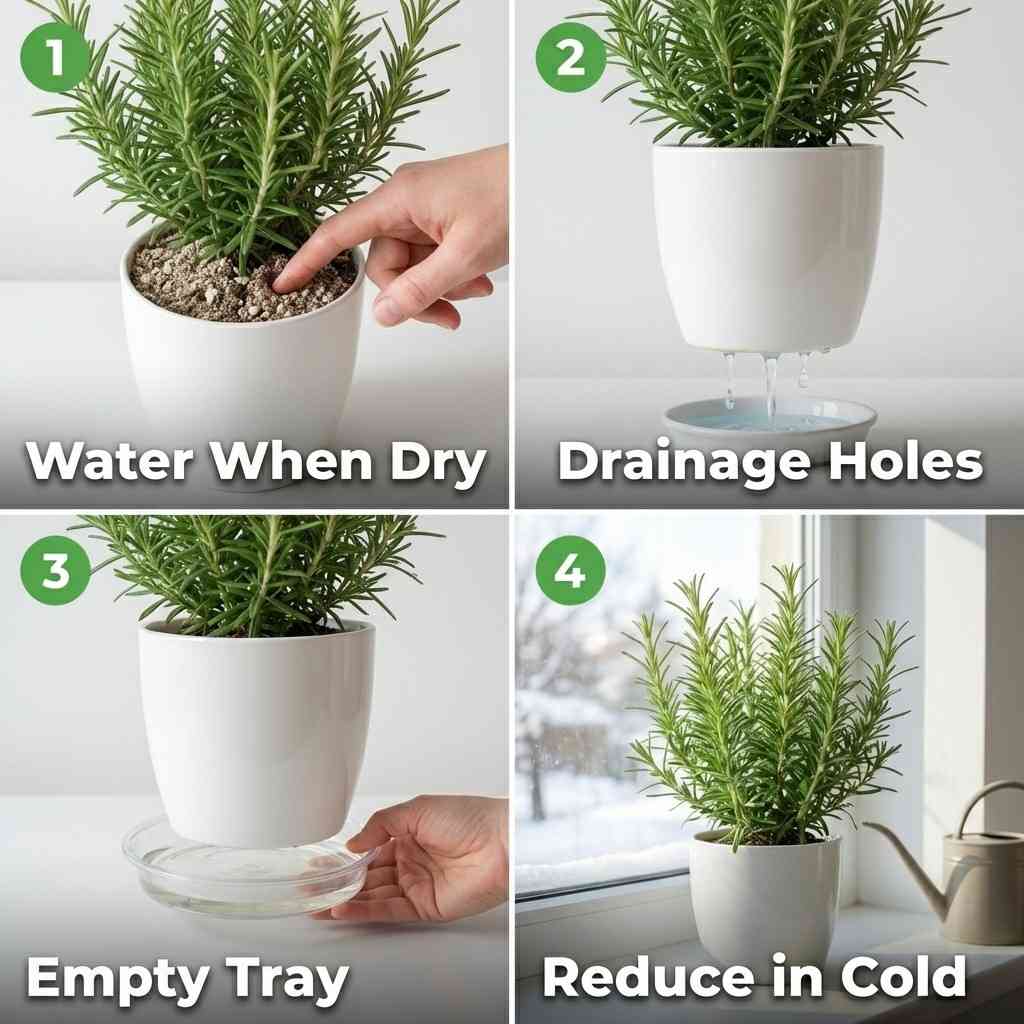
Once the roots recover, the plant can start growing normally again.
- Water only when soil feels dry
- Use pots with drainage holes
- Empty excess water from trays
- Reduce watering during colder months
Cause 3: Poor Soil and Drainage
Rosemary does not like heavy, compact soil. It needs a light, well-draining mix that allows air to reach the roots.
Switching to a better soil mix was one of the biggest improvements I made. After that, the plant stopped declining and started recovering.
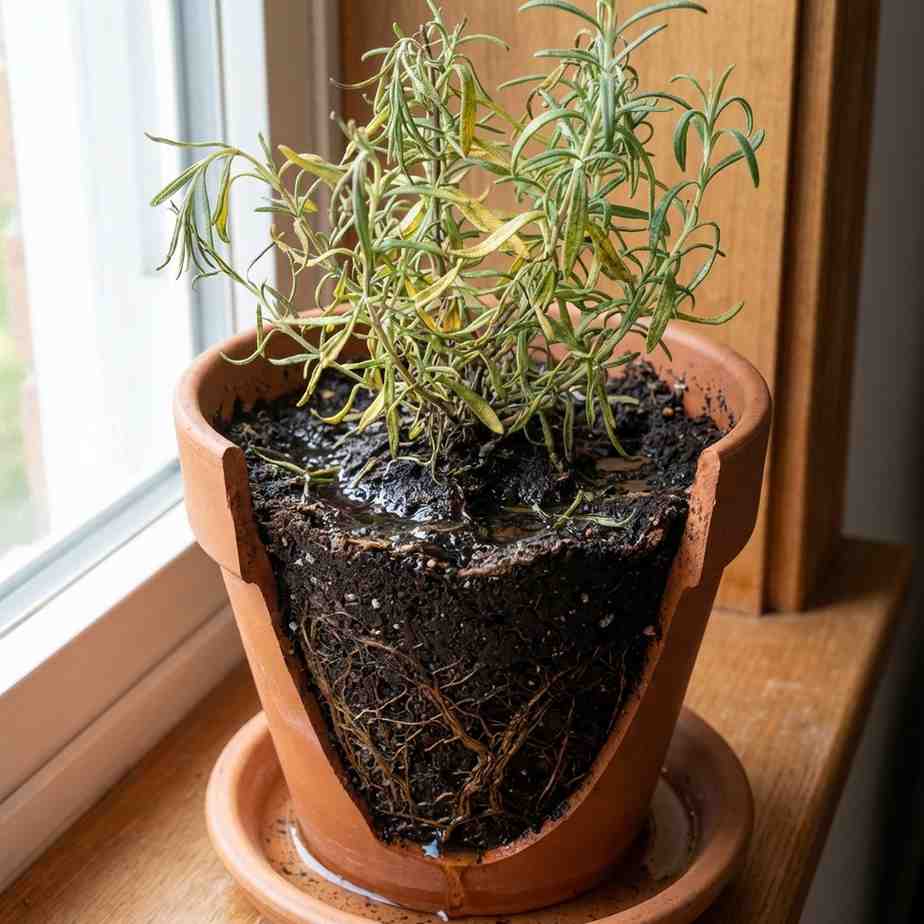
Good soil is essential for healthy root development.
- Soil feels dense and compact
- Water drains slowly
- Roots stay constantly wet
- Growth becomes weak
Best Soil Mix for Rosemary
A proper soil mix improves both drainage and airflow. This helps prevent root problems and supports healthy growth.
Simple adjustments can make a big difference.
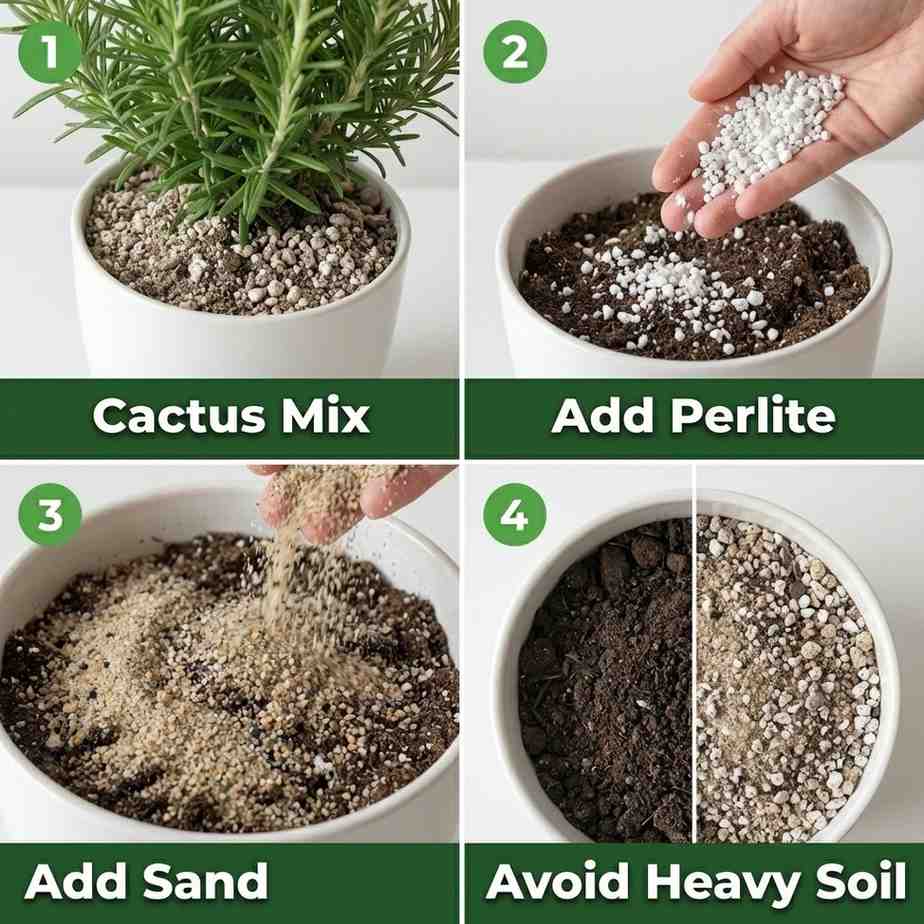
Using the right mix reduces most common issues.
- Use cactus or succulent mix
- Add perlite for drainage
- Mix in coarse sand
- Avoid heavy garden soil
Cause 4: Lack of Airflow
Indoors, air circulation is often limited. Rosemary naturally grows in open environments where air moves freely.
When air is stagnant, moisture builds up around the plant, increasing the risk of fungal issues.
I noticed that simply placing the plant near a slightly open window improved its condition.
- Leaves feel damp or sticky
- Fungal spots may appear
- Growth slows down
- Plant looks unhealthy overall
How to Improve Airflow
Improving airflow is simple but very effective. It helps reduce moisture buildup and keeps the plant healthy.
Even small changes can improve plant health significantly.
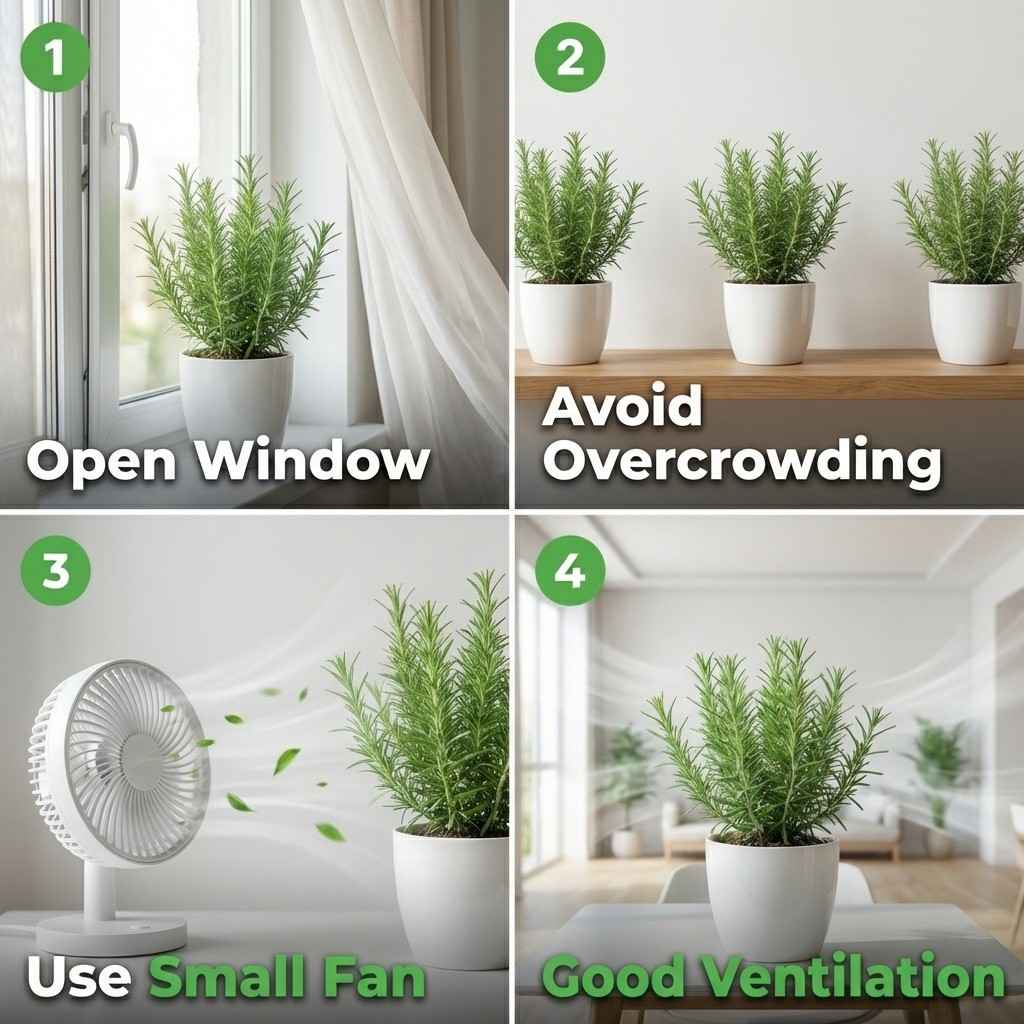
This is often overlooked but important.
- Place plant near open window
- Avoid overcrowding plants
- Use a small fan if needed
- Keep space well ventilated
Cause 5: Wrong Pot Size
Pot size plays a bigger role than most people realize. If the pot is too large, it holds excess moisture, which can lead to root rot. If it’s too small, roots become crowded and growth slows down.
In my case, I once repotted rosemary into a much larger pot thinking it would grow faster. Instead, the soil stayed wet longer, and the plant started declining.
Balance is key when choosing the right pot.
- Soil stays wet for too long (large pot)
- Roots become crowded (small pot)
- Growth slows down
- Plant looks unhealthy
How to Choose the Right Pot
The right pot size helps maintain proper moisture balance. It should support root growth without holding excess water.
Simple adjustments can prevent major problems.
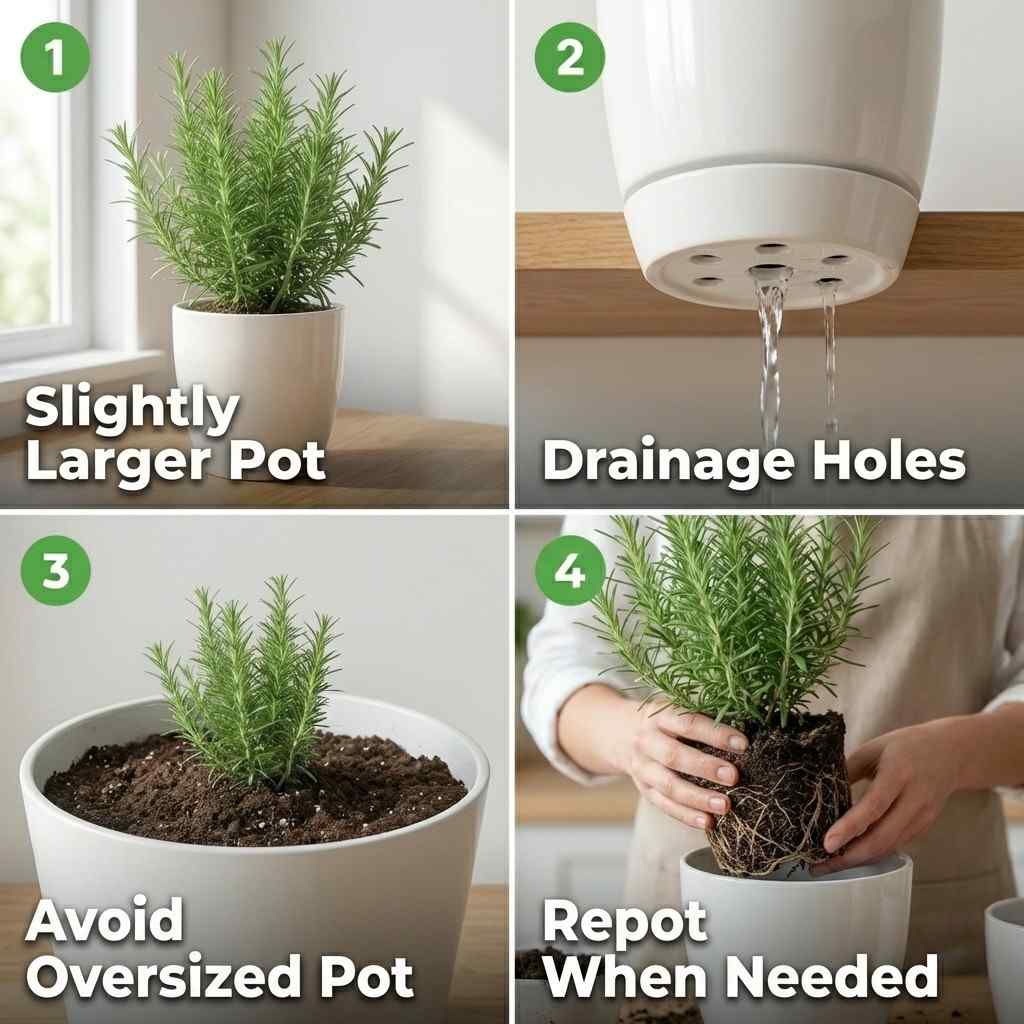
This step is often overlooked but very important.
- Choose pot 1–2 inches larger than root ball
- Always use drainage holes
- Avoid oversized containers
- Repot only when needed
Cause 6: Lack of Nutrients
While rosemary does not require heavy feeding, a complete lack of nutrients can weaken the plant over time. Without essential nutrients, growth becomes slow and leaves lose their color.
I noticed improvement after adding a mild fertilizer during the growing season. The plant became greener and more stable.
Balanced nutrition supports long-term health.
- Leaves appear pale or dull
- Slow or no new growth
- Weak plant structure
- Reduced overall health
How to Feed Rosemary Properly
Feeding should be light and controlled. Too much fertilizer can damage the plant, especially indoors.
Consistency matters more than quantity.
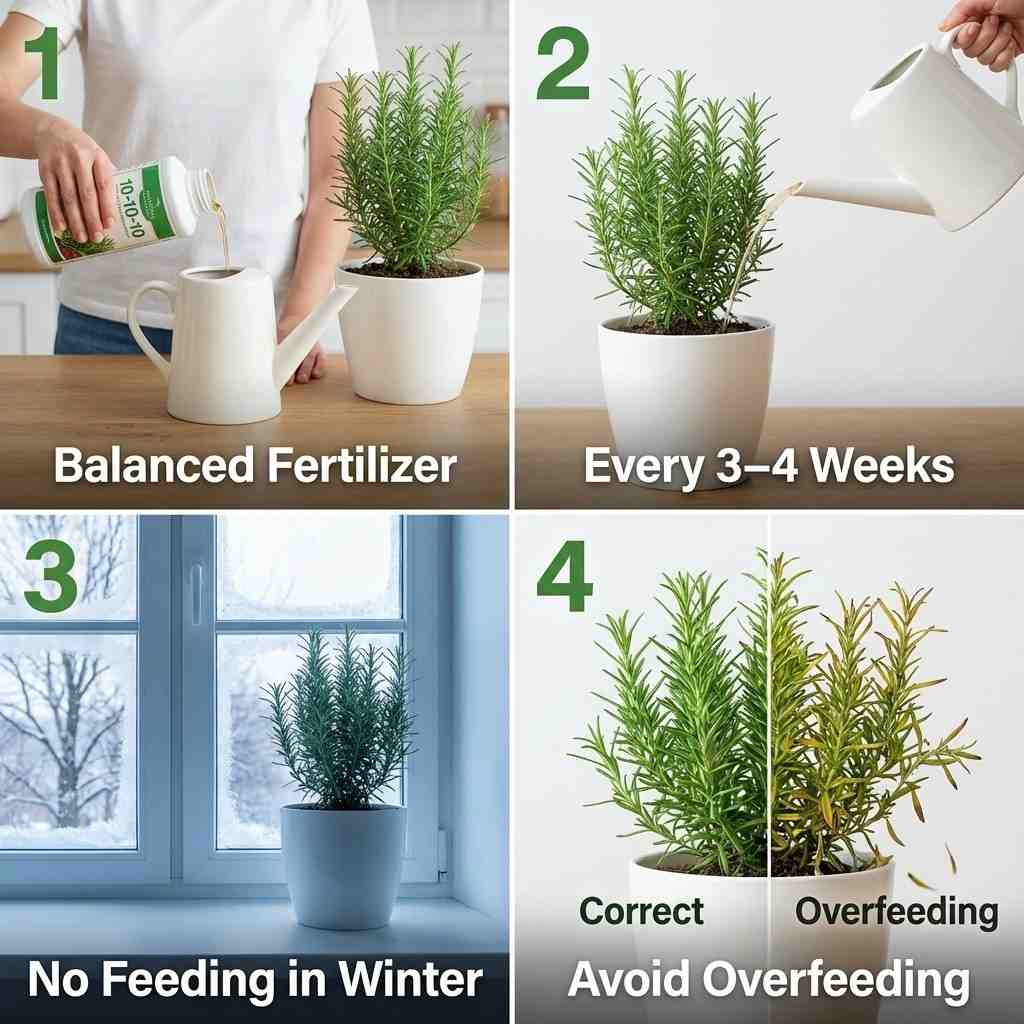
A simple feeding routine works best.
- Use balanced liquid fertilizer (like 10-10-10)
- Feed once every 3–4 weeks during growing season
- Avoid fertilizing in winter
- Do not overfeed
Cause 7: Temperature Stress
Rosemary prefers stable temperatures. Sudden changes can stress the plant and slow down growth.
Indoor environments sometimes expose plants to inconsistent temperatures, especially near heaters or air conditioning.
I once placed my plant near a heater, and within days, the leaves started drying.
- Leaves dry out quickly
- Edges turn brown
- Growth becomes irregular
- Plant looks stressed
How to Fix Temperature Issues
Maintaining a stable environment helps the plant stay healthy. Avoid placing it in extreme conditions.
Small changes in placement can make a big difference.
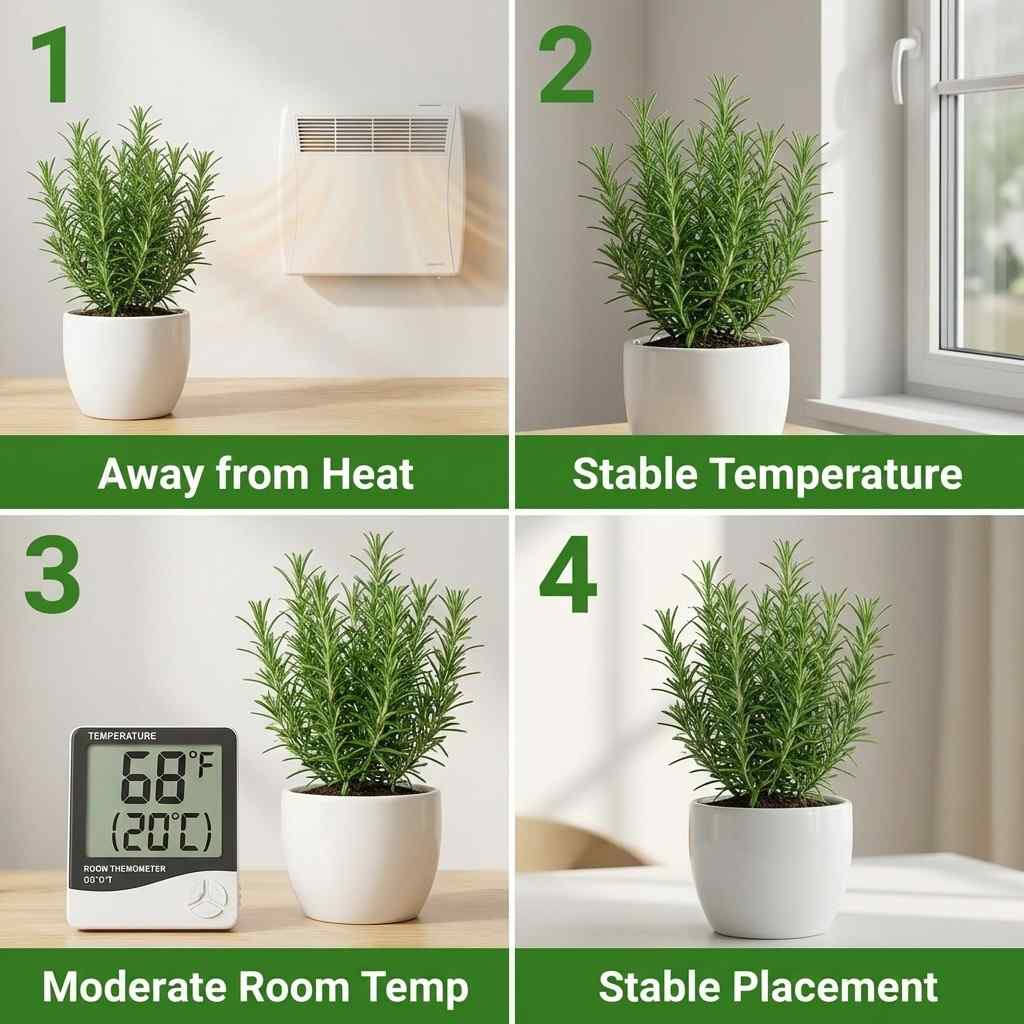
Consistency is key.
- Keep away from heaters and vents
- Avoid sudden temperature changes
- Maintain moderate room temperature
- Place in stable indoor environment
Cause 8: Root Damage or Transplant Shock
Repotting can sometimes stress the plant, especially if roots are disturbed. This can temporarily stop growth and make the plant look unhealthy.
I experienced this after repotting too aggressively. The plant stopped growing for a few weeks before recovering.
This is normal, but proper handling can reduce stress.
- Growth stops after repotting
- Leaves look weak or droopy
- No new growth appears
- Plant takes time to recover
How to Reduce Transplant Shock
Handling roots carefully during repotting helps reduce stress. Giving the plant time to adjust is important.
Recovery takes patience.
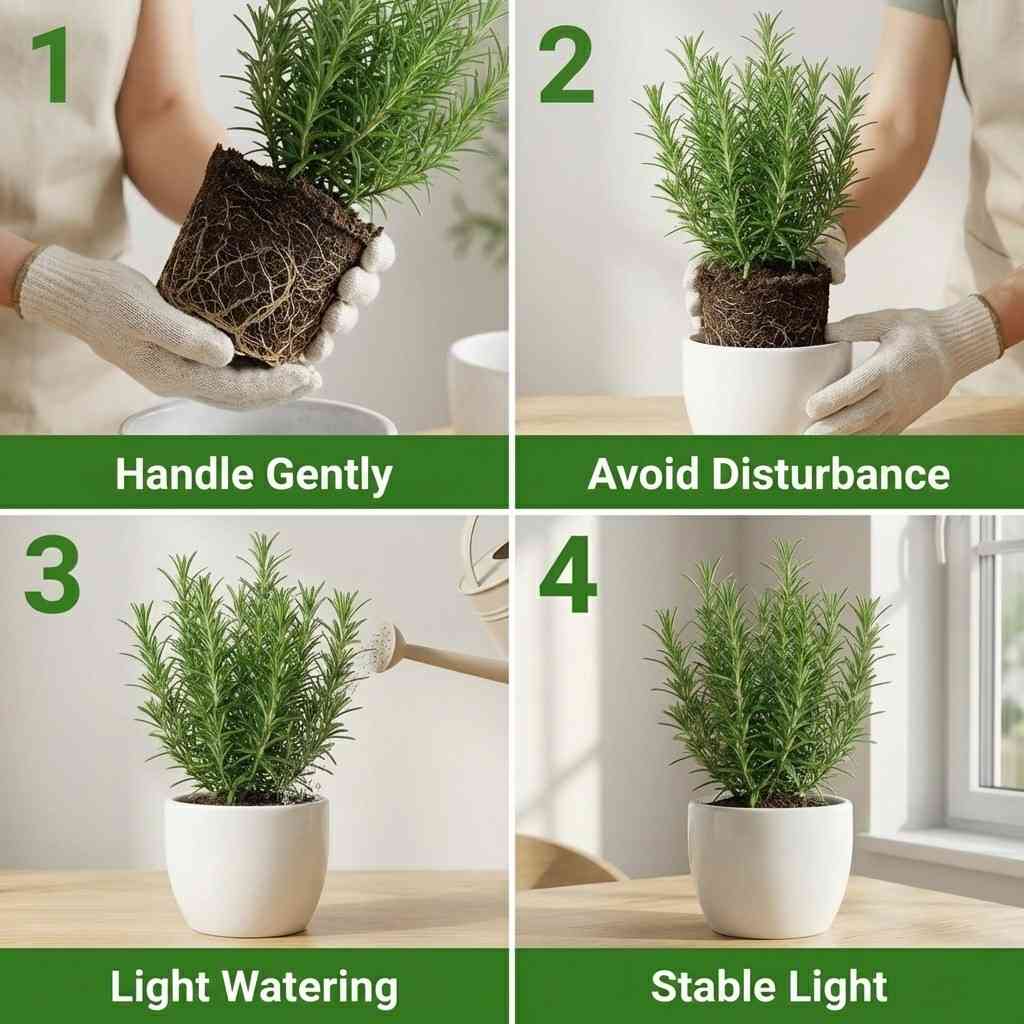
Proper technique makes a difference.
- Handle roots gently
- Avoid excessive root disturbance
- Water lightly after repotting
- Keep in stable light conditions
How to Revive a Dying Rosemary Plant
If your rosemary plant is dying, don’t panic. Most issues can be fixed with the right adjustments.
From my experience, recovery starts with identifying the main problem and fixing it step by step.
These steps can help bring your plant back to life.
- Improve light exposure immediately
- Adjust watering routine
- Check soil and drainage
- Trim dead or dry parts
- Provide stable environment
Quick Fix Summary Table
Here’s a quick summary of common problems and their solutions.
| Problem | Cause | Fix |
|---|---|---|
| Yellow leaves | Overwatering | Reduce watering |
| Dry leaves | Low humidity / heat | Adjust placement |
| Slow growth | Low light | Increase light |
| Weak plant | Poor soil | Improve soil mix |
| No growth | Lack of nutrients | Add light fertilizer |
Helpful Note for Indoor Gardeners
If you enjoy growing herbs indoors, you may find basil and mint much easier to manage compared to rosemary. They adapt quickly and are more forgiving.
Similarly, many indoor vegetables can thrive in controlled environments, but herbs like rosemary require more precise conditions to stay healthy.
My Personal Experience with Rosemary
At one point, my rosemary plant looked like it was beyond saving. Leaves were drying, and growth had stopped completely. I thought it was gone.
Instead of giving up, I moved it to a brighter spot, reduced watering, and changed the soil mix. Within a few weeks, I started seeing small signs of recovery.
That experience taught me that most rosemary problems are fixable if you act early.
FAQ:
Why is my rosemary plant drying indoors?
This is usually caused by low light, overwatering, or temperature stress. Identifying the exact cause helps fix the problem quickly.
Can a dying rosemary plant be saved?
Yes, in most cases. Adjusting light, watering, and soil conditions can help the plant recover.
How often should I water rosemary indoors?
Water only when the soil is completely dry. Overwatering is one of the biggest mistakes.
Does rosemary need fertilizer?
Yes, but only in small amounts. Use a balanced liquid fertilizer occasionally during the growing season.
Why is my rosemary not growing?
This is usually due to low light, poor soil, or lack of nutrients. Improving these conditions can restore growth.
Final Thoughts
If your rosemary plant is dying, don’t assume it’s too late. Most problems are caused by environmental factors that can be corrected.
Focus on improving light, watering habits, soil quality, and overall care. These changes can completely transform your plant.
With the right conditions, rosemary can recover and thrive indoors.