
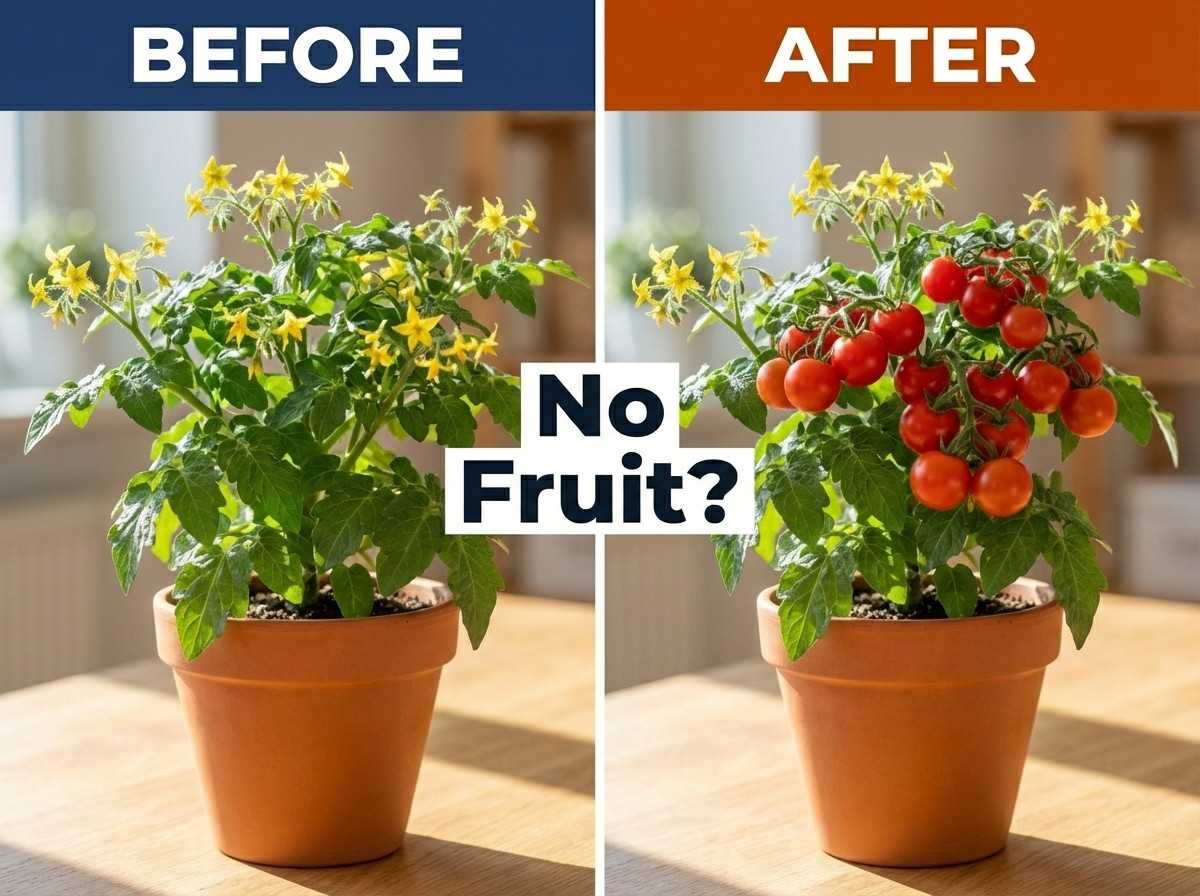
I started growing cherry tomatoes in small pots thinking it would be simple, but my cherry tomatoes in small pots struggled more than expected. The plants looked healthy at first, yet flowering and fruiting never happened the way I imagined.
At first, everything seems perfect. The plant grows fast, leaves look green, and the setup feels under control. But after a few weeks, problems start showing up—slow growth, weak stems, or flowers that never turn into fruit.
Growing tomatoes indoors in small pots is not difficult, but it is very precise. Small mistakes don’t show immediately, but they affect the plant’s ability to produce fruit later.
Why Small Pots Change Everything
When you grow cherry tomatoes in small pots, you are limiting the plant’s natural behavior. Outdoors, roots spread freely, nutrients are balanced naturally, and environmental changes are gradual.
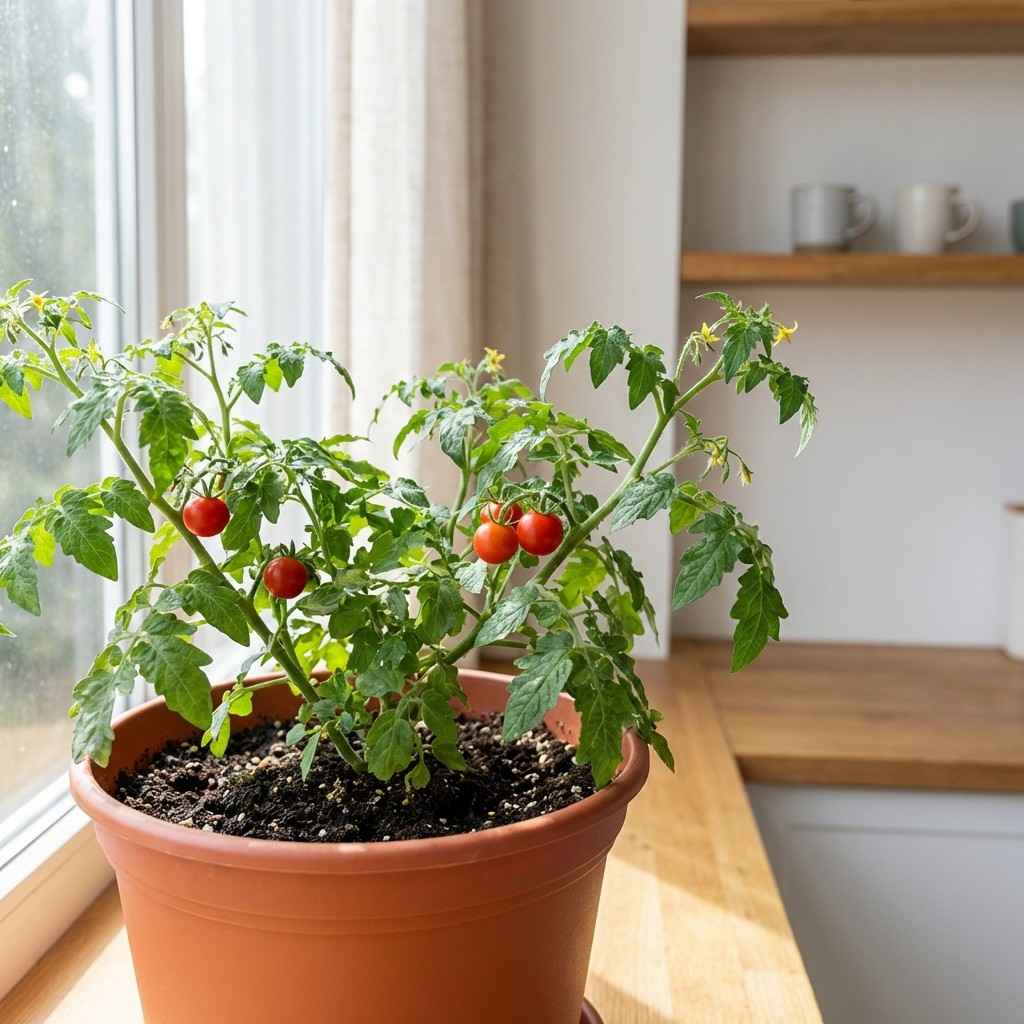
In a pot, especially a small one, everything becomes concentrated—water, nutrients, heat, and root pressure. This creates a completely different growing environment.
Understanding this is the key to solving most problems.
Quick Problem Identification Table
Use this table to quickly identify what might be going wrong with your plant.
| Symptom | Hidden Cause | Impact |
|---|---|---|
| Flowers but no fruit | Poor pollination | No tomatoes |
| Healthy leaves, slow growth | Root restriction | Delayed fruiting |
| Leaves curling | Microclimate stress | Reduced energy |
| Plant looks fine but inactive | Nutrient imbalance | No productivity |
Problem 1: Invisible Pollination Failure
This is one of the biggest indoor problems and most people don’t even realize it. Cherry tomatoes are self-pollinating, but indoors, there’s no wind or insects to help.
I had a plant full of flowers, and I was excited. But none of them turned into fruit. That’s when I realized pollination wasn’t happening.
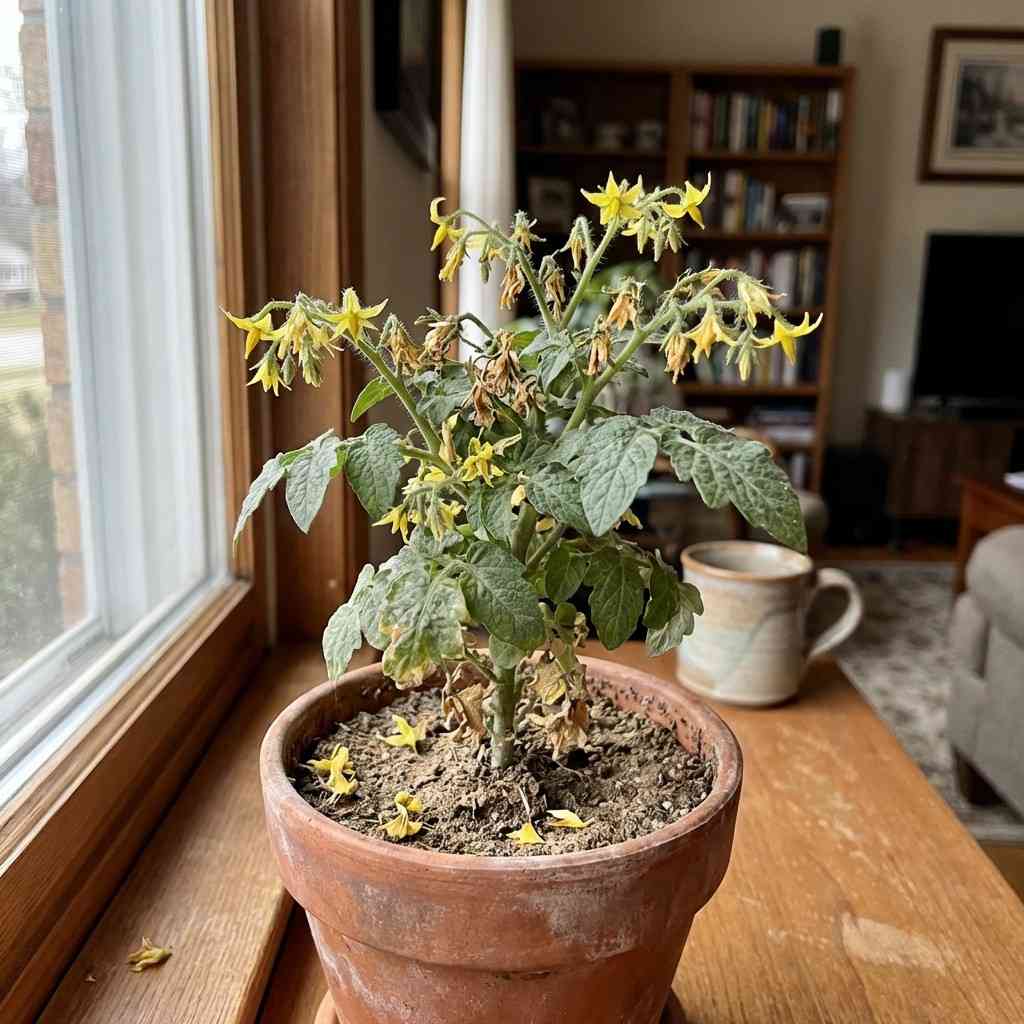
Without proper pollination, flowers simply dry and fall off.
- Flowers appear but drop quickly
- No fruit formation
- Plant looks healthy but unproductive
- Repeated flowering without results
Also Read: Grow Tomatoes Without Pollination
How to Fix Pollination
Once I started manually helping pollination, results changed within days. It’s simple but extremely effective.
This is one of the fastest fixes you can apply.
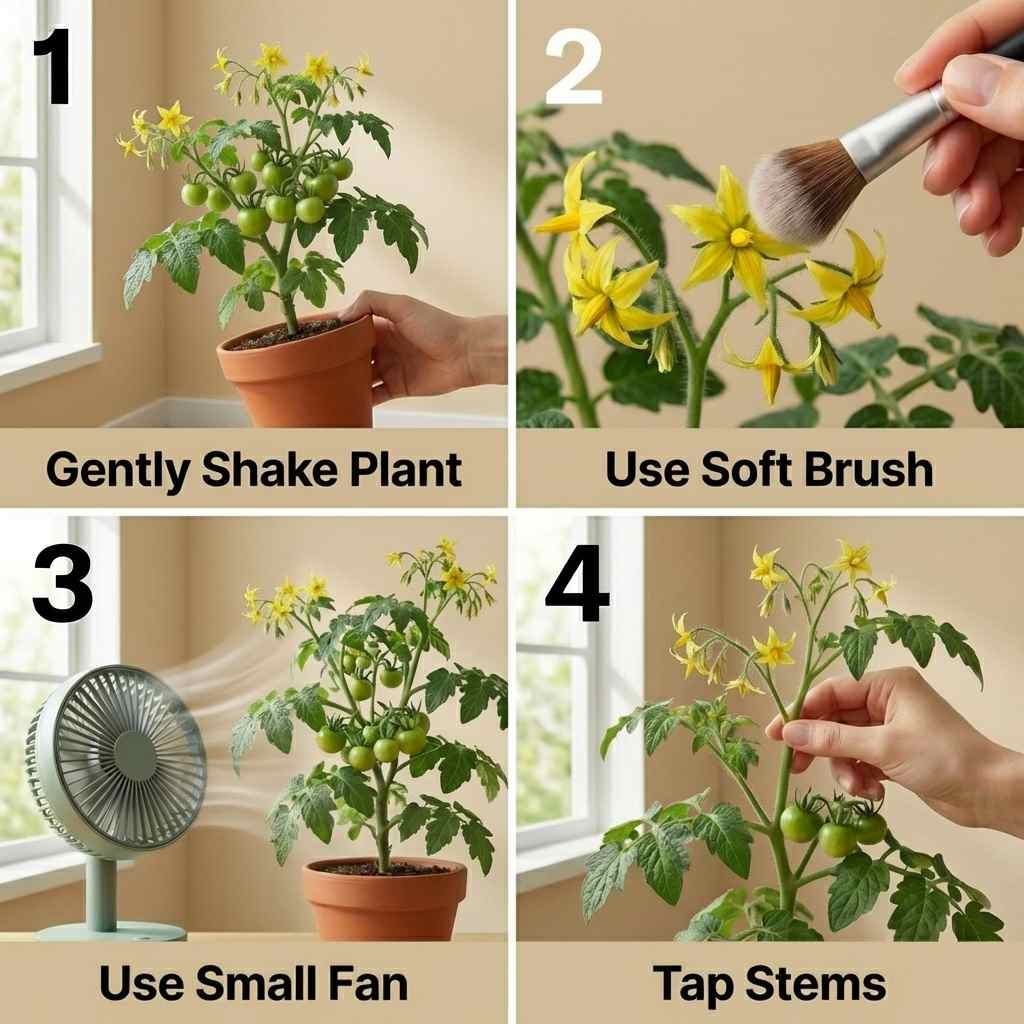
Consistency is key.
- Gently shake the plant daily
- Use a soft brush on flowers
- Use a small fan to simulate airflow
- Tap stems lightly during flowering
Problem 2: Root Zone Heat Build-Up
This is a hidden issue that rarely gets discussed. Small pots heat up quickly, especially indoors near windows or under lights.
When roots get too warm, they stop functioning properly. This affects nutrient absorption and slows down growth.
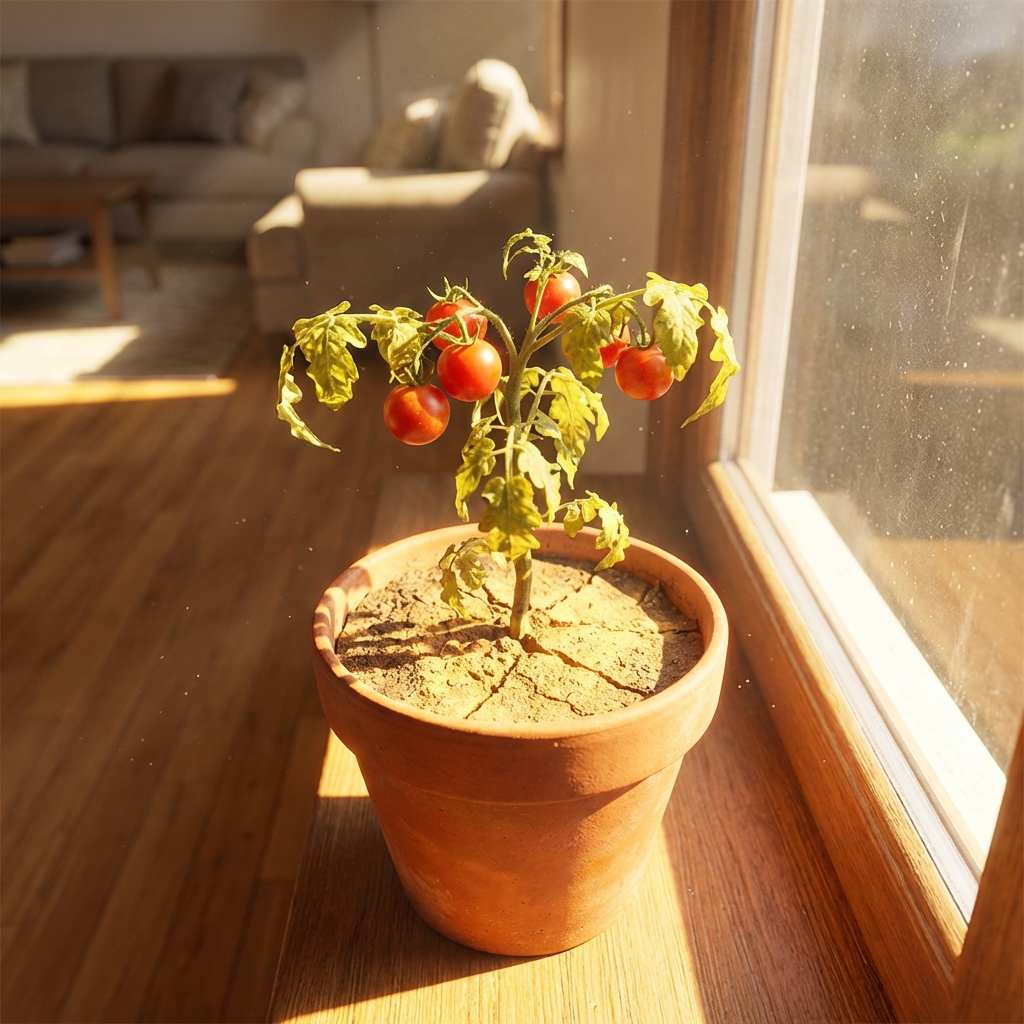
I noticed my plant looked stressed during the day but recovered slightly at night. The issue was root temperature.
- Leaves curl during warm hours
- Growth slows down
- Plant looks stressed despite watering
- No steady development
How to Fix Root Heat Issues
Cooling the root zone can significantly improve plant health. This is often ignored but very important in small containers.
Even simple adjustments can help.
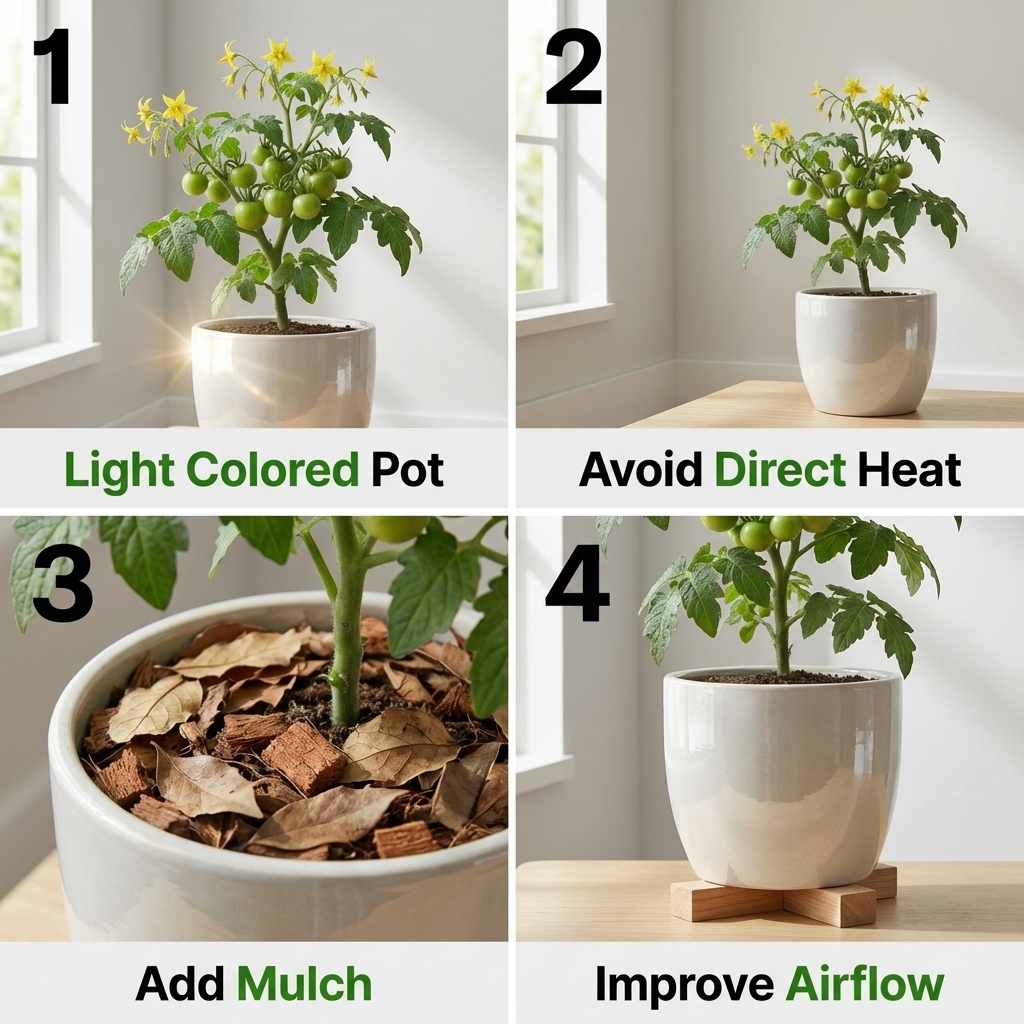
Think of roots as the plant’s engine.
- Use light-colored pots
- Avoid direct heat exposure on container
- Add mulch layer on soil
- Keep pot slightly elevated for airflow
Problem 3: Nutrient Lockout (Even When Feeding Correctly)
Sometimes the plant is not lacking nutrients it just cannot absorb them. This is called nutrient lockout.
I faced this when I was feeding regularly, but the plant still showed weak growth. The issue was not feeding it was absorption.
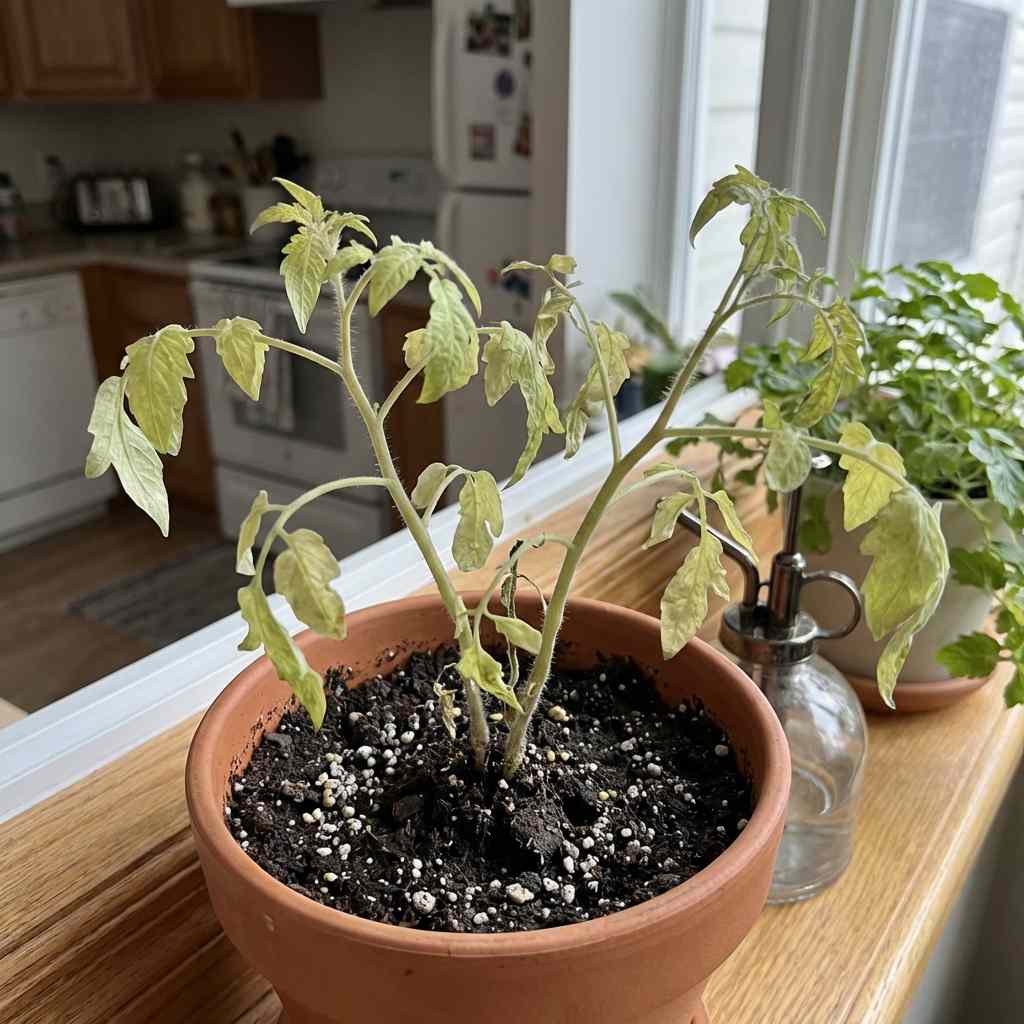
This usually happens due to pH imbalance or salt buildup.
- Leaves look dull despite feeding
- Growth becomes inconsistent
- No fruit development
- Plant appears stuck
How to Fix Nutrient Lockout
Fixing this requires resetting the soil environment.
Once corrected, the plant starts responding quickly.
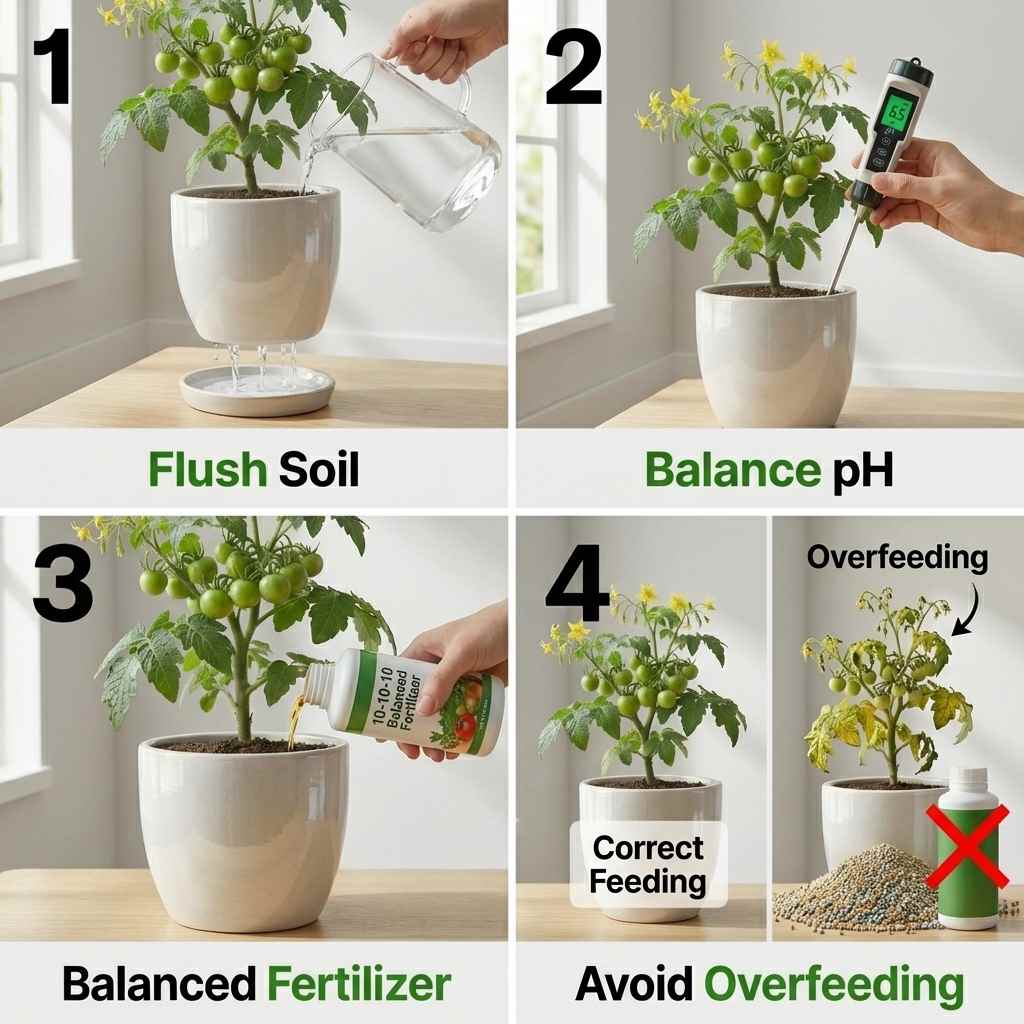
This is a game-changing step.
- Flush soil with clean water
- Maintain balanced pH (around 6–6.5)
- Use balanced fertilizer like 10-10-10
- Avoid overfeeding
Problem 4: Light Direction Instead of Light Amount
Most people focus on how much light the plant gets, but direction matters just as much. If light comes only from one side, the plant grows unevenly.
I noticed my plant leaning heavily toward one side, and fruiting slowed down. The plant was using energy to adjust its structure instead of producing fruit.
This creates imbalance in growth.
- Plant bends toward light
- Uneven leaf growth
- Weak structure
- Reduced fruit production
How to Fix Light Direction
Balancing light exposure helps the plant grow evenly and use energy efficiently.
This improves flowering and fruiting.
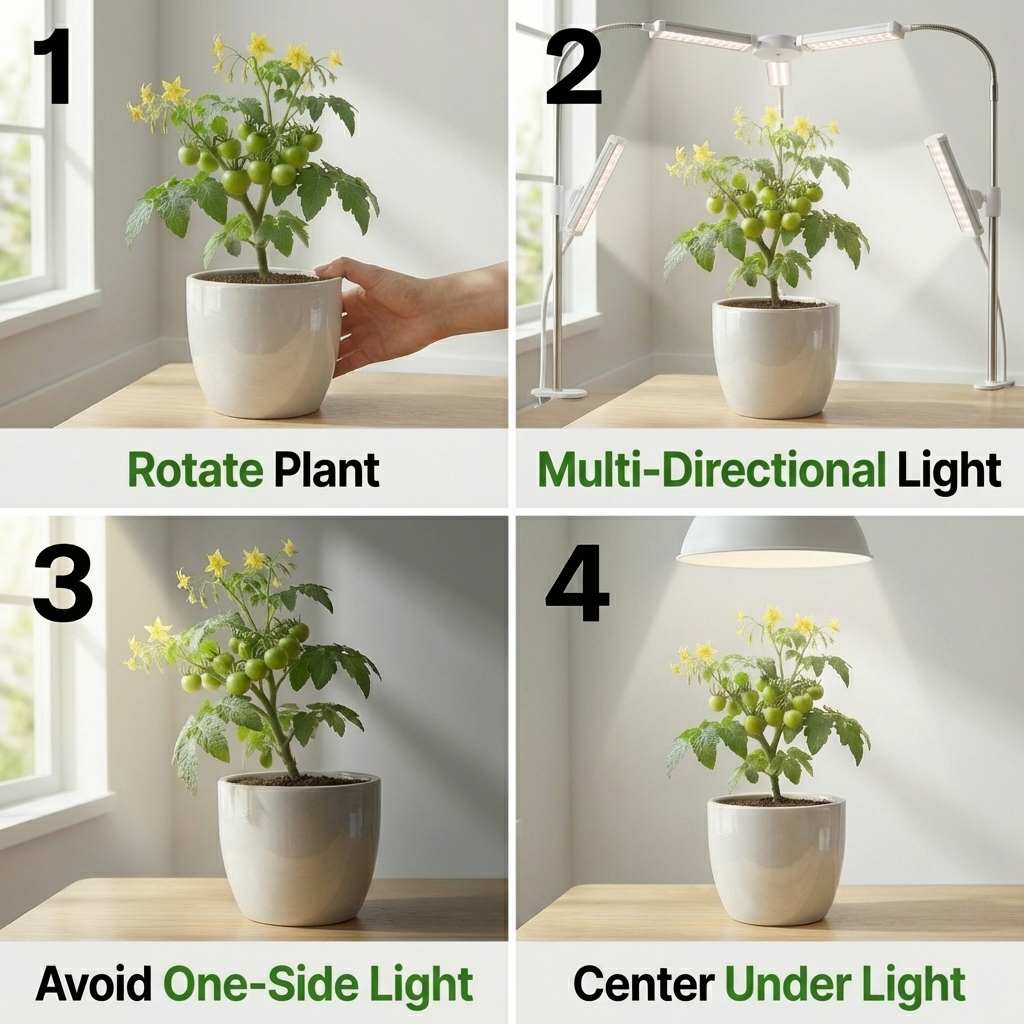
Small adjustments make a big difference.
- Rotate plant every few days
- Use multi-directional light if possible
- Avoid single-side lighting
- Keep plant centered under light source
Problem 5: Energy Drain from Excess Leaves
Sometimes the plant grows too many leaves, which seems like a good sign—but it can actually reduce fruit production. The plant uses most of its energy to maintain foliage instead of producing tomatoes.
I had a plant that looked extremely lush, but fruiting was very poor. Once I trimmed excess leaves, the plant redirected its energy and started producing better.
This is a subtle but powerful factor.
- Very dense leafy growth
- Few or no fruits
- Shaded inner plant area
- Reduced airflow
How to Fix It
Pruning helps balance the plant’s energy. It allows light and air to reach important parts of the plant.
Done correctly, it improves productivity.
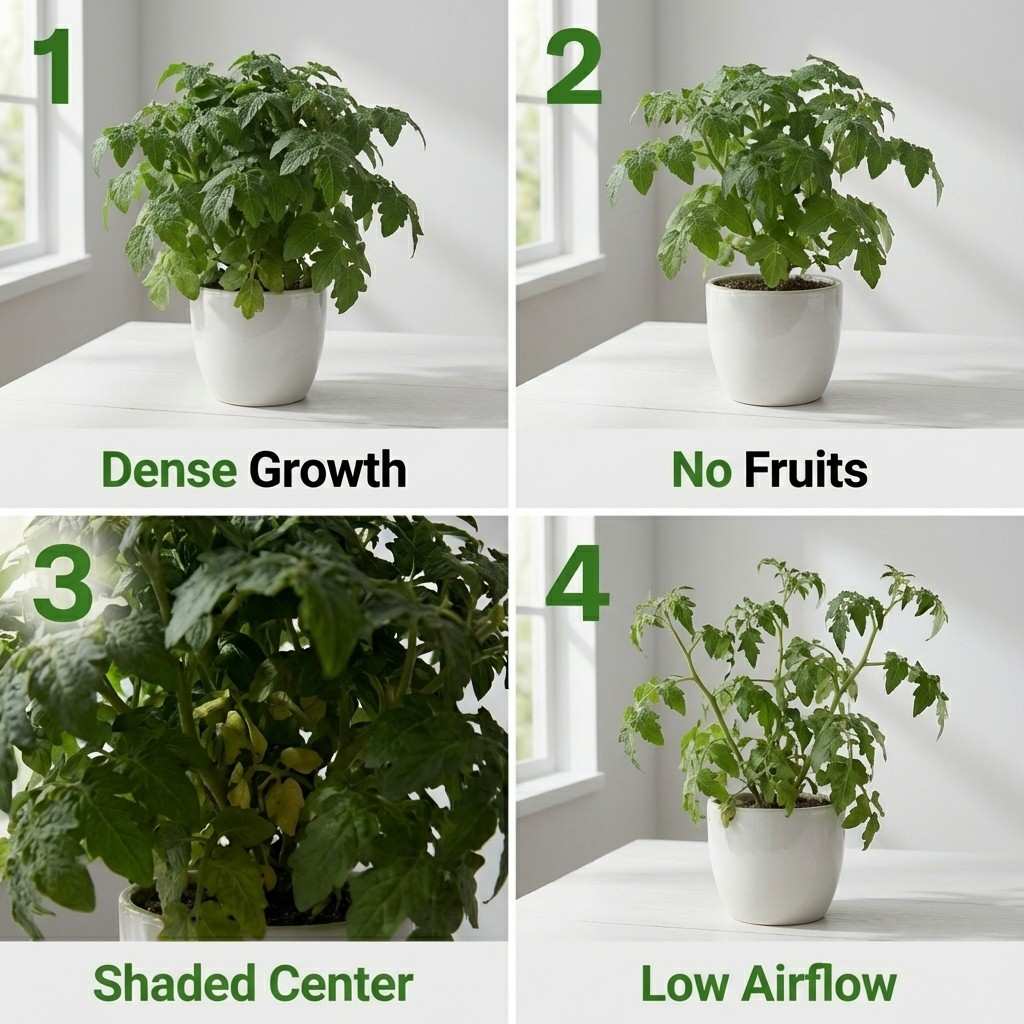
A little trimming goes a long way.
- Remove lower leaves
- Trim excess dense growth
- Improve airflow around plant
- Focus on fruiting branches
Problem 6: Micro Nutrient Deficiency (Often Ignored)
Even when using fertilizer, plants can lack essential micronutrients like calcium, magnesium, or iron. These are required in small amounts but play a major role in fruit development.
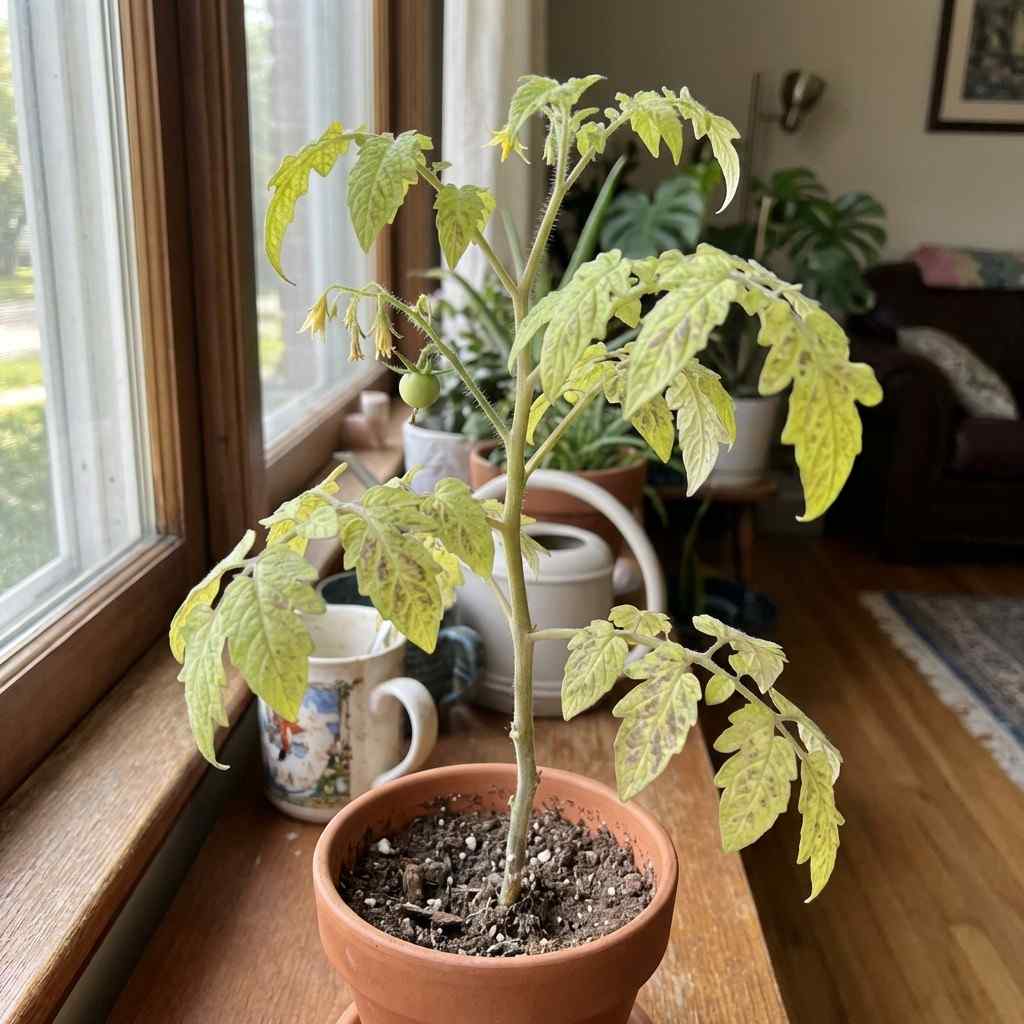
I noticed small flowers forming but dropping early. Adding a calcium-based supplement helped stabilize fruit development.
Micronutrients are often the missing piece.
- Weak flowers
- Poor fruit set
- Leaf discoloration
- Slow development
How to Fix It
Adding the right supplements can improve plant performance quickly.
This supports both flowering and fruiting stages.
Balance is key.
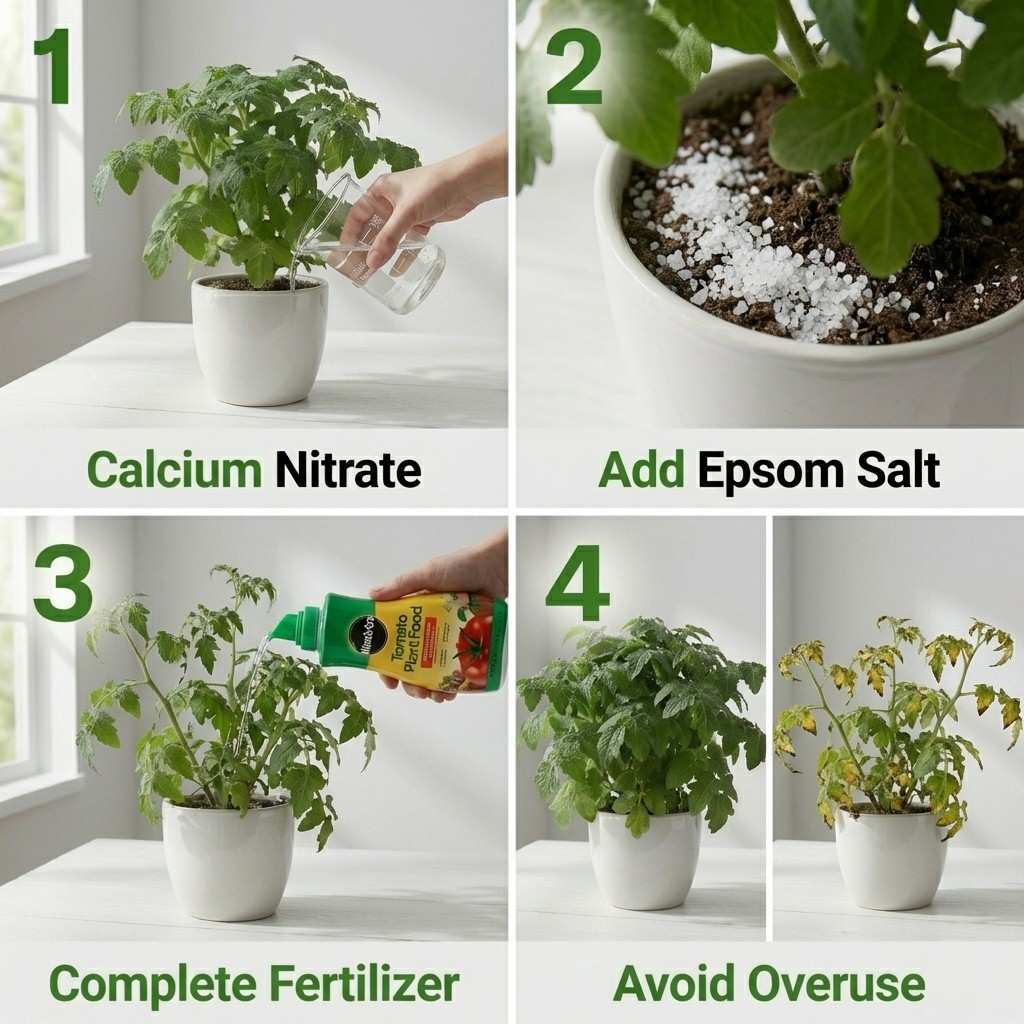
- Use calcium nitrate occasionally
- Add Epsom salt (magnesium source)
- Use complete fertilizer like Miracle-Gro Tomato Plant Food
- Avoid overuse
Problem 7: Air Stagnation (Silent Growth Killer)
Indoor plants often suffer from poor air circulation. Without airflow, plants struggle with gas exchange, which affects overall health and fruit production.
Once I added a small fan near my plant, I noticed stronger stems and better flowering.
Air movement is more important than it seems.
- Weak stems
- Reduced flowering
- Humidity buildup
- Slow plant activity
How to Fix It
Improving airflow can significantly boost plant performance.
This creates a more natural environment.
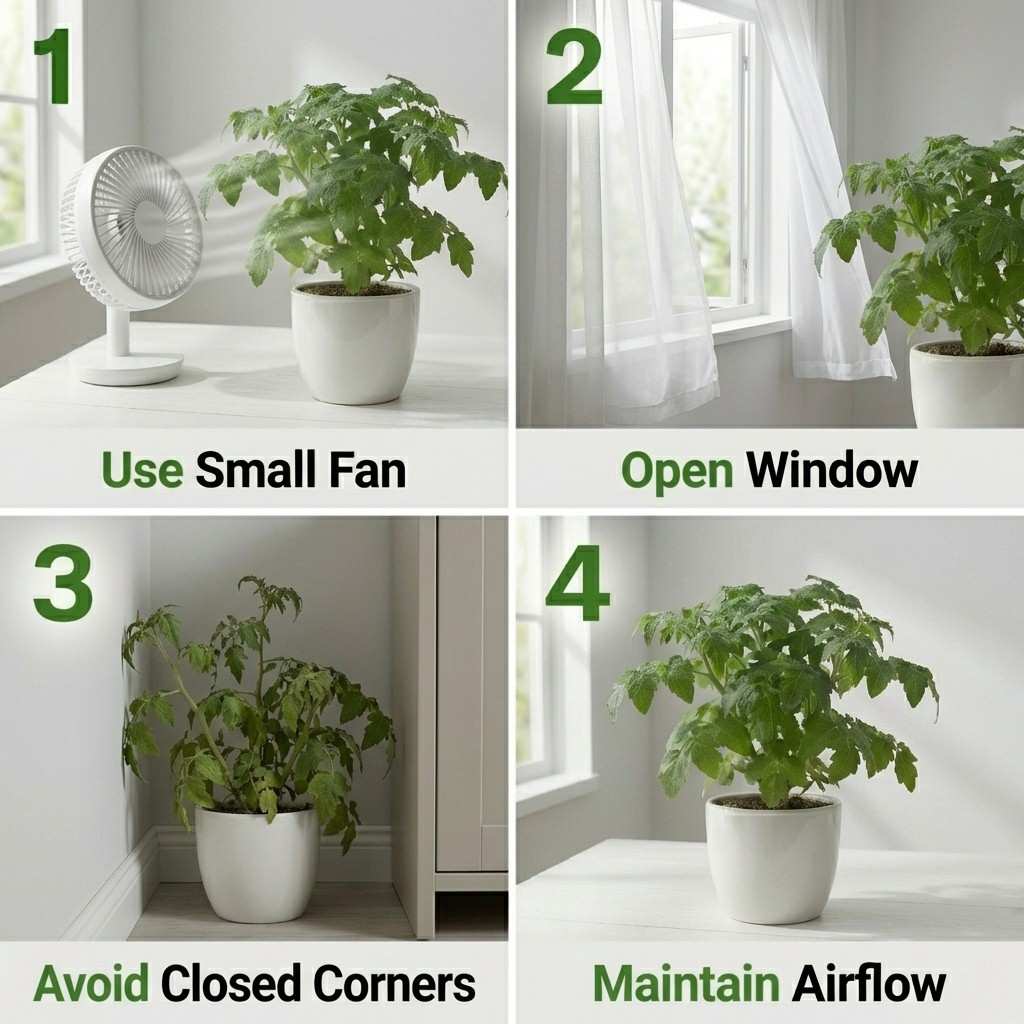
Simple solutions work best.
- Use a small fan nearby
- Open windows when possible
- Avoid placing plants in closed corners
- Maintain gentle air movement
Problem 8: Flower Drop Due to Stress Signals
Sometimes the plant produces flowers but drops them before fruit forms. This happens when the plant senses stress.
I experienced this when my watering and light schedule kept changing. The plant responded by dropping flowers to conserve energy.
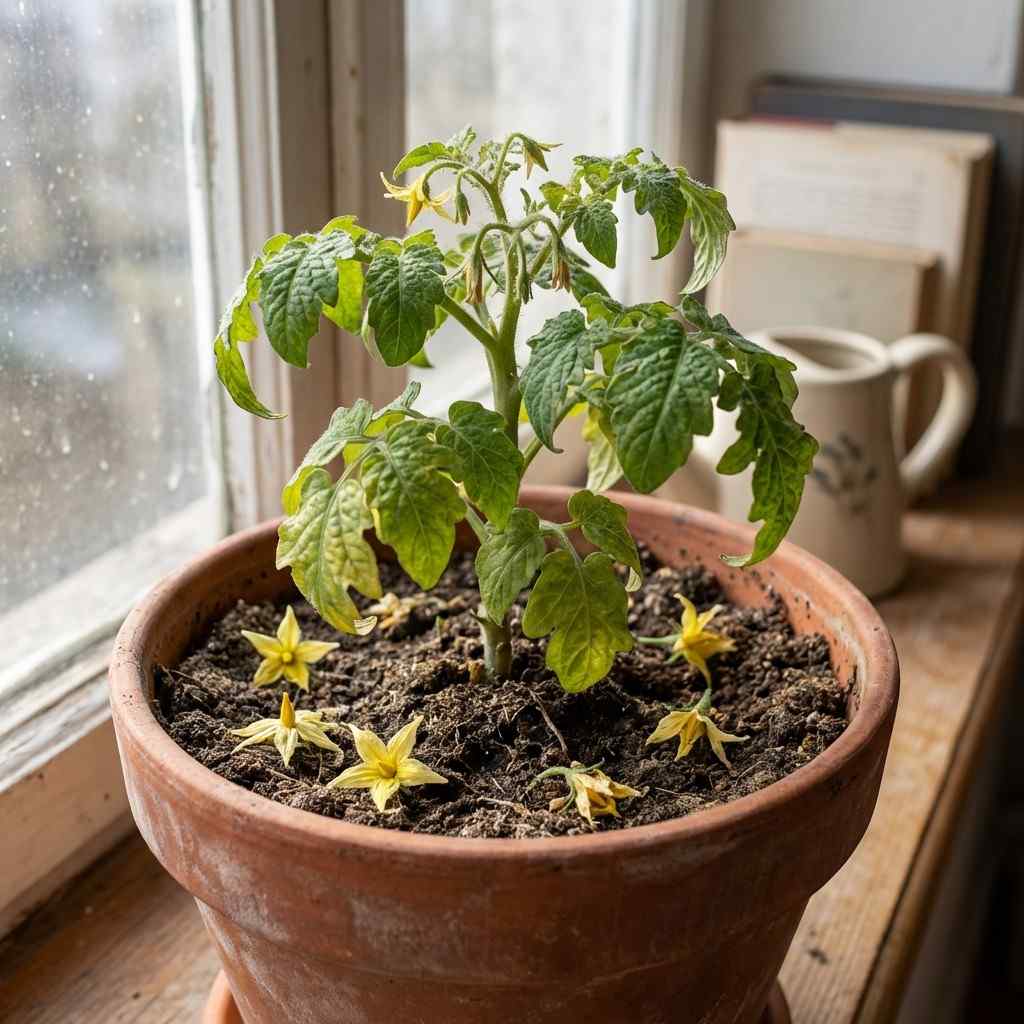
This is a survival response.
- Flowers fall off early
- No fruit formation
- Plant appears unstable
- Growth becomes inconsistent
How to Fix It
Stability is the key to preventing flower drop.
The plant needs predictable conditions.
Consistency leads to success.
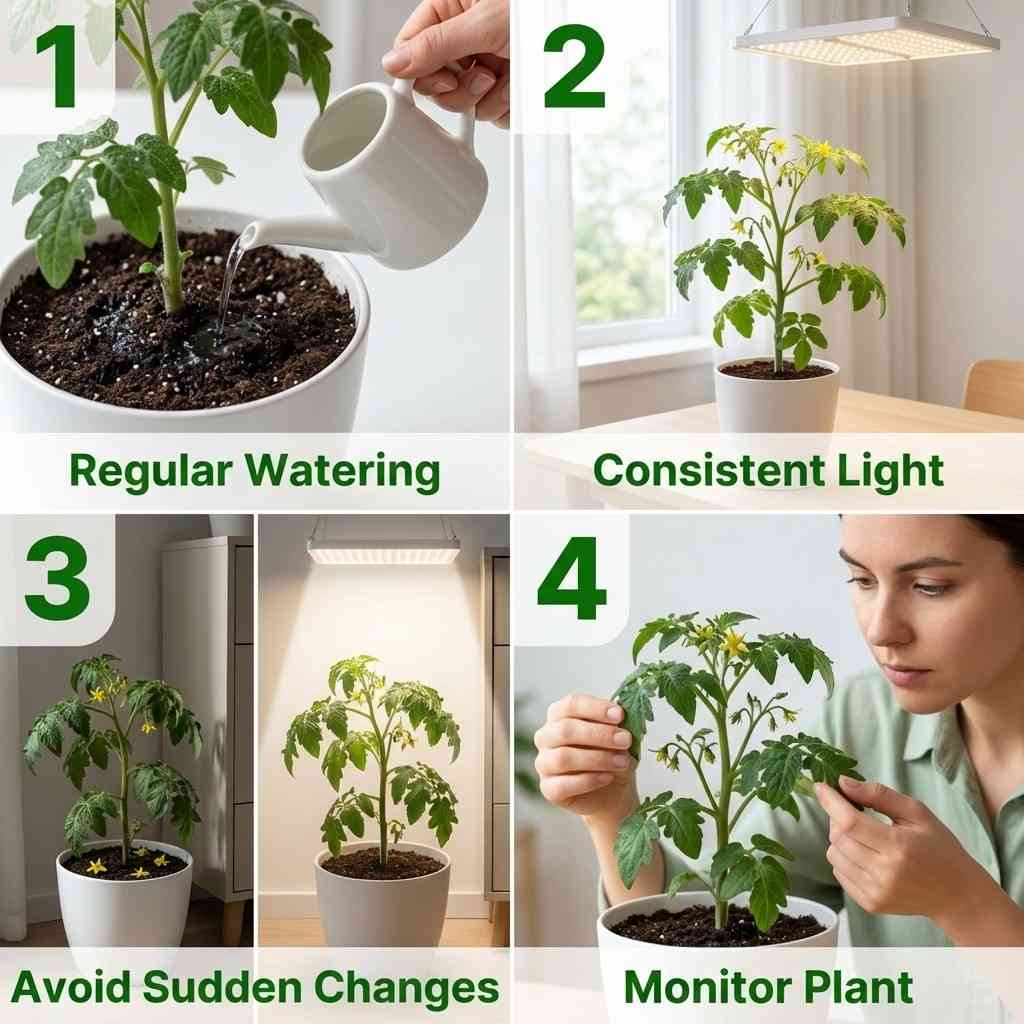
- Maintain regular watering schedule
- Keep light exposure consistent
- Avoid sudden changes
- Monitor plant closely
Best Fertilizer Strategy for Small Pots
Fertilizing correctly is one of the most important factors for growing cherry tomatoes in small pots. Since nutrients are limited, proper feeding is essential.
From my experience, switching to a tomato-specific fertilizer made a huge difference in fruit production.
The right balance supports both growth and fruiting.
- Use 10-10-10 for early growth
- Switch to 5-10-10 for flowering
- Use Miracle-Gro Tomato Plant Food
- Feed every 2 weeks lightly
Quick Fix Summary Table
| Problem | Cause | Solution |
|---|---|---|
| No fruit | No pollination | Manual pollination |
| Weak growth | Root heat | Cool root zone |
| Leaf-heavy plant | Energy imbalance | Pruning |
| Flower drop | Stress | Stabilize care |
| Poor fruiting | Nutrient imbalance | Adjust fertilizer |
My Personal Breakthrough Moment
The biggest change happened when I stopped treating the plant like a regular indoor plant and started thinking about fruit production specifically.
Once I focused on pollination, light intensity, and nutrient balance together, the plant completely transformed.
Within a couple of weeks, I started seeing actual tomatoes forming instead of just flowers.
A Quick Note for Indoor Growers
If you’ve grown herbs like basil or mint indoors, you may find them much easier to manage. They tolerate indoor conditions better than fruiting plants.
Cherry tomatoes require more precision, similar to many indoor vegetables that depend on light, nutrients, and balance to produce food.
Frequently Asked Questions (FAQ)
Why are my cherry tomatoes flowering but not producing fruit?
This is usually due to lack of pollination or nutrient imbalance.
How often should I fertilize cherry tomatoes in pots?
Light feeding every 2 weeks works best, depending on growth stage.
Can cherry tomatoes grow well indoors?
Yes, but they require strong light, proper nutrients, and airflow.
What is the biggest mistake beginners make?
Ignoring pollination and focusing only on watering.
Final Thoughts
Growing cherry tomatoes in small pots indoors is all about balance. Small changes can have a big impact on results.
If your plant is struggling, don’t give up. Identify the exact issue and fix it step by step.
Once everything is balanced, the plant will naturally start producing healthy tomatoes.