
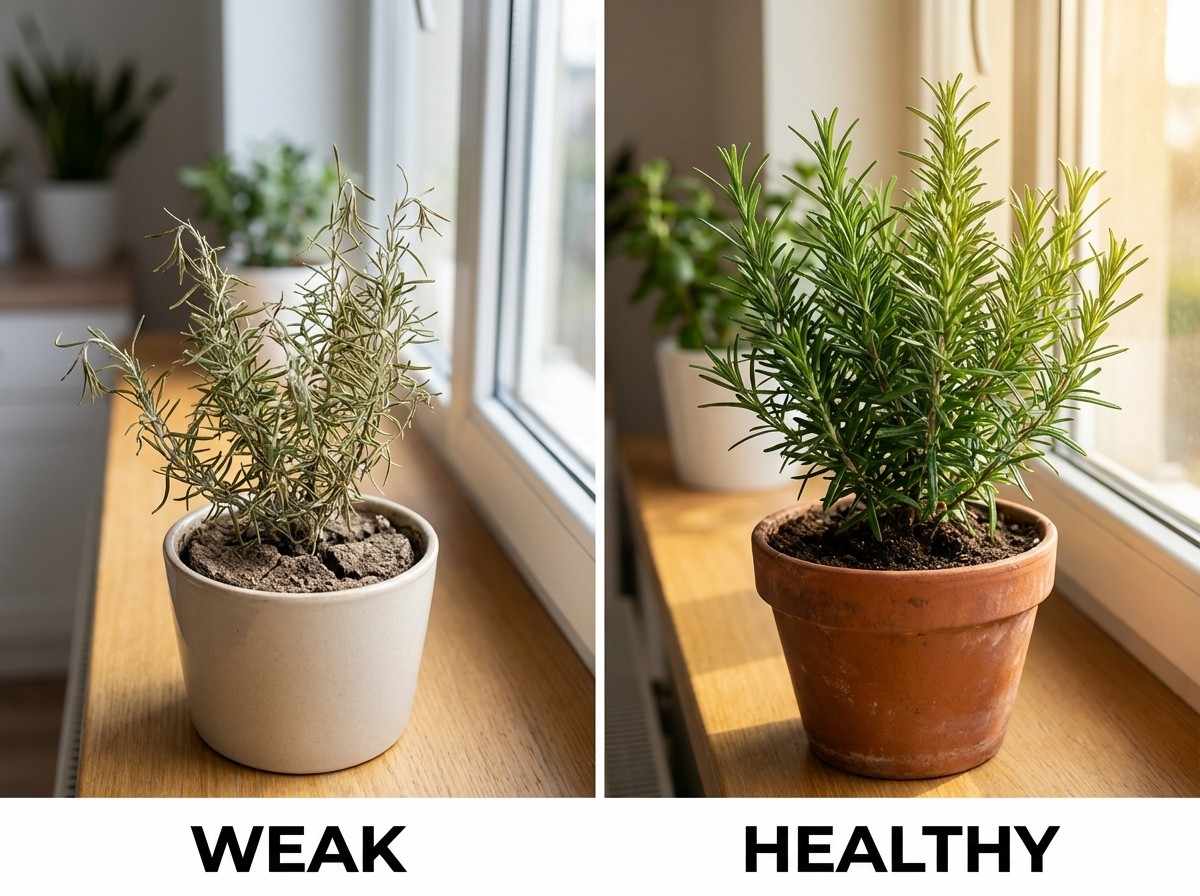
There is something deeply satisfying about growing rosemary indoors. You reach for a sprig while cooking, the kitchen fills with that woody, pine-like scent, and for a moment, life feels uncomplicated.
But there is something quietly frustrating about a rosemary plant that refuses to grow. It doesn’t collapse or die dramatically, it just stays the same. Weeks pass, then months, and nothing really changes. I’ve been there, staring at a plant that looked alive but felt completely stuck.
At first, it’s easy to blame watering or sunlight. But rosemary doesn’t usually fail because of one obvious mistake. It struggles when multiple small conditions don’t match what it naturally expects.
Once you understand that, everything starts making more sense. The plant isn’t being difficult, it’s just responding to an environment that doesn’t fully support it.
Why Rosemary Struggles Indoors More Than Other Herbs
Rosemary comes from dry, sunny, and windy regions. It’s used to intense light, fast-draining soil, and constant air movement.
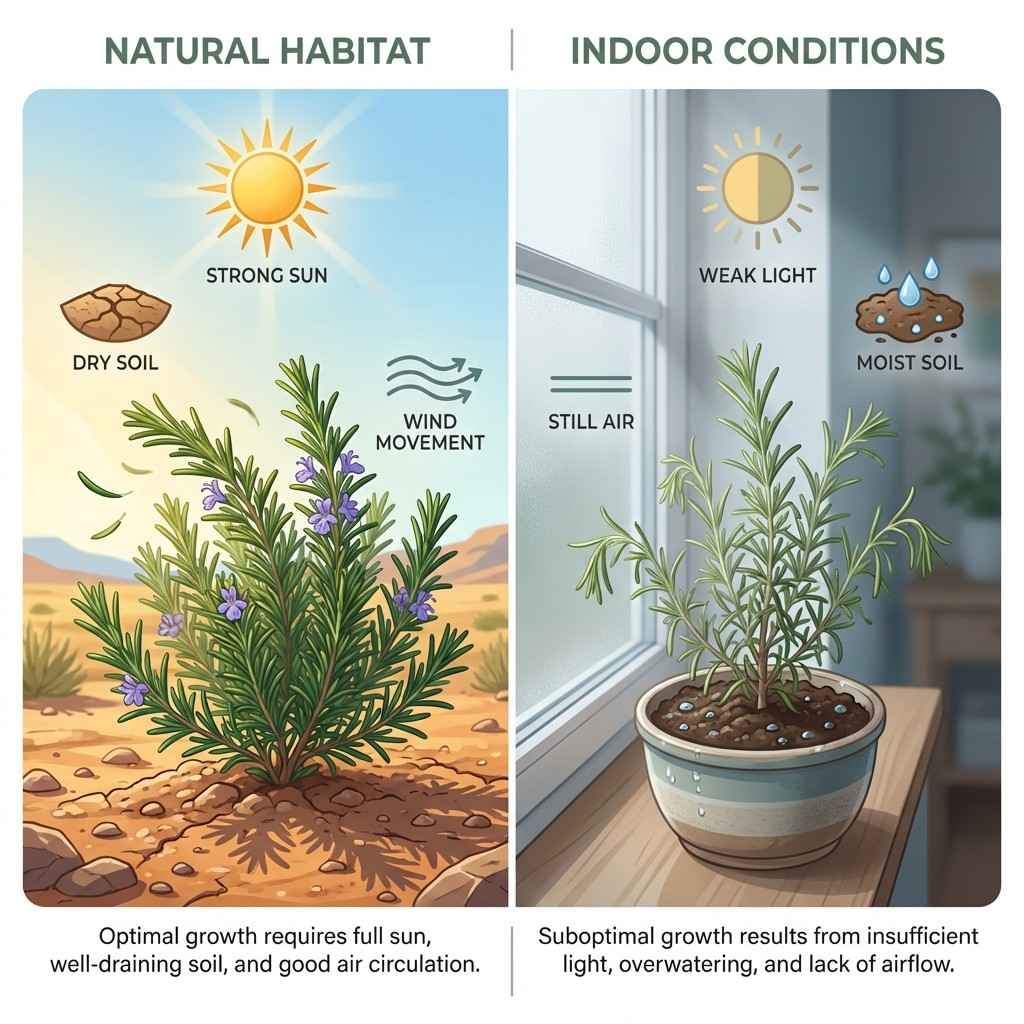
Indoors, we unknowingly create the opposite setup: less light, more moisture, and still air. The plant survives, but it doesn’t thrive.
| Natural Environment | Indoor Condition | Effect on Plant |
|---|---|---|
| Strong direct sunlight | Filtered window light | Low energy production |
| Dry, rocky soil | Moist potting mix | Root stress |
| Open airflow | Still indoor air | Weak growth |
This mismatch is the foundation of most indoor rosemary problems.
Problem 1. Rosemary Plant Not Producing New Growth Indoors
This is often the first thing people notice. The plant looks stable, maybe even healthy but it just doesn’t grow.
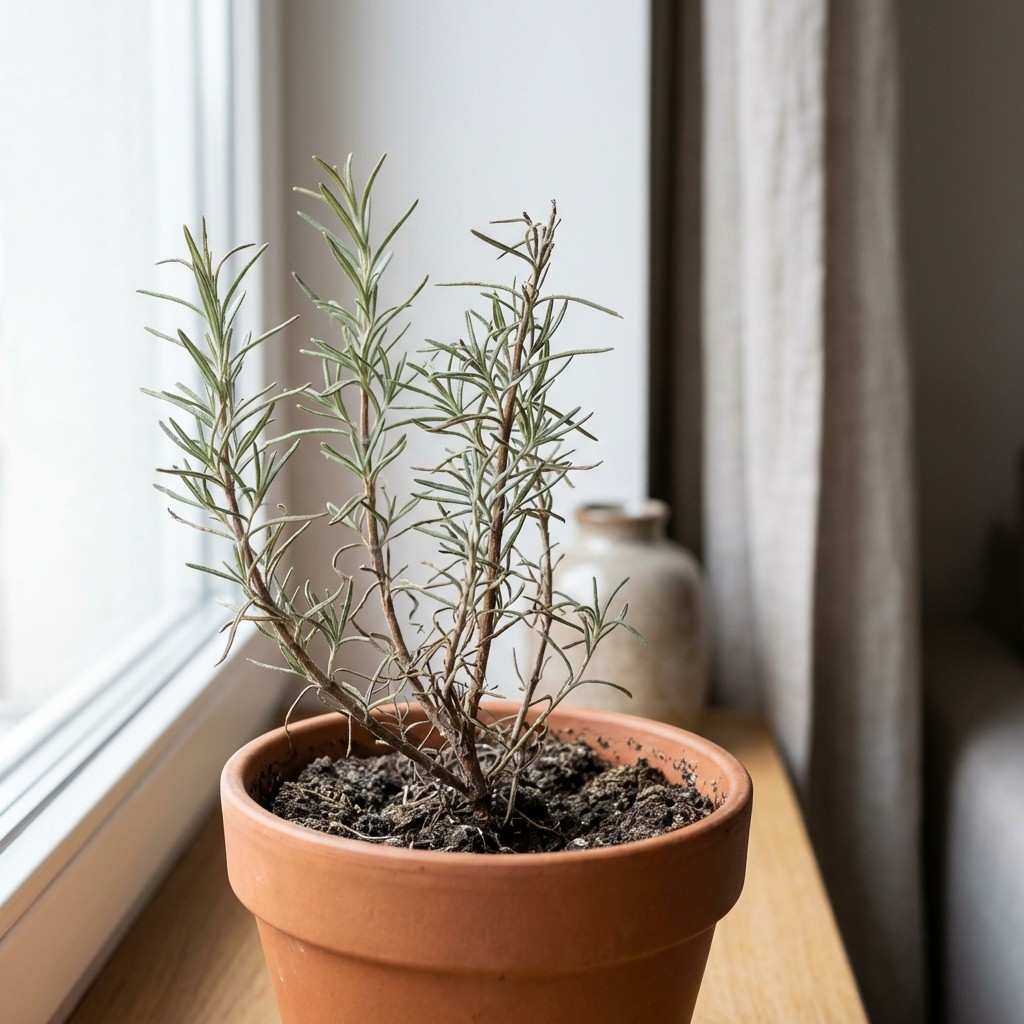
I had one Rosemary plant that stayed exactly the same for nearly a month. No new shoots, no expansion. It felt like it had paused.
What’s actually happening is simple: the plant doesn’t have enough energy to grow.
What Causes Growth to Stop
Growth depends on photosynthesis, and that depends on light. Without enough light, the plant switches into maintenance mode instead of growth mode.
- Less than 5–6 hours of strong light daily
- Placement too far from window
- Cloudy or shaded indoor environment
- Seasonal slowdown during winter
How to Fix It
Instead of adjusting everything, fix the main driver first light.
- Place the Rosemary plant in the brightest available window
- Use a full-spectrum grow light if needed
- Rotate the plant every few days
- Avoid constantly moving it around
Once light improves, new growth often returns without needing anything else.
Problem 2. Rosemary Plant Turning Black at Tips Indoors
Black tips can feel alarming. It looks like something serious is happening, and sometimes it is but not always for the reason you think.
In many cases, it’s not disease. It’s the plant reacting to stress it can’t manage properly.
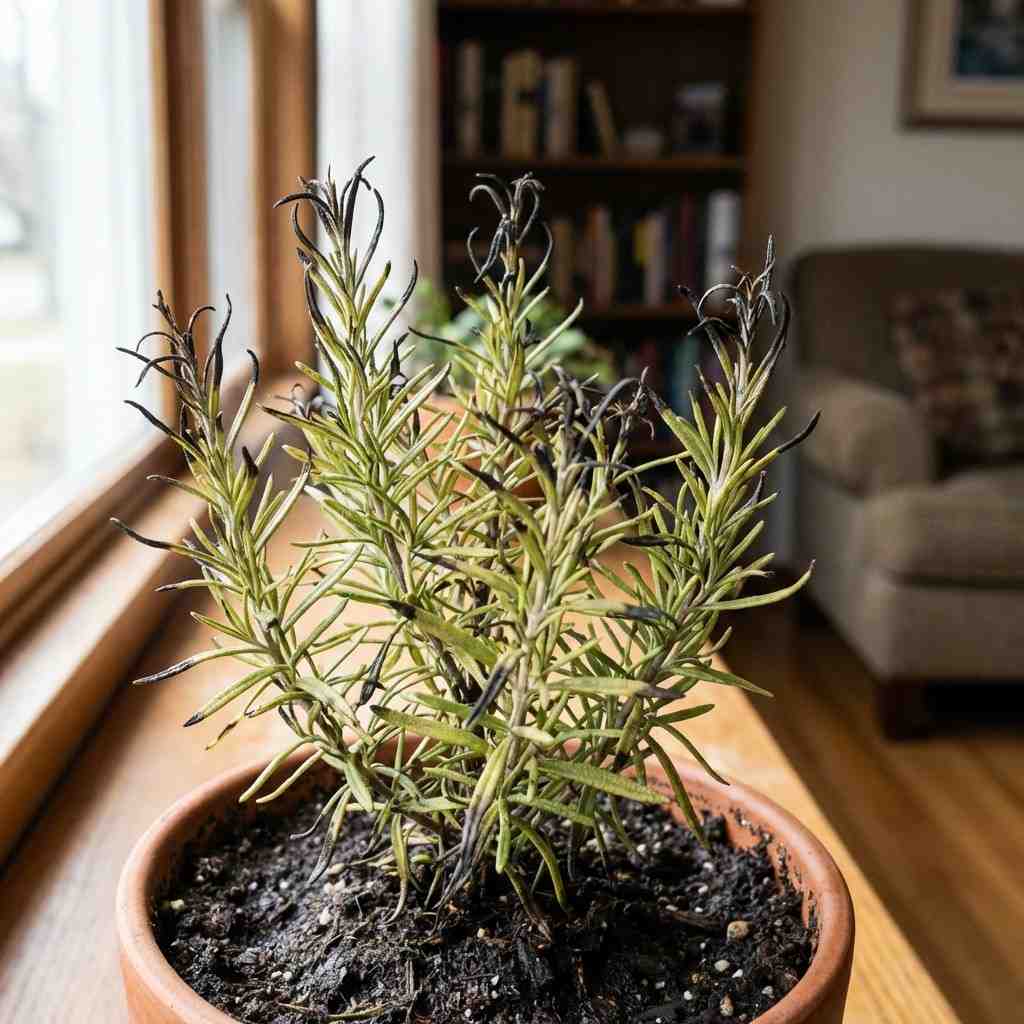
I once had this happen after I watered regularly but kept the plant in moderate light. The combination created imbalance.
Common Causes
- Overwatering with slow-draining soil
- Cold air near windows
- Poor airflow
- Fertilizer salt buildup
What’s Really Happening
The plant is struggling to move water and nutrients efficiently. The tips being the farthest points are the first to show damage.
| Symptom | Underlying Issue |
|---|---|
| Blackened tips | Moisture imbalance |
| Soft stems | Root stress |
| Slow recovery | Low energy |
How to Fix It
The goal is not quick correction, but stability.
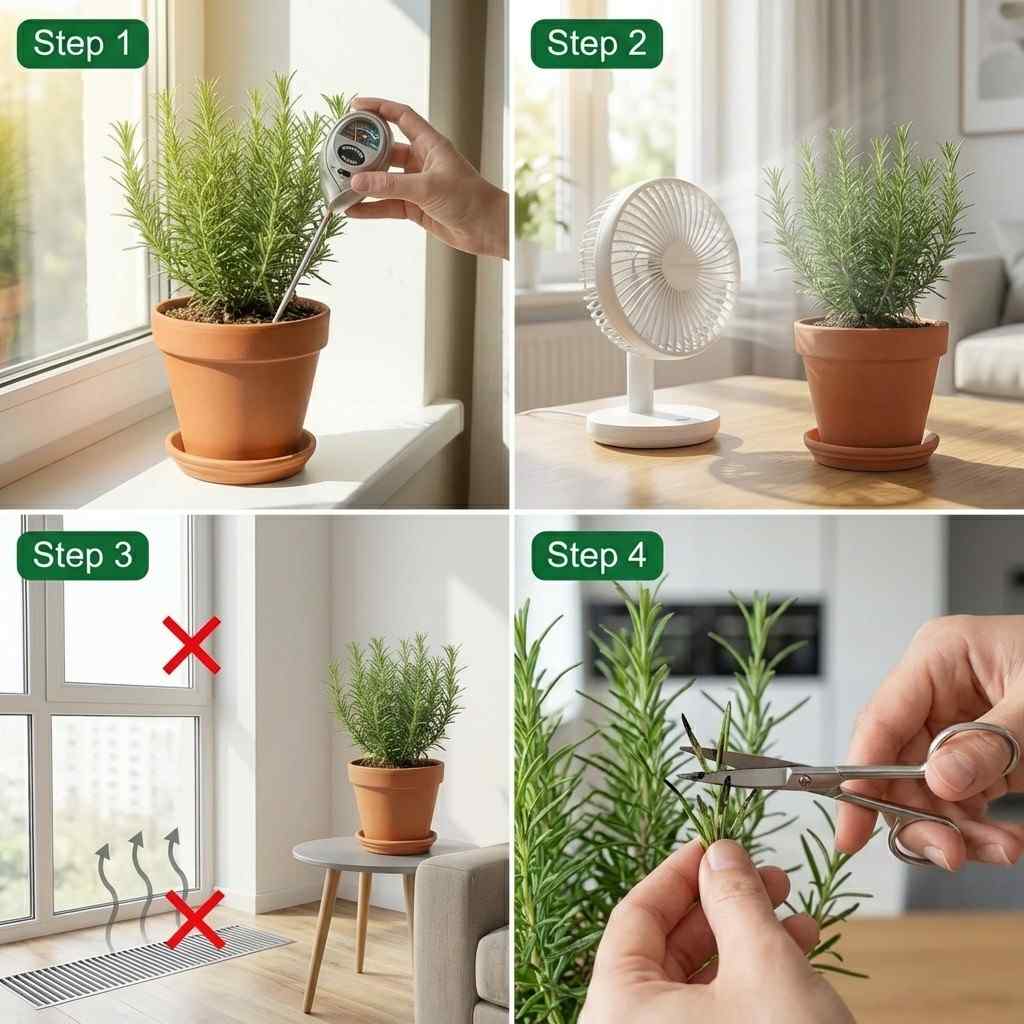
- Let soil dry properly before watering
- Improve airflow around the plant
- Keep away from cold drafts or vents
- Trim damaged tips carefully
Problem 3. Rosemary Leaves Crispy but Soil Is Moist
This is one of the most confusing problems. The soil feels damp, yet the leaves feel dry and brittle.
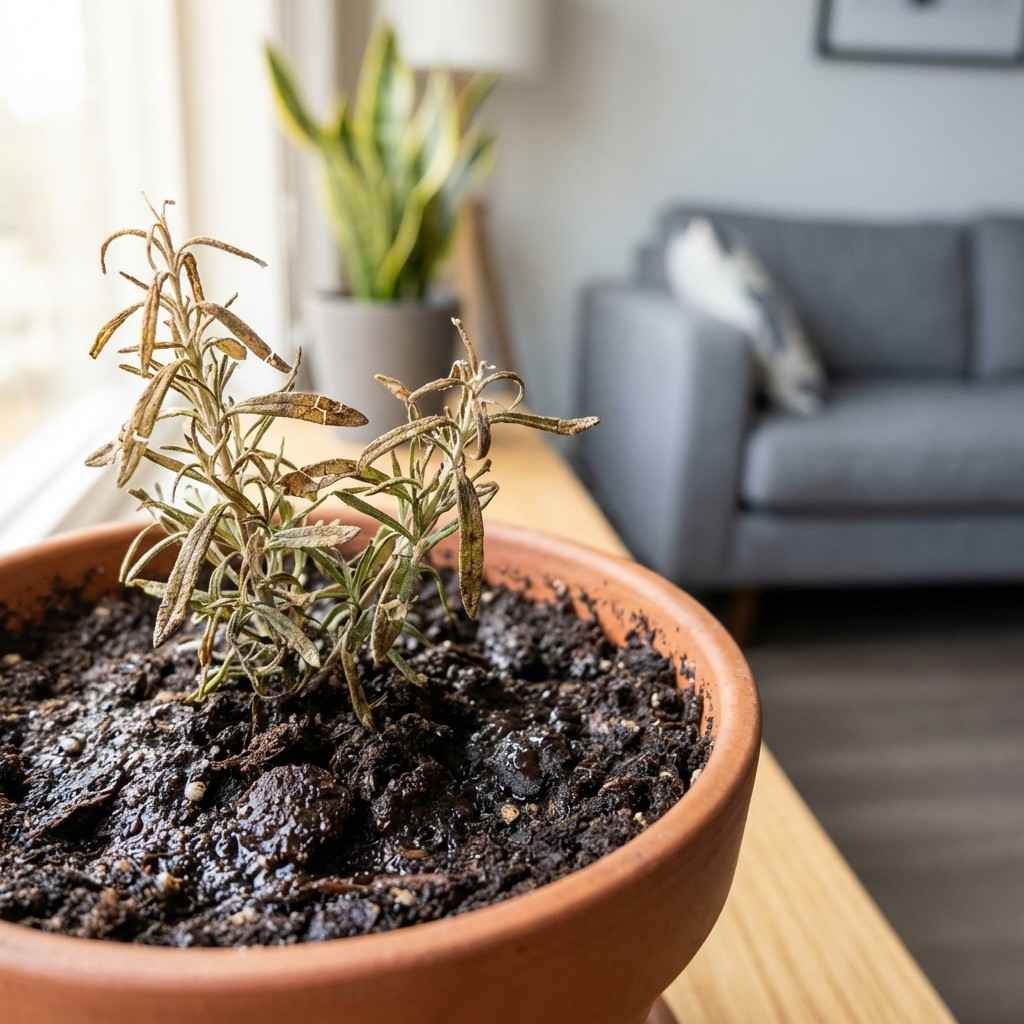
I remember checking the soil repeatedly, thinking I needed to water more. That only made things worse.
The real issue isn’t lack of water, it’s the plant’s inability to use it.
What’s Actually Happening
When soil stays wet for too long, roots lose oxygen. Without oxygen, roots stop functioning properly.
So even though water is present, the plant cannot absorb it effectively.
| What You See | What It Means |
|---|---|
| Moist soil | Low oxygen in roots |
| Crispy leaves | Water not reaching plant |
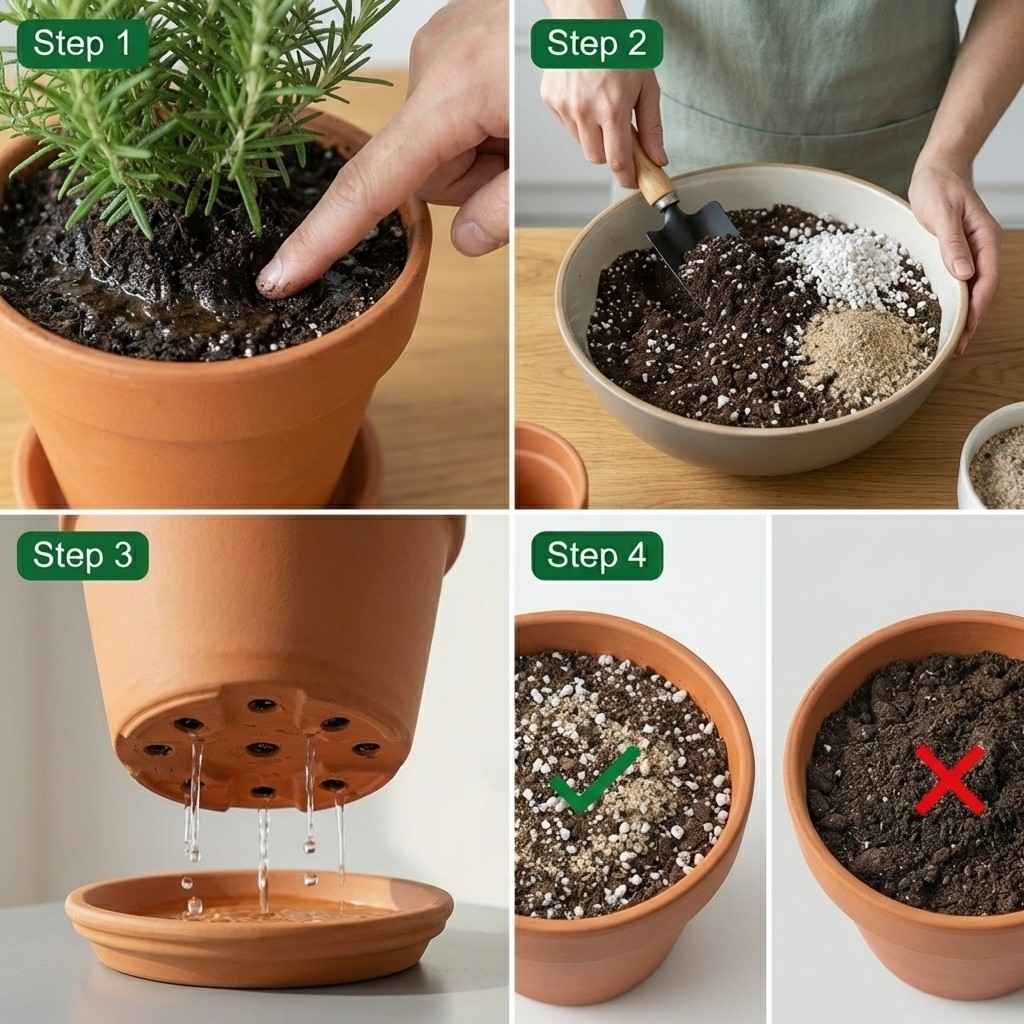
How to Fix This Problem
- Allow soil to dry fully before watering again
- Use a well-draining soil mix (add perlite or sand)
- Ensure pot has proper drainage holes
- Avoid heavy, compact soil
Problem 4. Rosemary Smells Weak and Not Strong
One of the easiest ways to tell if your rosemary is truly healthy is not by looking at it, but by smelling it.
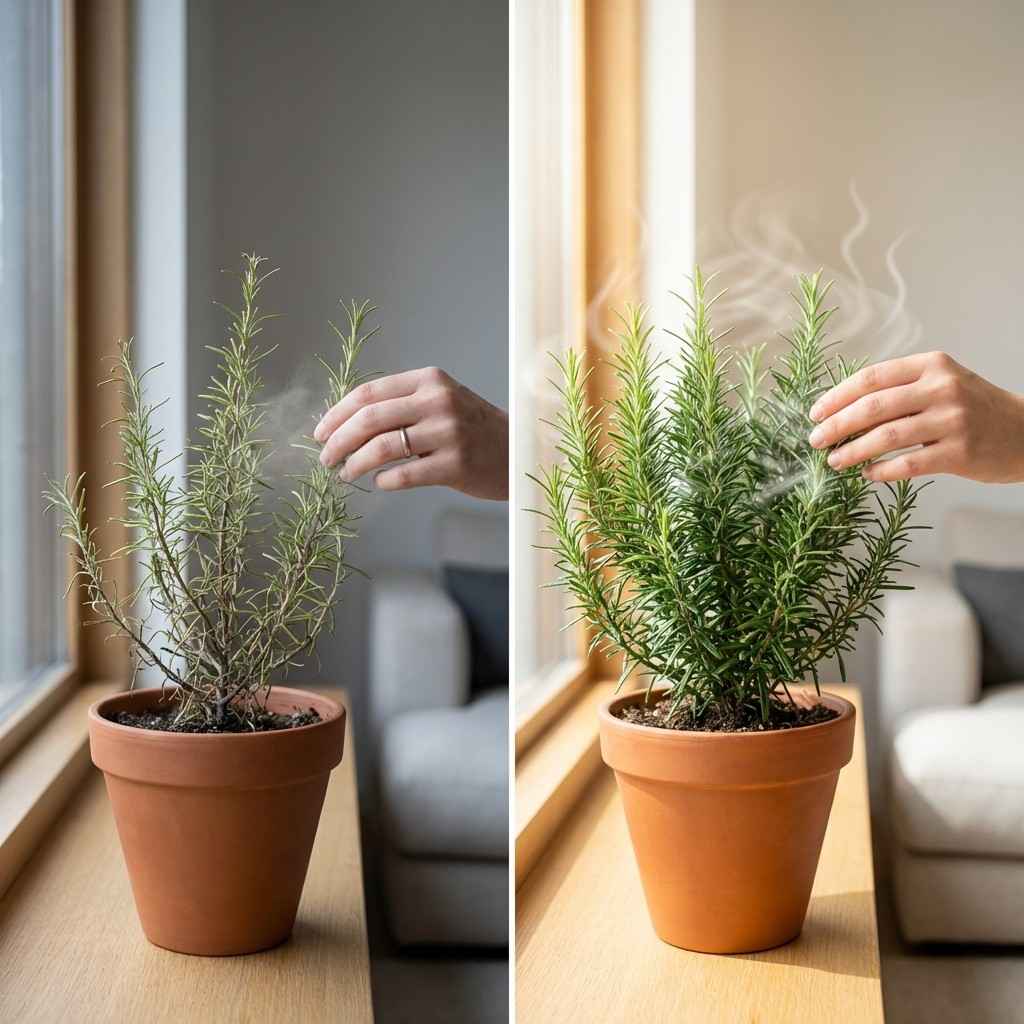
I had a plant once that looked perfectly green, but when I rubbed the leaves, the fragrance was almost gone. That’s when I realized something deeper was off.
Rosemary’s scent comes from natural oils, and those oils depend heavily on the plant’s energy levels.
Why the Aroma Becomes Weak
When rosemary doesn’t get enough light or is under stress, it reduces oil production to conserve energy.
- Low sunlight exposure
- Overwatering and root stress
- Excess nitrogen fertilizer
- Overall weak plant condition
| Condition | Effect on Aroma |
|---|---|
| Strong light | High oil production |
| Low light | Weak scent |
| Healthy roots | Rich fragrance |
| Stressed roots | Dull smell |
How to Fix Weak Smell
Instead of adding anything artificial, restore natural growing conditions.
- Increase direct light exposure
- Avoid overwatering
- Reduce fertilizer use
- Maintain consistent environment
Once the plant regains strength, the aroma returns naturally.
Problem 5. Rosemary Plant Drying from Top Down Indoors
This is one of the more serious warning signs. When the top of the Rosemary plant starts drying first, it usually means something deeper is wrong.
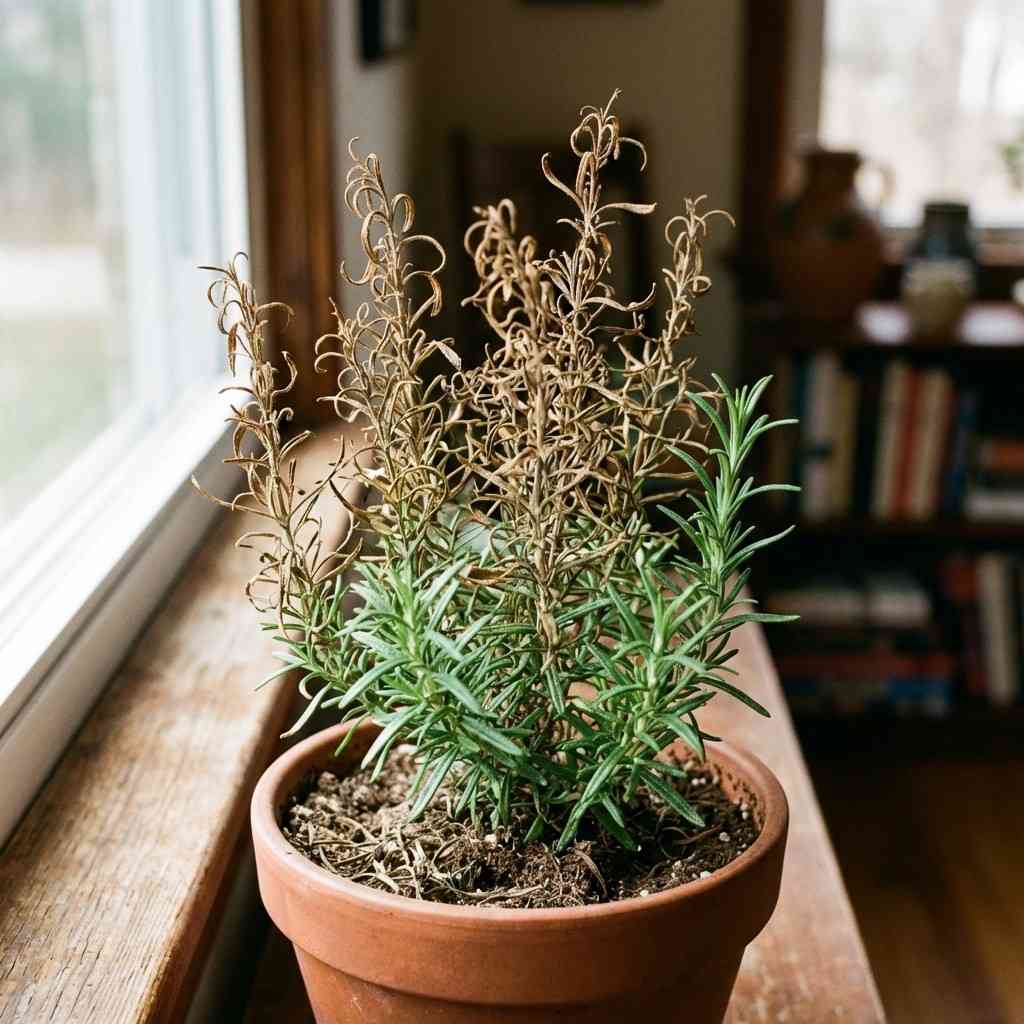
I once noticed my plant looking healthy at the base but drying from the tips downward. That pattern told me the problem wasn’t surface-level.
What This Pattern Means
The top of the plant is where active growth happens. If that part fails first, it often means the plant cannot transport water or nutrients properly.
- Top leaves dry first
- Upper stems become brittle
- Lower plant may still look green
Main Causes
This issue is rarely caused by one factor alone.
- Root damage or early root rot
- Inconsistent watering patterns
- Sudden temperature changes
- Weak root-to-shoot connection
How to Fix It
Recovery depends on early action.
- Trim all dry or dead parts
- Check root health if needed
- Stabilize watering schedule
- Avoid temperature extremes
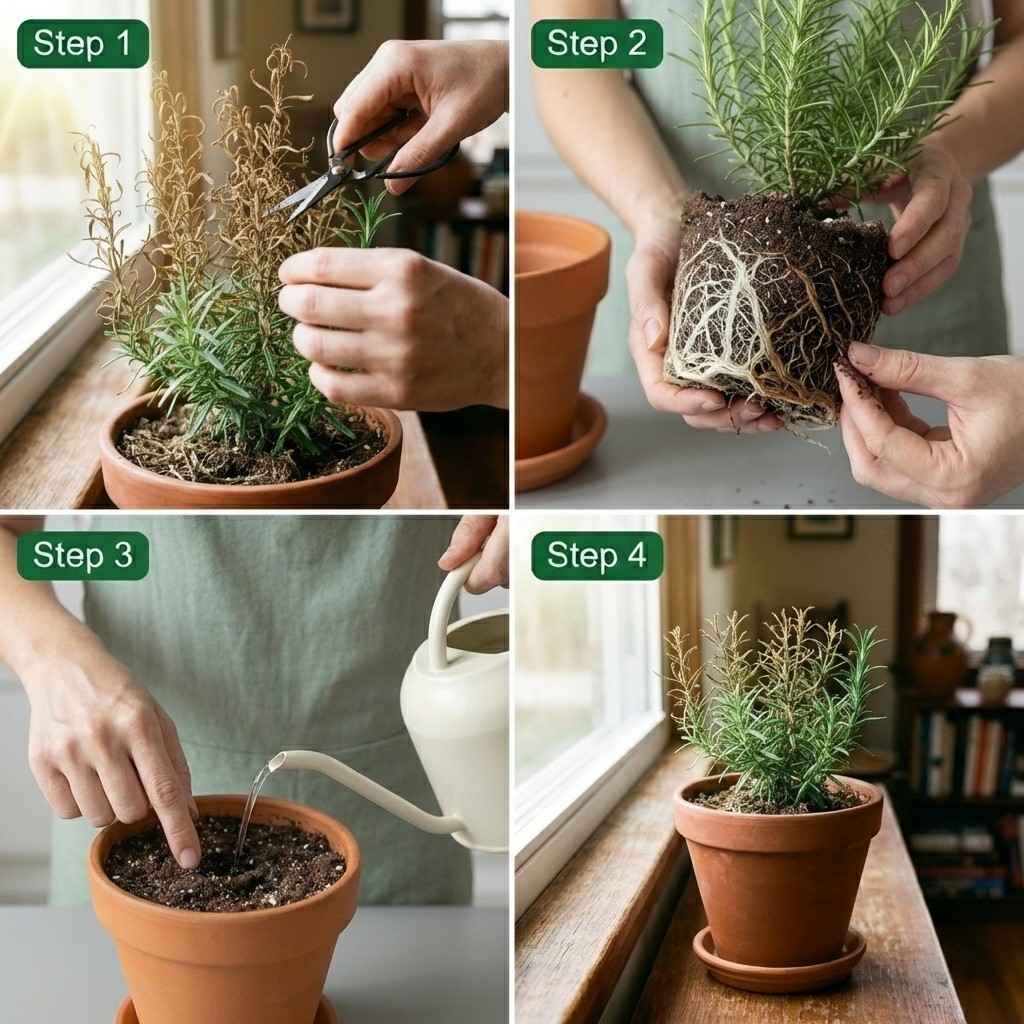
If caught early, the plant can push new growth from lower sections.
Problem 6. The Root Zone: Where Most Problems Begin
After dealing with multiple rosemary issues, I realized something important most visible problems start below the soil.
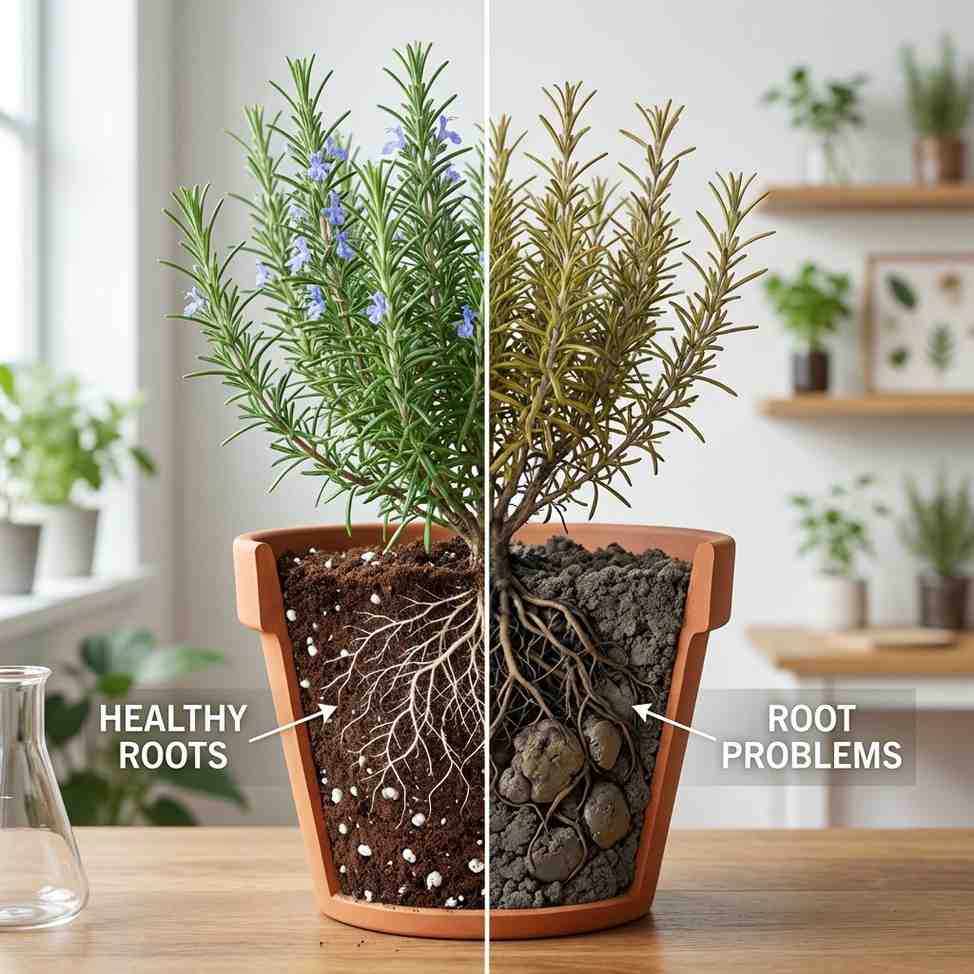
The roots control everything. If they are stressed, the plant cannot grow, no matter how good the leaves look.
| Root Condition | Visible Effect |
|---|---|
| Waterlogged | Crispy or dull leaves |
| Compacted soil | No new growth |
| Poor airflow | Weak structure |
How to Improve Root Health of Rosemary
Instead of reacting to symptoms, fix the root environment.
- Use well-draining soil mix
- Add perlite or coarse sand
- Ensure proper drainage holes
- Avoid frequent watering
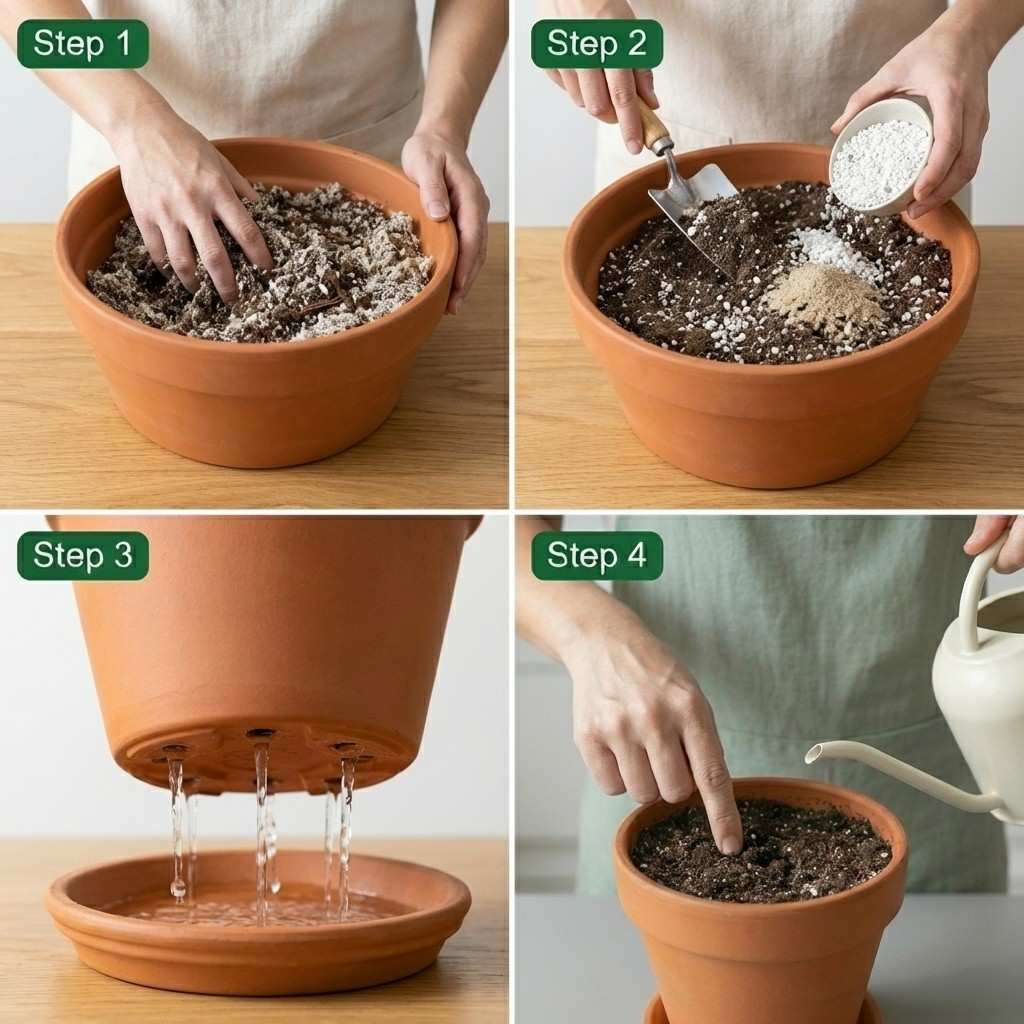
Healthy roots lead to consistent growth.
Light Intensity vs Light Duration
Many people think more hours of light automatically means better growth. But rosemary responds more to intensity than duration.
I once kept a plant under light for long hours, but it still didn’t grow. The light simply wasn’t strong enough.
That’s when I realized the difference.
What Matters More
- Strong direct light beats long weak light
- Window proximity matters more than room brightness
- Grow lights should be close enough to be effective
Without enough intensity, the plant stays in survival mode.
Environmental Consistency
Rosemary doesn’t like constant changes. Even small adjustments can affect how it grows.
I used to move my plant frequently trying different spots. Instead of helping, it slowed growth.
Once I stopped moving it and kept everything stable, the plant improved.
What Helps Stability
- Keep plant in one consistent location
- Avoid sudden temperature shifts
- Maintain steady care routine
- Observe before making changes
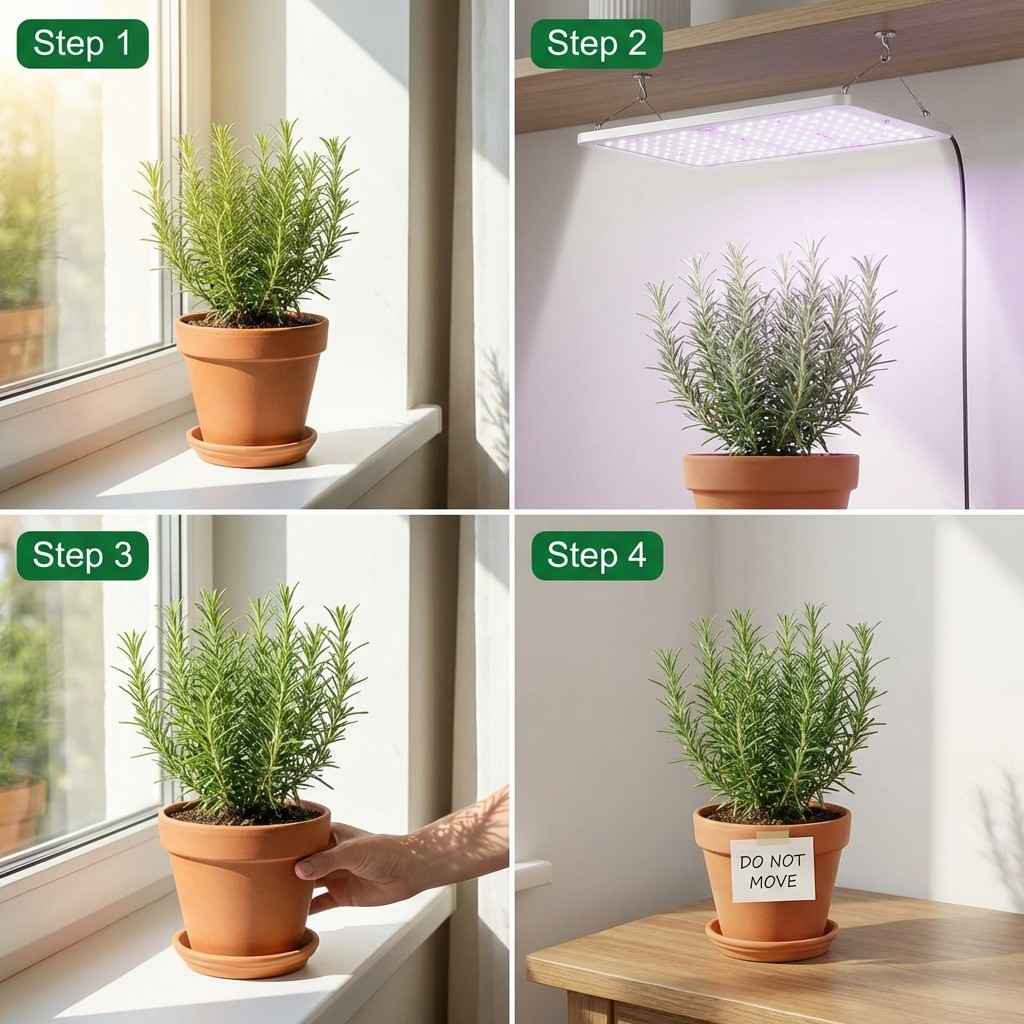
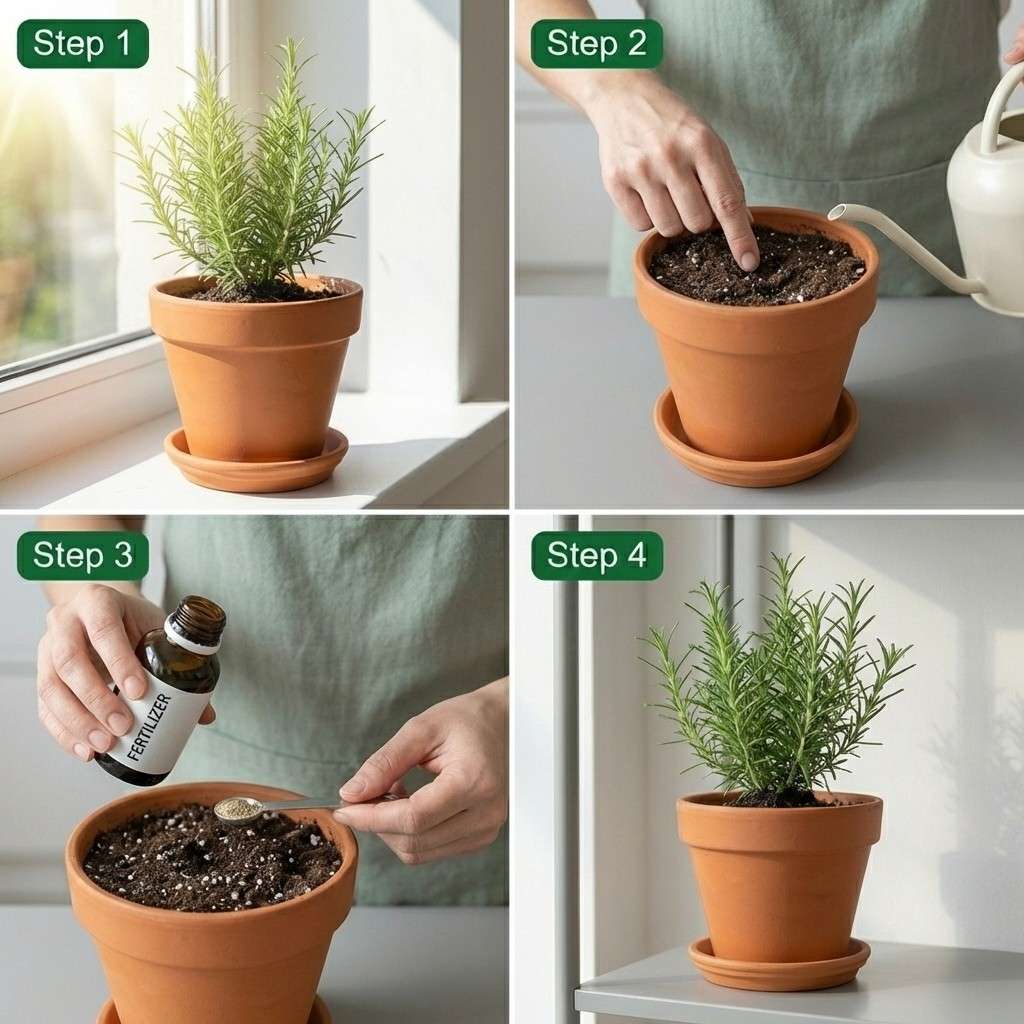
Step-by-Step Recovery Plan (If Your Rosemary Not Growing Indoors)
If your rosemary not growing indoors, the worst thing you can do is change everything at once. I made that mistake-adjusted watering, moved the plant, changed soil all within a few days. The plant only became more stressed.
What works better is a structured approach where you fix the most important factor first and let the plant respond.
Step 1: Fix Light First
Light is the main driver of Rosemary growth. Without it, nothing else works properly.
- Place plant in brightest available window
- Use a grow light if natural light is weak
- Ensure consistent exposure daily
Step 2: Correct Soil and Drainage
If the Rosemary roots are sitting in moisture too long, growth will remain slow.
- Use well-draining soil (cactus mix or add perlite)
- Ensure pot has drainage holes
- Avoid compact or heavy soil
Step 3: Reset Watering Pattern
Watering should be based on soil condition, not schedule.
- Water only when top soil is dry
- Avoid frequent light watering
- Let roots breathe between watering
Step 4: Support Rosemary with Nutrients
Only after the plant stabilizes should you add nutrients.
- Use balanced fertilizer (10-10-10)
- Feed lightly every few weeks
- Avoid overfeeding
The “Stability First” Growth Model
After multiple attempts, one approach consistently worked focus on stability instead of quick fixes.
Rosemary grows best when conditions remain steady over time.
| Approach | Result |
|---|---|
| Frequent changes | Stress and slow recovery |
| Stable conditions | Consistent growth |
| Balanced care | Healthy development |
How Long Does Rosemary Take to Recover?
This is where patience becomes important. Rosemary does not respond instantly.
In my experience, visible improvement can take several days, sometimes weeks.
Instead of expecting fast results, look for small signals:
- New leaf tips forming
- Stronger stem structure
- Deeper green color
- Gradual, steady growth
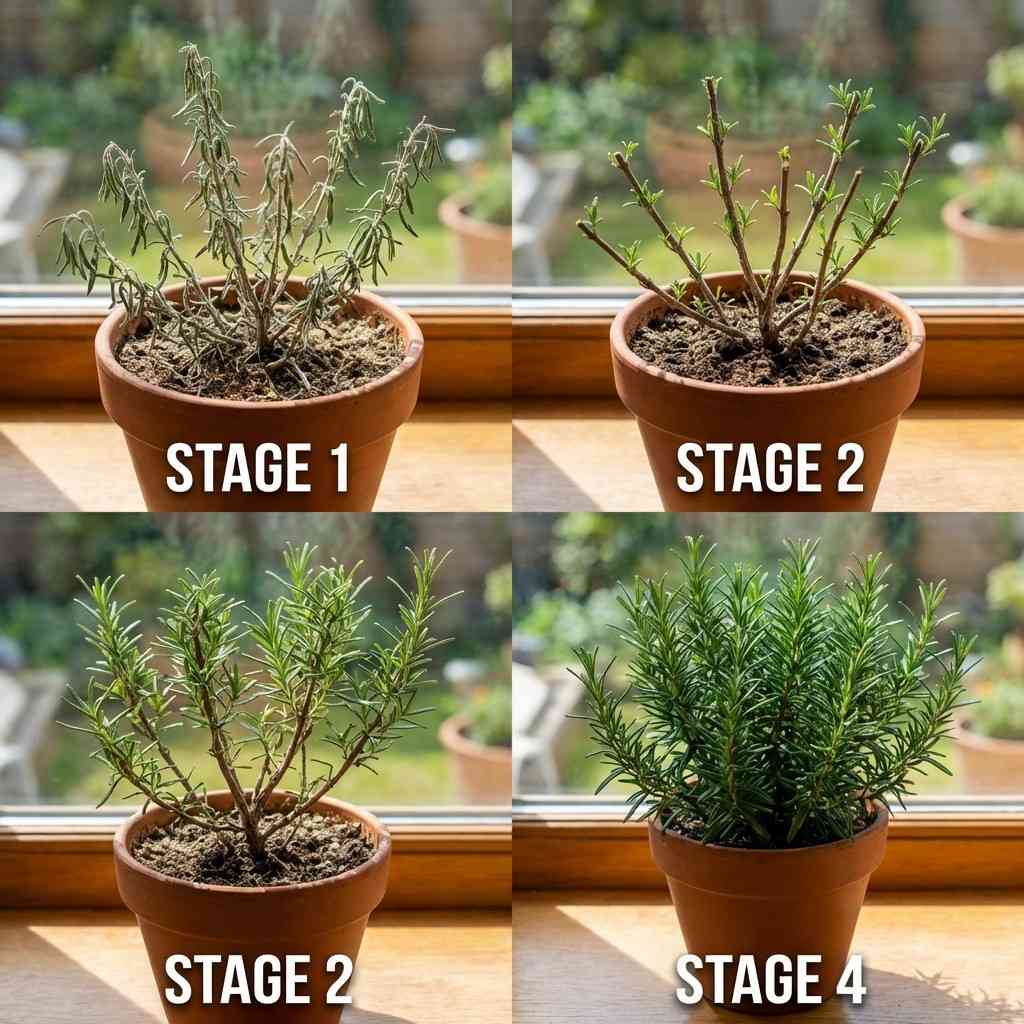
These are early signs that your fixes are working.
When to Act and When to Wait
One of the biggest mistakes is over-correcting. I used to adjust something every few days, thinking I was helping.
In reality, I was interrupting the plant’s recovery process.
A better approach is simple:
- Make one change
- Observe for a few days
- Adjust only if needed
This allows the plant to adapt properly.
Complete Indoor Rosemary Growth Checklist
| Factor | What to Check |
|---|---|
| Light | Strong and consistent daily exposure |
| Watering | Only when soil is dry |
| Soil | Loose, well-draining |
| Airflow | Good circulation |
| Placement | Stable, not frequently moved |
Frequently Asked Questions
Why is my rosemary not growing indoors even after proper care?
This usually happens due to low light or root stress. Even if care seems correct, the plant may not have enough energy to produce new growth.
How long does rosemary take to start growing again?
Most plants show improvement within one to two weeks after conditions are corrected, but full recovery depends on root health and environmental stability.
Can rosemary recover after drying out or stress?
Yes, if roots are still alive. Trim damaged parts and stabilize care. Recovery may take time, but new growth can appear from healthy sections.
Does fertilizer help rosemary grow faster indoors?
Fertilizer supports growth but only after the plant stabilizes. It cannot fix issues like poor light or root problems.
What is the most common mistake with indoor rosemary?
The most common mistake is overwatering combined with low light. This creates root stress and stops growth even if the plant looks healthy.
Final Thoughts
If your rosemary not growing indoors, the solution is not a quick fix. it’s a combination of stable conditions, proper light, and patience.
Once the environment is right, the plant responds naturally. Give it consistency, and it will reward you with steady, healthy growth.