
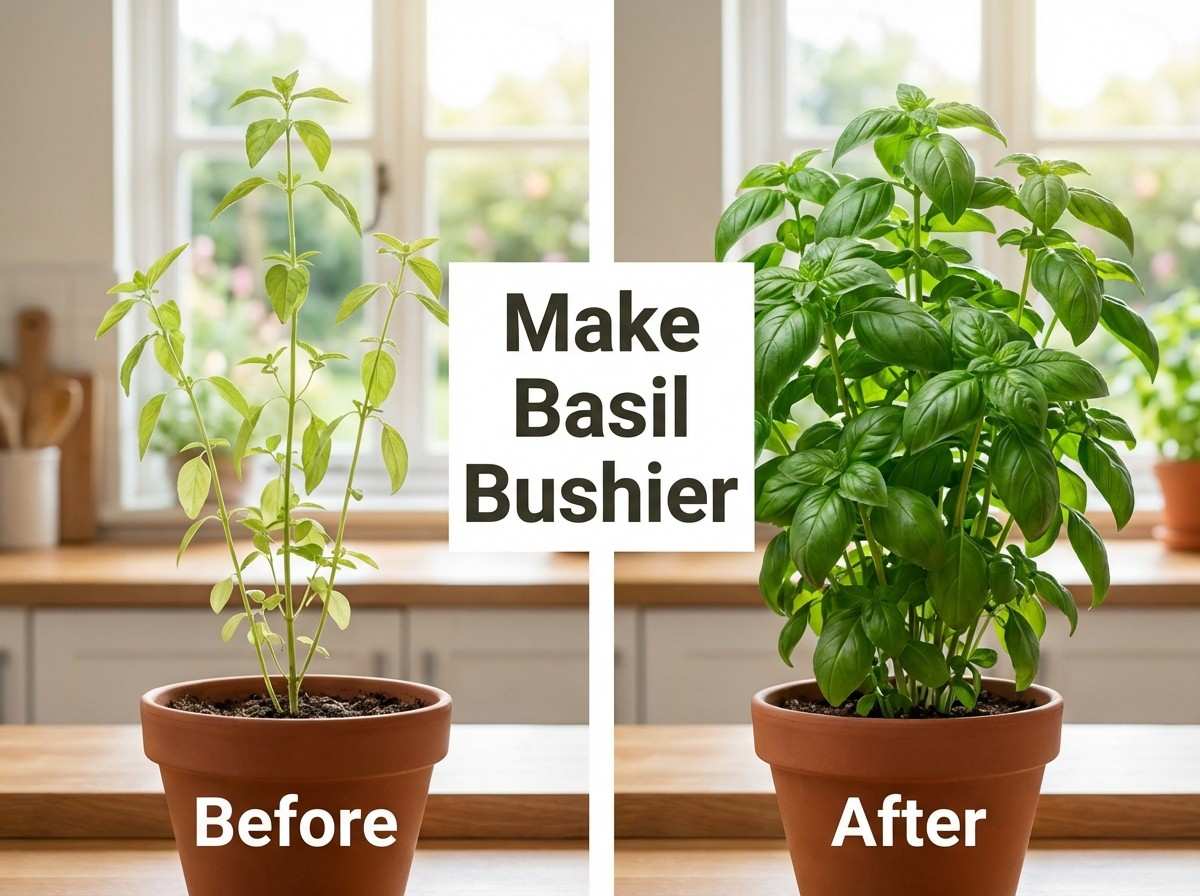
I used to wonder why my basil looked tall but empty, until I realized the secret to make basil bushier isn’t more watering or fertilizer, it’s how you guide its growth from the beginning. That one change completely transformed my plant.
At first, basil gives you a false sense of success. It grows fast, looks green, and seems healthy. But after a few weeks, you notice something is off, it’s tall, thin, and not producing enough leaves.
The truth is, basil doesn’t naturally grow bushy unless you actively shape it. If left alone, it grows upward instead of outward.
What “Bushy Basil” Actually Means
Before fixing anything, it’s important to understand what you’re trying to achieve.
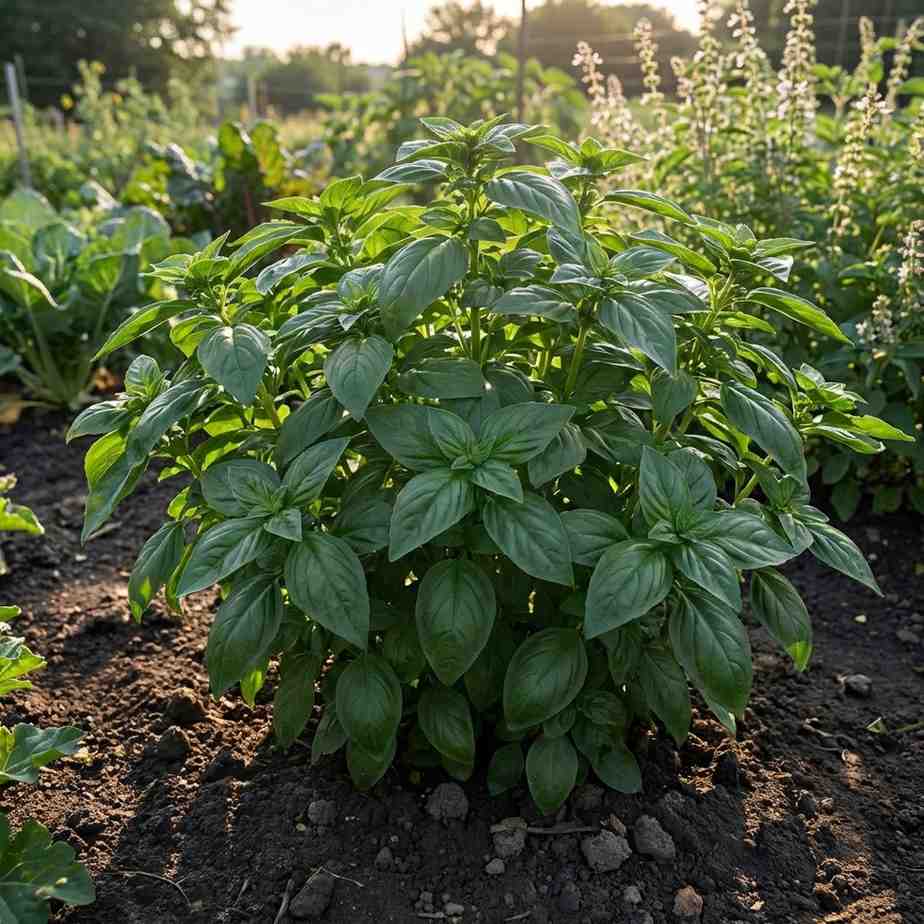
A bushy basil plant is not just about more leaves, it’s about branching. Each cut you make encourages the plant to split into two new stems.
More branches = more leaves = fuller plant.
If you’re just starting out, mint is often much easier to grow compared to basil. It spreads quickly and naturally becomes fuller without much effort, which makes it a great contrast when learning plant growth behavior.
Why Most Basil Plants Stay Thin
Most people unknowingly allow basil to grow in a single stem pattern. This leads to height but not density.
I made the same mistake early on waiting too long to prune. By the time I cut it, the plant had already committed to vertical growth.
Once that happens, recovery takes time.
| Common Habit | Result |
|---|---|
| No pruning | Tall, weak plant |
| Late pruning | Delayed branching |
| Wrong cutting point | No new shoots |
The Growth Switch Most People Miss
Basil has a built-in response system. When you cut the top correctly, the plant activates side nodes.
This is not random it’s a biological response.
Once you understand this, controlling the shape becomes easy.
How to Prune Basil for Maximum Growth
This is where everything changes. Proper pruning is the fastest way to make basil bushier.
The first time I pruned correctly, I noticed new growth within days. Two new stems appeared exactly where I cut.
It felt like unlocking a hidden feature of the plant.
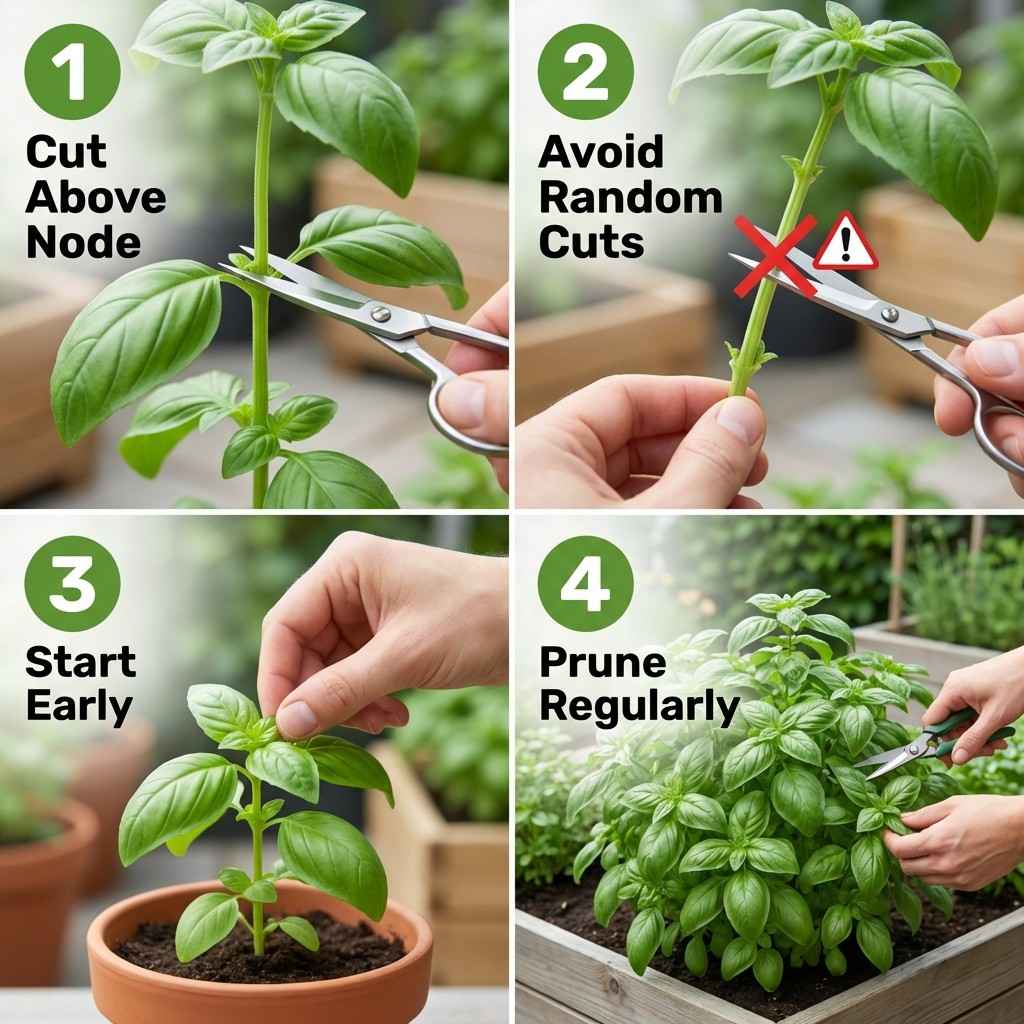
Here’s how to do it right:
- Cut just above a leaf node (where two leaves grow)
- Never cut randomly from the middle of a stem
- Start pruning early when plant is small
- Repeat regularly to maintain shape
Timing Matters More Than You Think
Pruning basil too late slows down the process. Early cuts create stronger structure.
If you wait until the plant is tall, it takes longer to redirect growth.
Think of it like training, not fixing.
When to Cut Basil Leaves for Regrowth
Many people harvest basil the wrong way. They pick random leaves, which doesn’t help the plant grow fuller.
I used to do this too plucking leaves from the top. The plant stayed thin.
Once I started cutting strategically, the plant doubled in density.
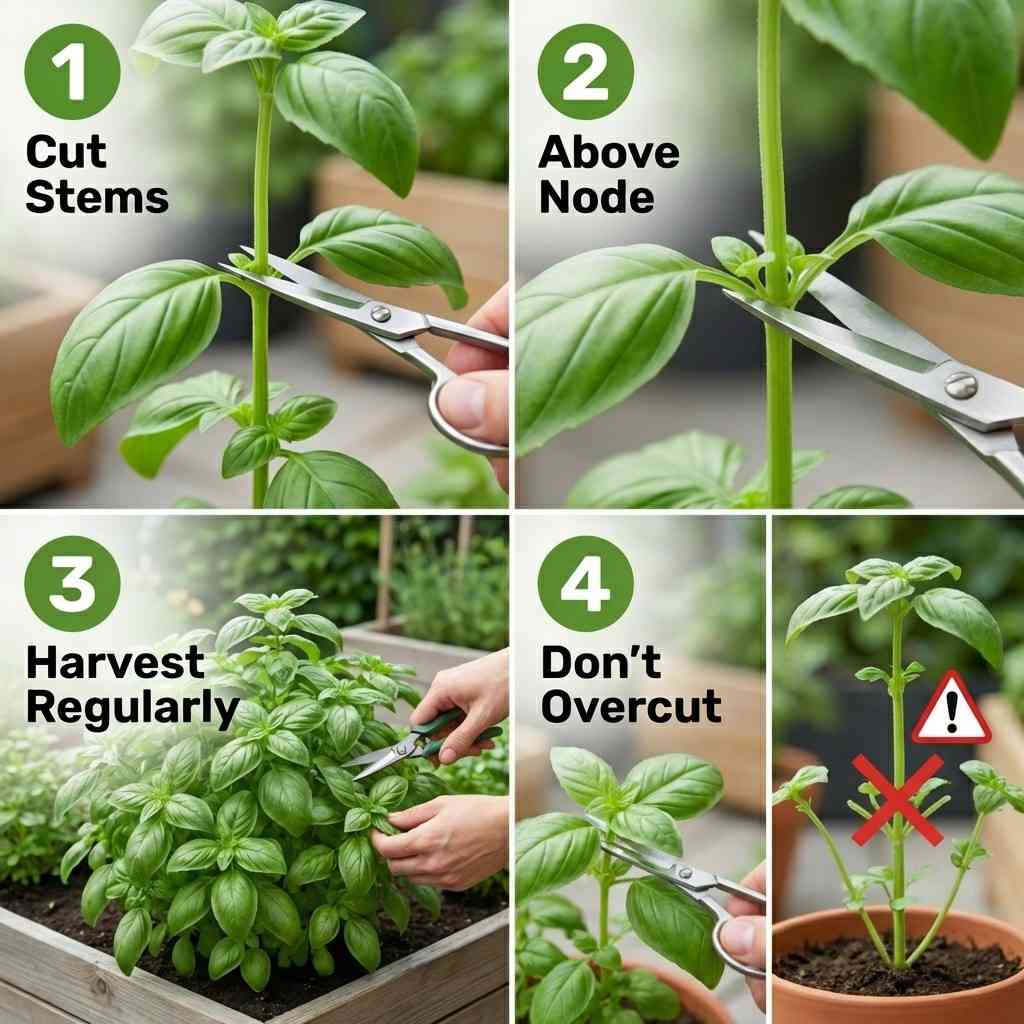
Follow this approach:
- Cut stems, not individual leaves
- Always cut above a node
- Harvest regularly but carefully
- Avoid removing more than one-third at once
Light Direction Changes Growth Pattern
One subtle factor that affects bushiness is light direction.
If light comes from one side, basil stretches toward it, reducing side growth.
I noticed uneven growth in my plant until I started rotating it every few days.
This small change made the plant grow evenly.
Basil Quick Growth Control Table
| Factor | Effect | Fix |
|---|---|---|
| No pruning | Tall plant | Cut early |
| Wrong harvesting | Less growth | Cut stems |
| Single-direction light | Uneven growth | Rotate plant |
Something I Noticed After Multiple Basil Plants
After growing basil several times, one pattern became clear plants that were pruned early always looked better than those “fixed later.”
It’s not about saving a plant; it’s about guiding it from the start.
Once you get that right, bushy growth becomes natural.
At one point, I stopped following strict rules and started watching how each plant behaved differently. That shift changed everything. Instead of forcing a method, I adjusted based on how the plant responded and growth improved naturally.
Why Some Basil Plants Never Become Dense (Even After Pruning)
One thing that took me time to understand is that not all basil plants respond the same way. You can follow the exact same pruning method, yet one plant becomes dense while another stays thin.
This usually comes down to how much energy the plant can generate and distribute. If the plant doesn’t have enough energy, it simply cannot support multiple branches at once.
Think of it like this branching is expensive for the plant. It needs extra resources to grow in multiple directions.
So if your basil is not getting bushier, the problem may not be pruning it may be limited energy production.
Energy Triangle: The Real Growth Formula
After experimenting with multiple basil plants, I started seeing a pattern. Bushy growth depends on three things working together.
Remove one, and growth slows down.
| Factor | Role | If Missing |
|---|---|---|
| Light | Energy production | Weak growth |
| Nutrients | Support branching | Slow recovery |
| Pruning | Trigger branching | Tall plant |
All three must work together if you want to make basil bushier effectively.
Advanced Pruning Strategy of Basil
Basic pruning works but if you want faster results, you need a more refined approach.
Instead of always cutting the top, start observing where the plant is strongest and where it’s lagging.
This allows you to control shape more precisely.
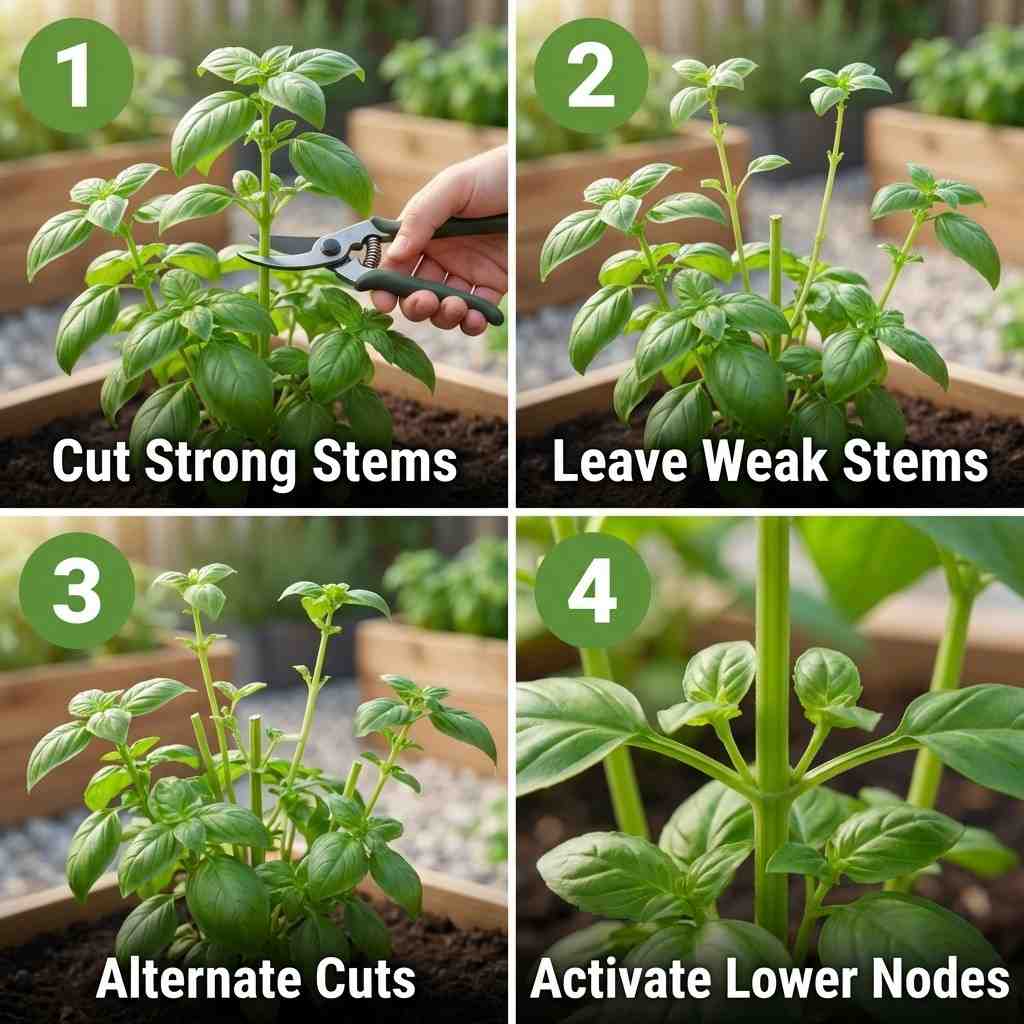
Here’s what works better in practice:
- Cut stronger stems first to balance growth
- Leave weaker stems untouched for recovery
- Alternate pruning points instead of repeating same spot
- Encourage lower node activation
This method creates a more even and dense plant instead of uneven branching.
Basil Micro-Stress Technique
Plants don’t always grow best in perfect conditions. Slight stress can actually improve branching.
I accidentally discovered this when I skipped watering for a day longer than usual. The plant responded with faster side growth afterward.
This doesn’t mean neglect it means controlled stress.
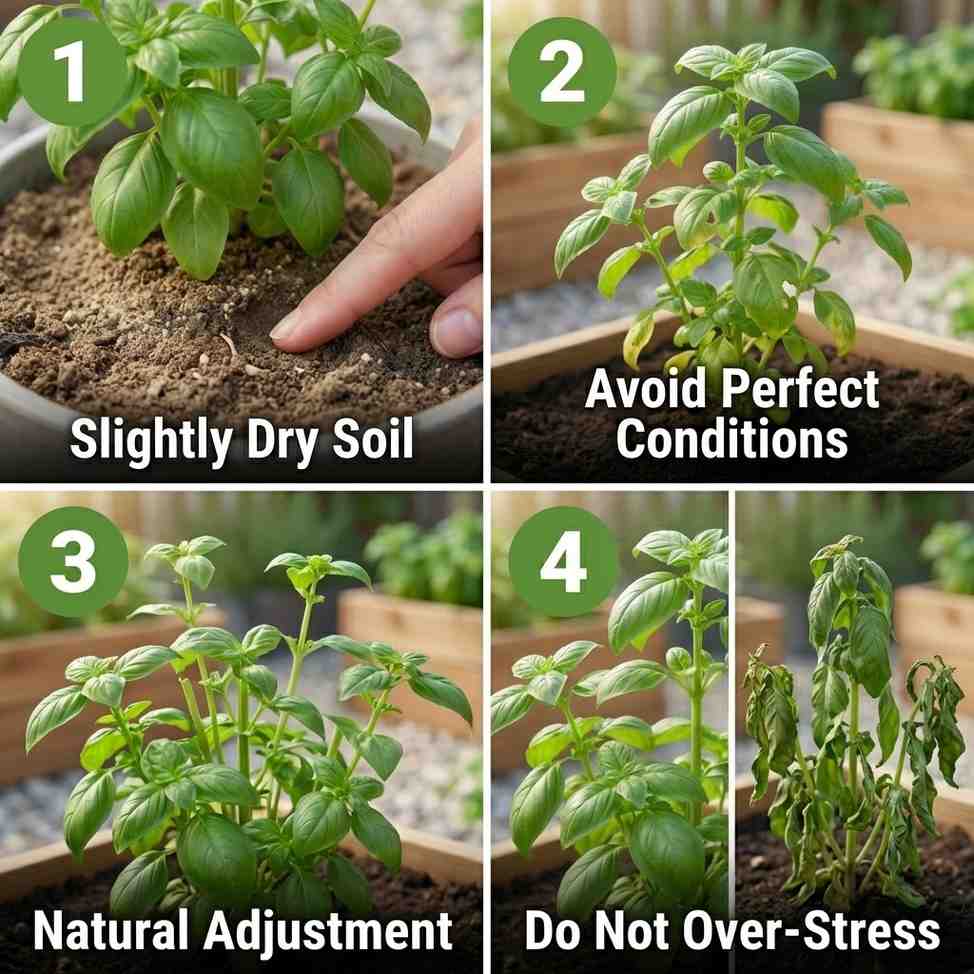
How to apply safely:
- Allow soil to dry slightly before watering
- Avoid constant “perfect” conditions
- Let plant adjust naturally
- Never over-stress the plant
This technique encourages survival response, which often leads to denser growth.
The Hidden Role of Stem Thickness
Thicker stems usually mean stronger growth potential. Thin stems struggle to support multiple branches.
If your basil stems are weak, the plant will avoid producing too many shoots or Your Basil Plant Keeps Dying.
I noticed that once stems became stronger, branching improved automatically even without extra pruning.
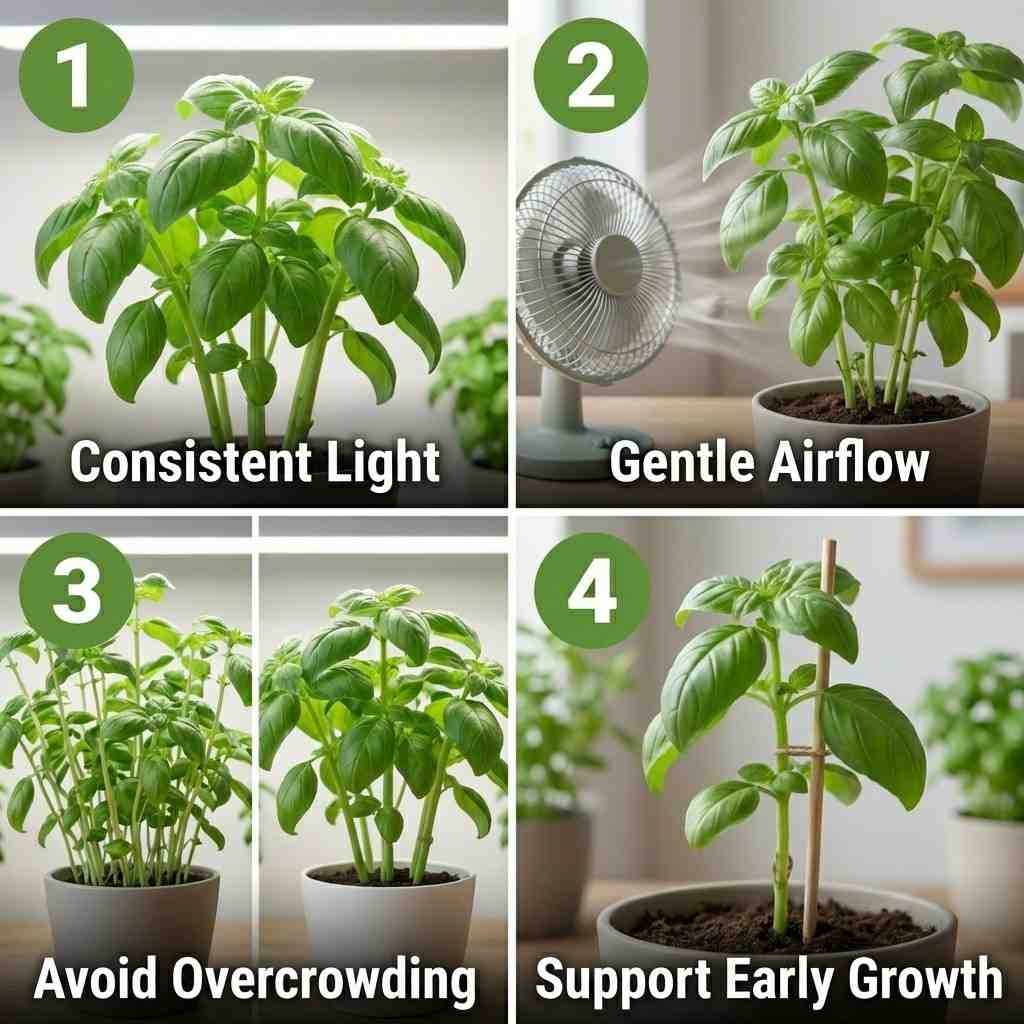
To improve stem strength:
- Provide consistent light
- Use gentle airflow (fan)
- Avoid overcrowding
- Support early growth
Why Indoor Basil Behaves Differently
Indoor basil doesn’t experience natural wind, temperature variation, or full sunlight. This changes how it grows.
In controlled environments, plants often become “comfortable,” which reduces their need to branch aggressively.
That’s why indoor basil often looks softer and less dense.
The solution is not more care it’s better simulation of natural conditions.
Basil responds quickly to pruning, but not all herbs behave the same way. For example, rosemary grows slower and reacts differently to indoor conditions, especially when it comes to light and watering balance.
Basil Leaf Harvesting Strategy
Most people harvest basil randomly, which disrupts growth pattern.
A better approach is to harvest in a way that encourages future growth.
This simple change made a big difference in my plants.
| Method | Result |
|---|---|
| Random leaf picking | Slow growth |
| Stem cutting | New branches |
| Top harvesting | Denser plant |
Fertilizer Timing For Basil
Most people focus on which fertilizer to use, but timing matters more.
If you fertilize right after pruning, the plant responds faster because it has both the signal and the resources to grow.
This timing-based approach works better than random feeding.
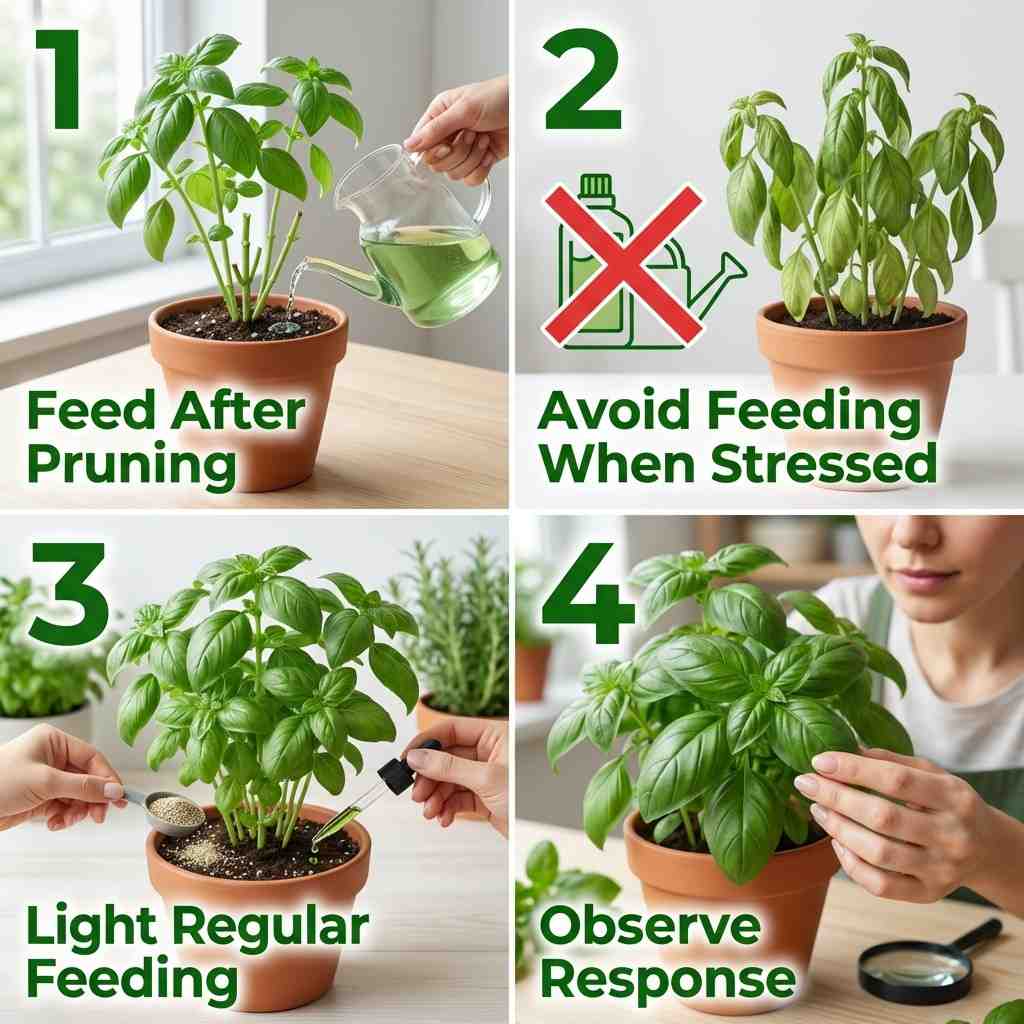
Best timing strategy:
- Feed after pruning cycle
- Avoid feeding stressed plants
- Use light doses regularly
- Observe plant response before next feed
Common Growth Blocks for Basil
Sometimes the issue isn’t obvious. Small hidden factors can limit growth without showing clear symptoms.
- Pot placed in stagnant air corner
- Light intensity fluctuating daily
- Inconsistent pruning schedule
- Too frequent watering preventing root strength
Fixing these small things often unlocks better growth.
Final Growth Model
If you want a reliable way to make basil bushier, follow this simple cycle:
Prune → Feed → Stabilize → Repeat
This cycle creates continuous branching over time.
FAQ
How often should I prune basil to make it bushier?
Prune every 1–2 weeks during active growth. Regular trimming encourages branching, but avoid cutting too much at once to prevent stress and slow recovery.
Can I make an already tall basil plant bushy again?
Yes, but it takes time. Start pruning gradually from the top and work downward over weeks to redirect growth toward side branches.
Does fertilizer really help basil grow fuller?
Fertilizer supports growth but doesn’t create bushiness alone. It helps the plant recover faster after pruning and strengthens new shoots.
Why does my basil grow tall instead of wide?
This happens when the plant isn’t pruned early. Basil naturally grows upward unless you cut it regularly to trigger side branching.
Should I remove basil flowers immediately?
Yes. Once basil starts flowering, it reduces leaf production. Removing flowers early keeps the plant focused on growing fuller and bushier.
Final Thoughts
To make basil bushier, you don’t need complicated techniques. You just need to understand how the plant responds to small changes.
Once you combine pruning, timing, and observation, the plant naturally shifts toward fuller growth.
At that point, it stops being trial and error and becomes predictable.