
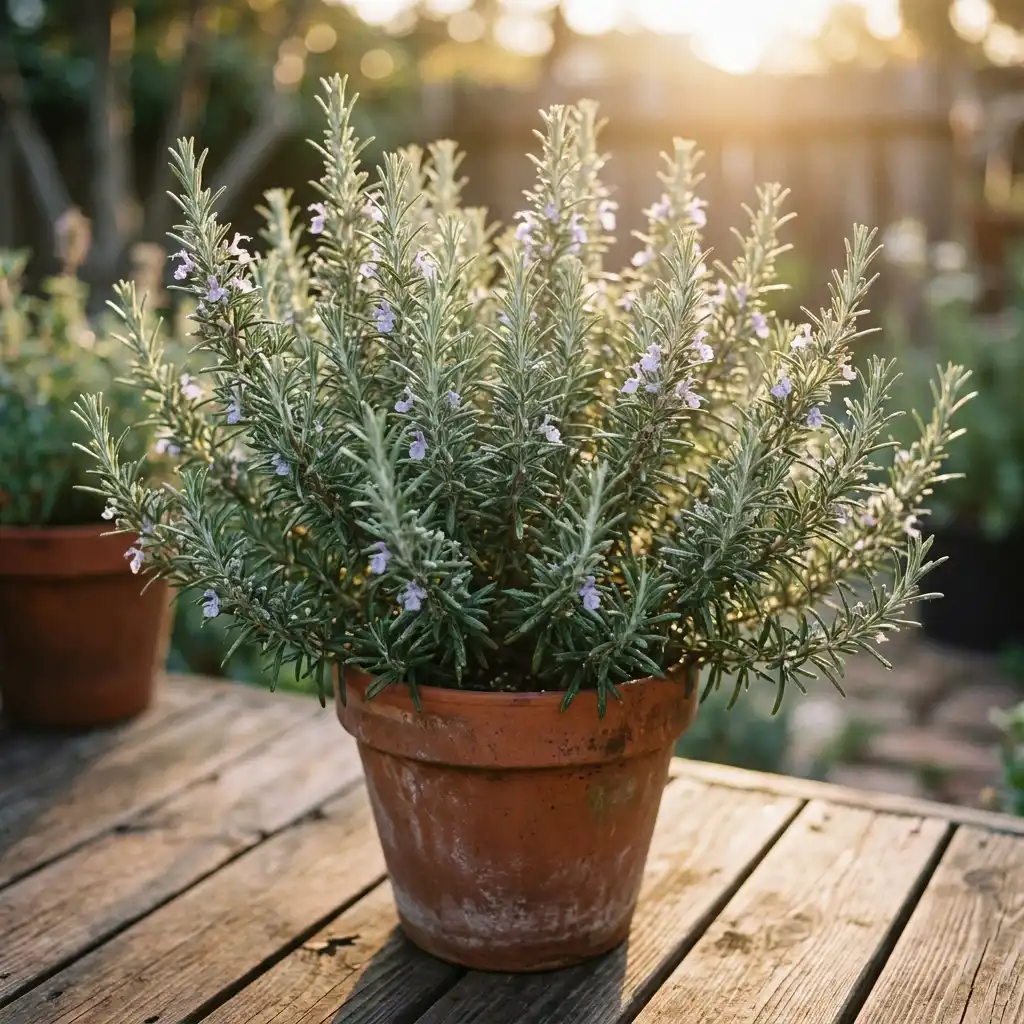
I’ll be honest with you — the first rosemary plant I ever potted didn’t make it past winter. I overwatered it, stuffed it into a pot that was way too small, and then wondered why the leaves turned brown and mushy. That was almost two decades ago, and since then I’ve grown more rosemary plants in containers than I can count. I’ve made every mistake in the book so you don’t have to.
If you’ve been thinking about growing a rosemary plant in a pot, you’re in the right place. Whether you’re working with a tiny apartment balcony in Chicago or a sunny back porch in Texas, container-grown rosemary is completely doable — and incredibly rewarding. This herb doesn’t just smell amazing. It’s one of the most useful plants you can keep within arm’s reach of your kitchen.
Let’s dig in.
Why Grow a Rosemary Plant in Pot?
Rosemary (Salvia rosmarinus, formerly Rosmarinus officinalis) is a Mediterranean herb that thrives in dry, well-drained conditions. Growing it in a container actually gives you a lot of advantages over planting it in the ground — especially if you live in the northern US where winters get brutal.
Here’s why container growing works so well for rosemary:
- You control the drainage. Rosemary hates wet feet. In pots, you can build the perfect fast-draining mix that garden soil often can’t replicate.
- You can move it indoors. In USDA zones 6 and below, rosemary won’t survive outdoors in winter. A pot lets you bring it inside before the first freeze.
- It stays manageable. In the ground, rosemary can grow into a large shrub. In a pot, it stays compact and tidy — perfect for patios, balconies, and kitchen windowsills.
- Herb accessibility. A pot on your back porch or kitchen counter means fresh rosemary is always a snip away.
- Great for renters. No yard? No problem. A sunny window or balcony is all you need.
Choosing the Right Pot for Your Rosemary Plant
This is where a lot of beginners go wrong — including me, back in the day. The pot you choose will make or break your plant’s health.
Size Matters
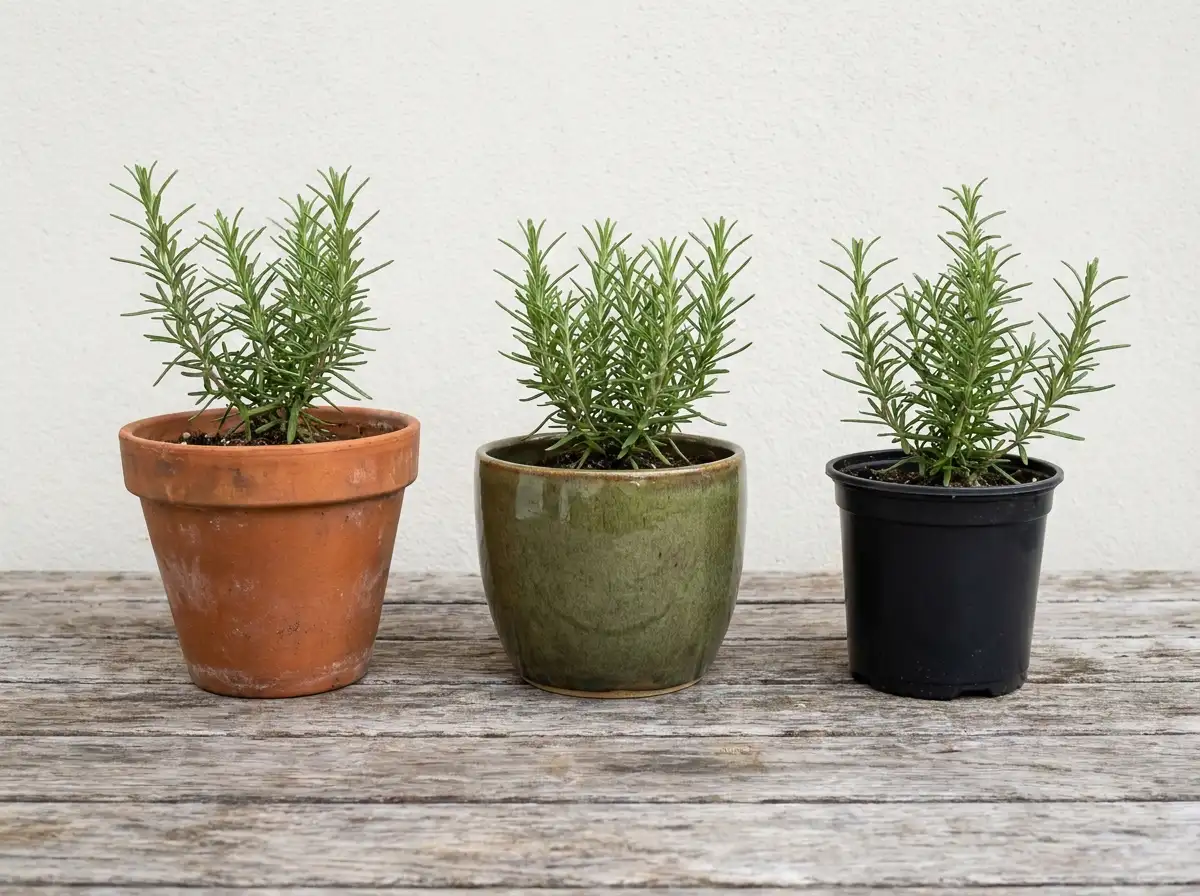
For a young rosemary plant, start with a 6–8 inch pot. As it matures, you’ll want to move up to a 12–16 inch container. Don’t go too big too fast — oversized pots hold excess moisture around the roots, which leads to root rot.
Material Matters Even More
| Pot Material | Pros | Cons | Best For |
|---|---|---|---|
| Terracotta | Breathable, dries out quickly, natural look | Can crack in freezing temps, heavy | Outdoor use, warm climates |
| Ceramic (glazed) | Stylish, retains moisture slightly longer | Less breathable than terracotta | Decorative indoor pots |
| Plastic | Lightweight, affordable, great drainage holes | Heats up fast in full sun, less aesthetic | Beginners, budget-friendly setups |
| Fabric (grow bags) | Excellent air pruning, great drainage | Dries out fast, needs more watering | Experienced growers, warm climates |
My personal go-to? Terracotta. It mimics the dry, airy conditions rosemary loves in its native Mediterranean habitat. Just make sure you bring it indoors before the temperature drops below 20°F — terracotta will crack in a hard freeze.
Non-negotiable rule: Whatever pot you choose, it MUST have drainage holes at the bottom. No exceptions. Rosemary sitting in standing water is a dead rosemary.
The Best Soil Mix for Potted Rosemary
Standard potting mix straight from the bag isn’t ideal for rosemary. It tends to hold too much moisture. You need something that drains fast and stays loose.
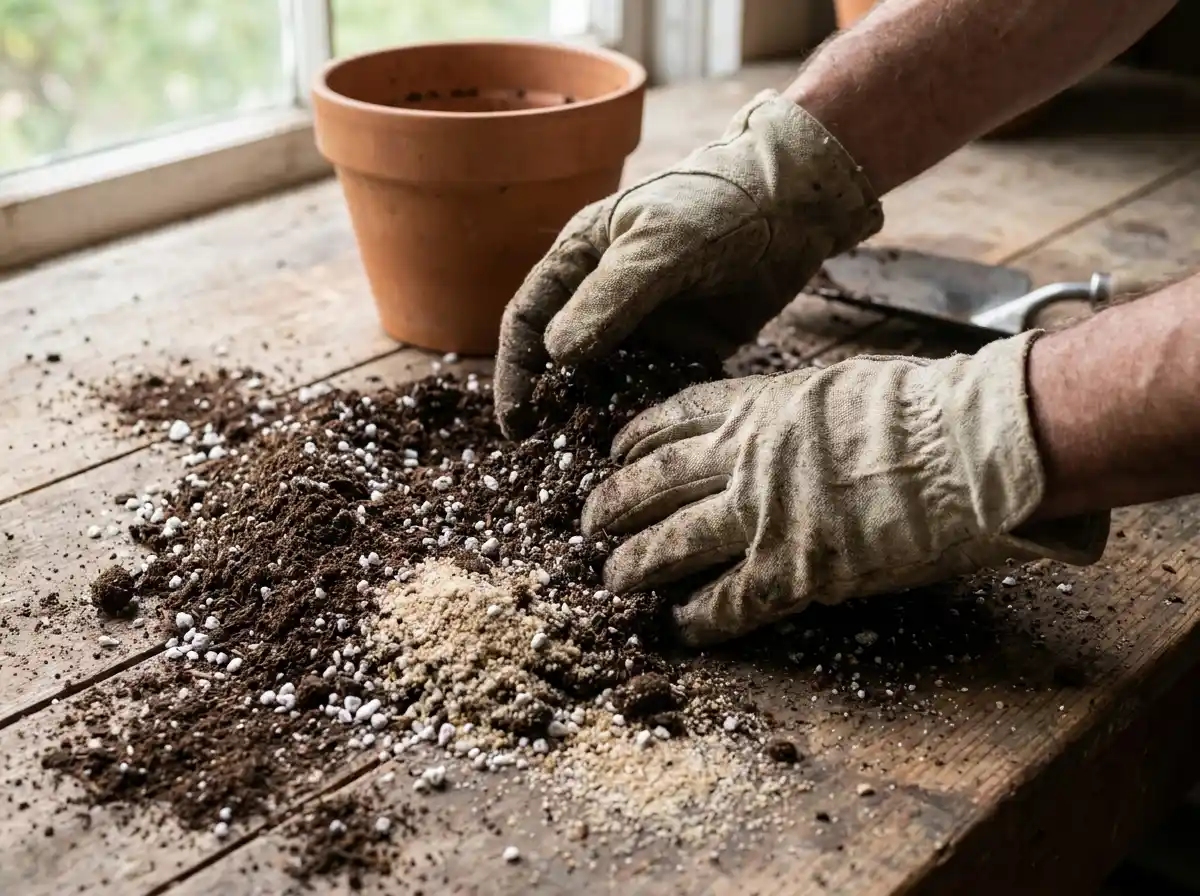
Here’s the mix I’ve been using for years, and it works beautifully:
- 50% high-quality potting mix (like Fox Farm Happy Frog or Miracle-Gro)
- 30% coarse perlite or pumice
- 20% coarse sand (not play sand — it compacts too much)
This gives you excellent drainage while still holding enough nutrients for healthy growth. The pH sweet spot for rosemary is between 6.0 and 7.0 — slightly acidic to neutral. You can pick up an inexpensive soil pH meter at any garden center to check.
Avoid using heavy garden soil or clay-heavy mixes in containers. They compact over time and suffocate roots.
How to Plant Rosemary in a Container: Step by Step
Want to plant Rosemary in a container, Whether you’re starting from a nursery transplant, a cutting, or even seeds, the planting process is straightforward.
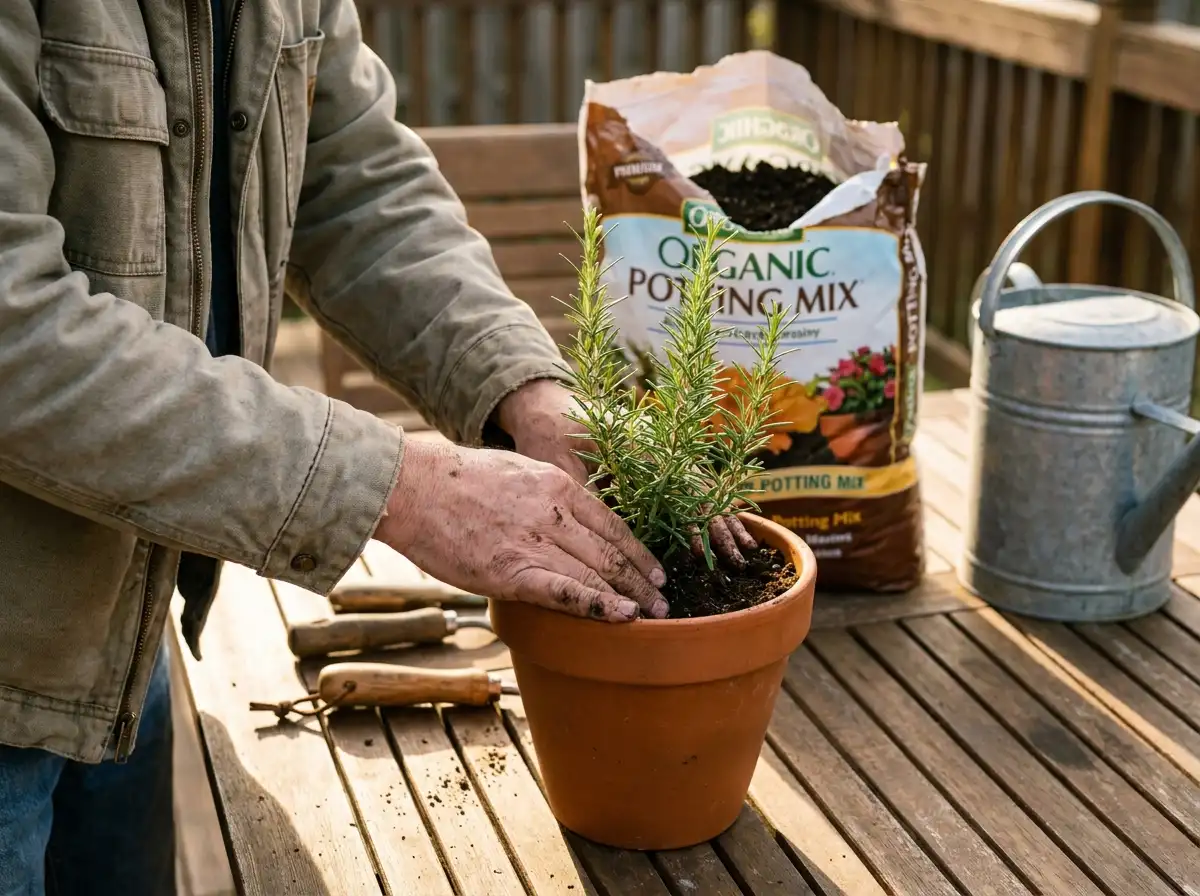
- Choose the right time. Spring is ideal — after your last frost date. In most of the US, that’s somewhere between March and May depending on your zone.
- Prep your pot. Place a small piece of mesh or a coffee filter over the drainage holes to prevent soil from washing out. Don’t use gravel at the bottom — it’s a myth that it improves drainage. It actually creates a perched water table.
- Fill with your soil mix. Fill about 2/3 of the pot. Leave room at the top for the root ball.
- Remove the plant from its nursery container. Gently loosen the root ball if it’s rootbound. Don’t break roots — just tease them apart a bit.
- Set the plant in. The crown (where stem meets roots) should sit about an inch below the rim of the pot.
- Fill in around the roots. Press soil gently but firmly around the base to eliminate air pockets.
- Water thoroughly. Water until it drains freely from the bottom. Then don’t water again until the top inch of soil is dry.
- Place in full sun immediately. Don’t baby it in the shade — rosemary wants light from day one.
Sunlight Requirements for Rosemary Plant in Pot
Rosemary is a sun worshipper. Period. It needs a minimum of 6–8 hours of direct sunlight per day to thrive. If you’re growing it indoors, a south-facing window is your best friend. If that’s not available, a grow light set to 14–16 hours a day will do the trick.
Outdoors, the more sun the better. A spot that gets full morning and afternoon sun is ideal. Avoid placing your pot in a shaded corner or under a covered porch — the plant will survive but it’ll be spindly, pale, and lacking in flavor and fragrance.
One pro tip from personal experience: in extreme summer heat (think Phoenix, Vegas, or Southern Texas), afternoon shade isn’t a bad idea. When temps consistently hit 100°F+, even rosemary can get heat stressed. A little afternoon protection during peak summer is fine.
Watering Rosemary in a Pot: The Most Common Mistake
If I had a dollar for every rosemary plant that’s been loved to death by overwatering, I could retire early. This is hands-down the number one killer of container rosemary in America.
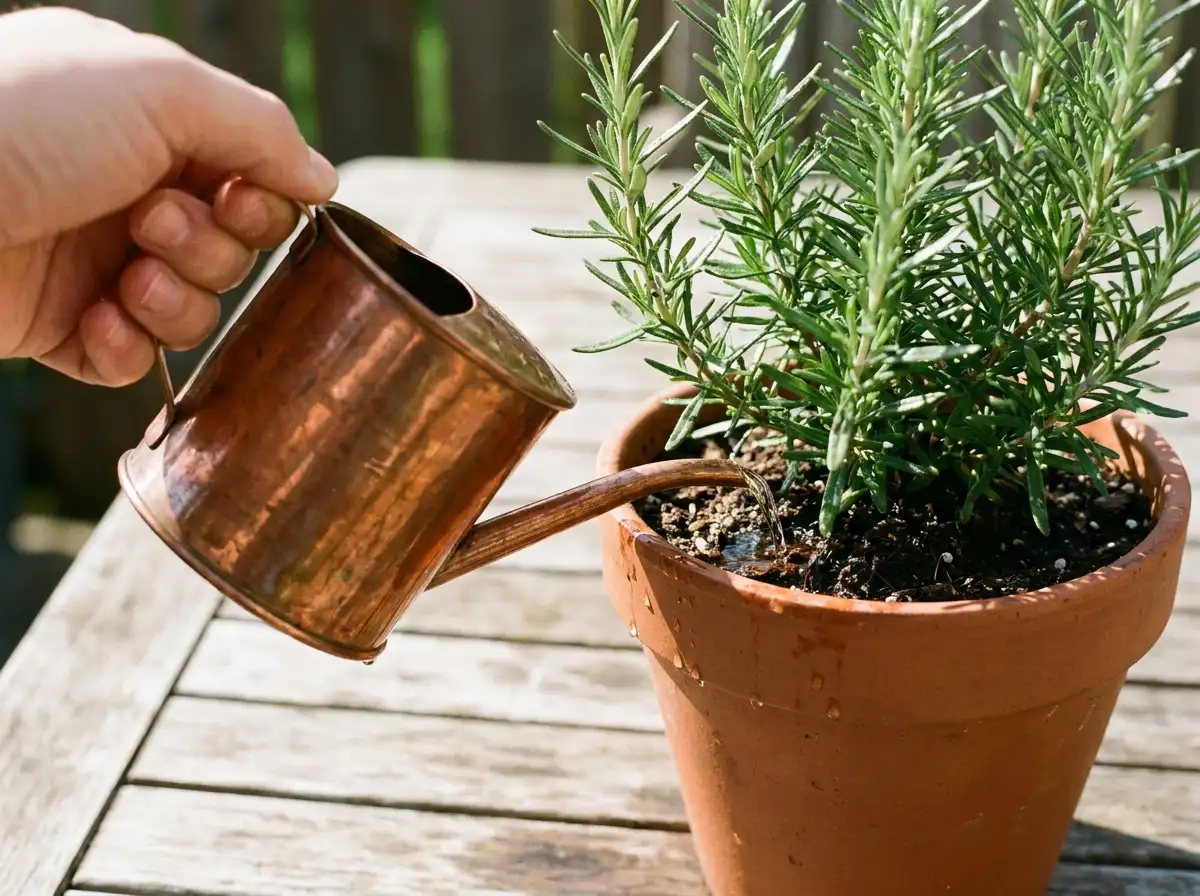
Here’s the truth: rosemary wants to dry out between waterings. It comes from the dry, rocky hillsides of the Mediterranean coast. It’s built for drought, not abundance.
The Golden Rule
Stick your finger about an inch into the soil. If it’s dry, water thoroughly. If it’s still moist, leave it alone and check again in a day or two.
Seasonal Watering Guide
| Season | Watering Frequency | Notes |
|---|---|---|
| Spring | Every 7–10 days | Increase as temperatures rise and growth picks up |
| Summer | Every 5–7 days | Check more frequently in heatwaves; terracotta dries faster |
| Fall | Every 10–14 days | Reduce as plant slows down for the season |
| Winter (indoors) | Every 14–21 days | Indoor heating dries air but plant’s needs drop significantly |
Always water at the base of the plant, not over the foliage. Wet foliage invites powdery mildew and fungal issues — something rosemary is somewhat susceptible to indoors.
Fertilizing Your Potted Rosemary Plant
Good news: rosemary is not a heavy feeder. In fact, over-fertilizing produces fast, weak, flavorless growth. The oils that give rosemary its incredible scent and flavor actually develop in leaner conditions.
Here’s a simple fertilizing schedule that works:
- Spring (March–April): Apply a balanced, slow-release fertilizer (10-10-10) once at the start of the growing season. Work it gently into the top inch of soil.
- Summer (June–July): Optional light feeding with a diluted liquid fertilizer (half strength) if growth seems slow.
- Fall and Winter: Stop fertilizing completely. The plant is resting.
If you’re an organic gardener (and honestly, for an herb you’re going to eat, I’d recommend going organic), a top dressing of compost in spring works wonderfully. Worm castings are another excellent option — gentle, slow-release, and perfectly safe for edible herbs.
Pruning and Harvesting Your Rosemary
Pruning rosemary is more forgiving than most people think — and it actually encourages the plant to grow fuller and bushier. Don’t be afraid to cut it back.
When to Prune
The best time to do a significant prune is in early spring, just as new growth starts appearing. A light shaping can be done anytime during the growing season. Avoid heavy pruning in late fall — it stimulates new tender growth that can be damaged by cold.
How to Prune
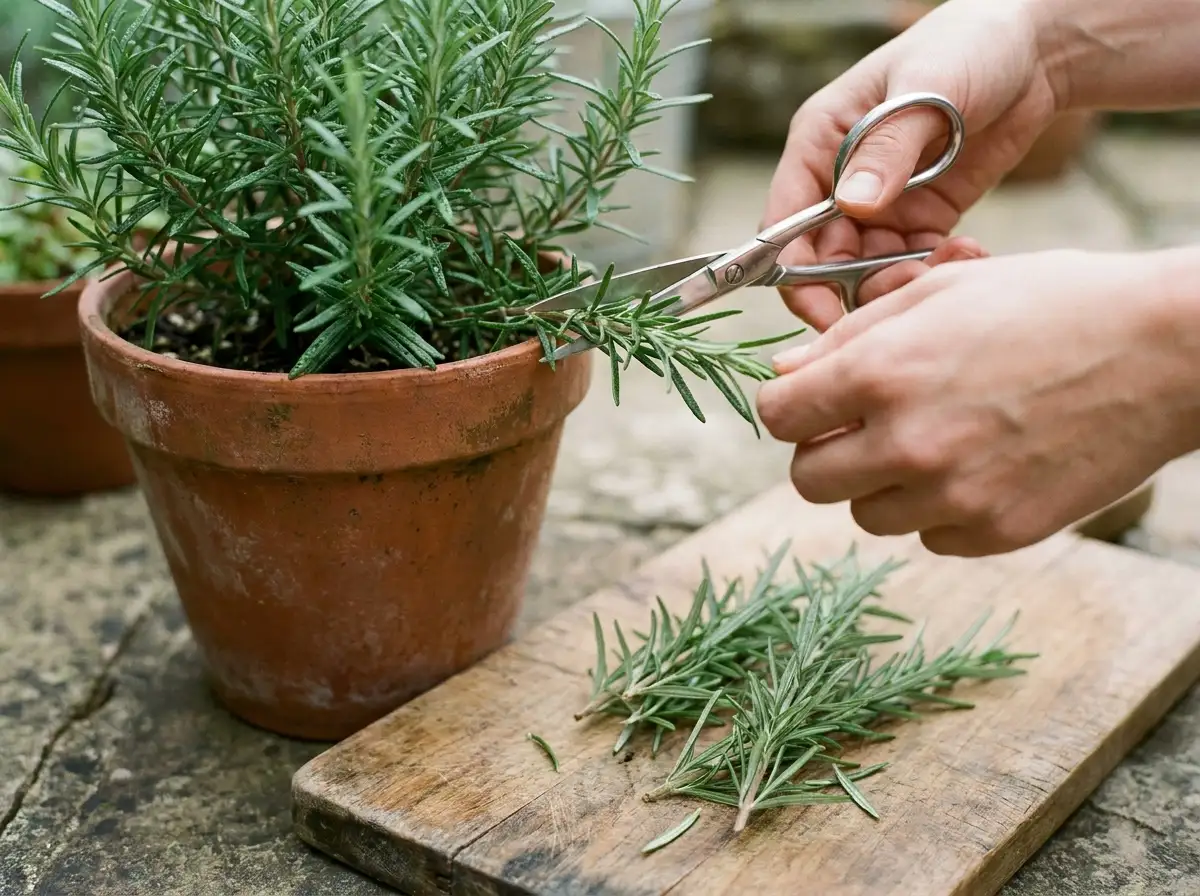
- Use clean, sharp pruning shears or scissors. Dull tools crush stems and invite disease.
- Never cut back into the woody, brown, older stems. Rosemary won’t regrow from old wood the way lavender sometimes does. Always cut in the green, newer growth zone.
- Remove no more than one-third of the plant at any one time.
- Shape it as you harvest — this is the beauty of rosemary. Every time you snip a sprig for cooking, you’re also doing light maintenance pruning.
Harvesting Tips
Harvest in the morning after the dew has dried — that’s when the essential oil concentration is highest and the flavor is most intense. Snip from the tips of the newest growth. These younger sprigs are also the most tender and best for cooking.
Winter Care for Rosemary Plants in Pots
This is where many American gardeners struggle — especially those in zones 5, 6, or 7 where winters get cold. Rosemary is cold-hardy to about 10–20°F, but in a pot the roots are exposed on all sides and far more vulnerable than in-ground roots.
Zone-by-Zone Winter Strategy
| USDA Zone | Winter Strategy |
|---|---|
| Zones 8–11 (CA, TX, FL, Pacific NW) | Leave outdoors year-round. Protect from hard frost with frost cloth if needed. |
| Zone 7 (Mid-Atlantic, TN, NC) | Move to a sheltered spot (covered porch, garage wall). Bring in during hard freezes. |
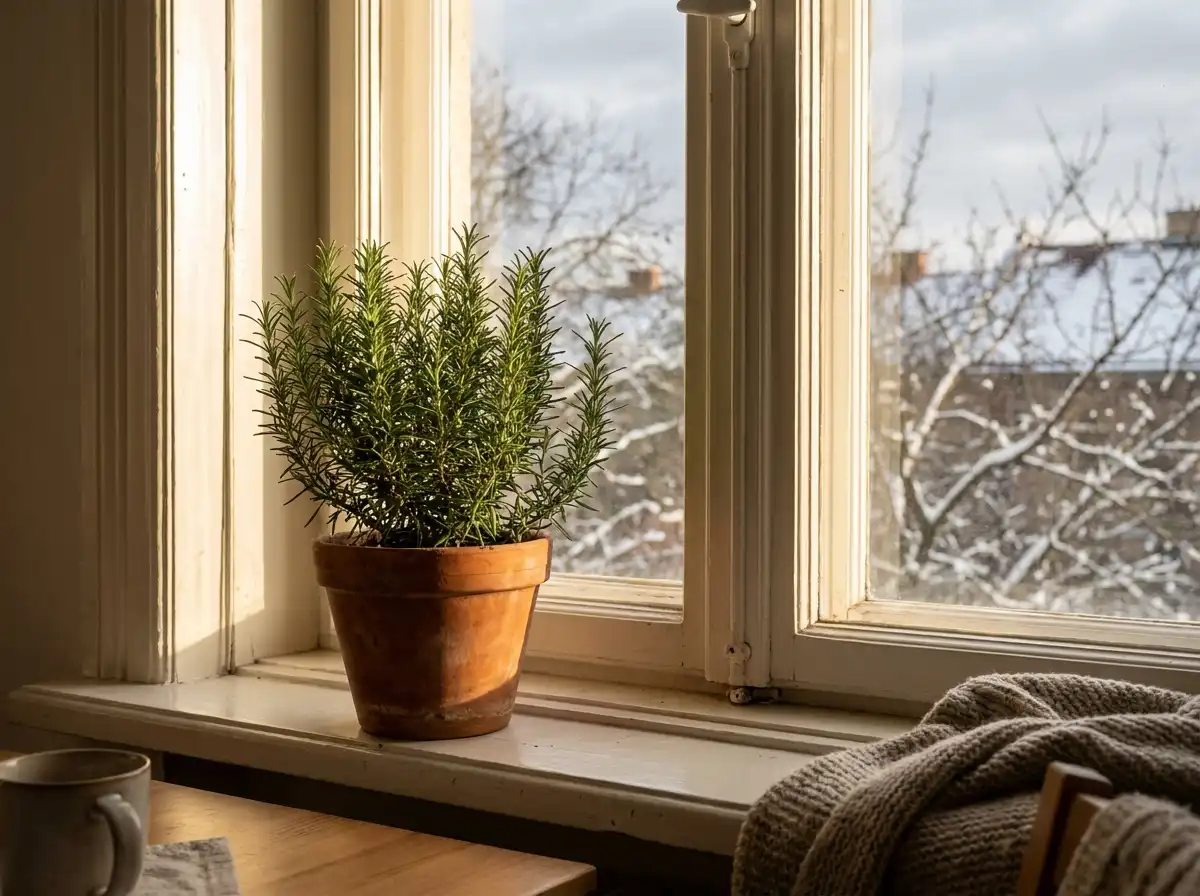
| Zones 5–6 (Midwest, Northeast, Mountain West) | Bring indoors before first frost. Place in sunniest window available. |
| Zones 3–4 (Upper Midwest, Northern Plains) | Grow as an annual outdoors or keep indoors year-round. |
Indoor winter care tips:
- Place near a south-facing window that gets at least 6 hours of light.
- Use a grow light if natural light is insufficient — indoor winter light in the northern US is often not enough.
- Keep away from heating vents (too dry and hot) and drafty windows (too cold).
- Humidity is often the hidden problem indoors. Run a small humidifier nearby or set the pot on a tray of pebbles with water to boost ambient humidity.
- Watch for powdery mildew and spider mites, which are far more common indoors.
Common Problems With Rosemary in Pots (And How to Fix Them)
Here Are some common problems with rosemary when you plant it in Pot.
Brown or Mushy Stems at the Base
Cause: Root rot from overwatering or poor drainage.
Fix: Reduce watering immediately. If the plant is salvageable, unpot it, trim rotted roots, repot in fresh dry mix, and let it dry out before watering again. Prevention is always better — get that drainage right from day one.
Yellowing Leaves
Cause: Usually overwatering, but can also be nitrogen deficiency or waterlogged roots.
Fix: Check soil moisture first. If it’s wet, hold back on water. If it’s dry, try a light feed with balanced fertilizer.
Leggy, Spindly Growth
Cause: Not enough light.
Fix: Move the plant to a sunnier location. Indoors, supplement with a grow light.
Powdery White Coating on Leaves
Cause: Powdery mildew, typically from poor air circulation and high humidity indoors.
Fix: Improve airflow around the plant. Remove affected leaves. Spray with a diluted neem oil solution (1 tsp neem oil + 1 drop dish soap per quart of water). Avoid getting foliage wet when watering.
Plant Dies in Winter Indoors
Cause: Usually insufficient light, overwatering in low-light conditions, or both.
Fix: Invest in a quality grow light. Drastically reduce watering during winter months indoors.
Best Rosemary Varieties for Growing in Pots
Not all rosemary is created equal when it comes to container gardening. Some varieties get quite large; others stay compact and are better suited to pot life.
- ‘Arp’ — One of the most cold-hardy varieties, tolerates temperatures down to about -10°F. Great for Midwest and Northeast gardeners. Upright habit with light blue flowers.
- ‘Tuscan Blue’ — A classic upright variety with strong flavor and beautiful deep blue flowers. Great for larger containers.
- ‘Prostratus’ (Creeping Rosemary) — Stays low and trails beautifully over the edge of a container. Perfect for decorative pots and window boxes.
- ‘Salem’ — Another cold-hardy selection. Upright growth, reliable flavor, good for zones 5–6.
- ‘Blue Boy’ — Compact dwarf variety. Ideal for small pots and kitchen windowsills. Slower growing but stays tidy.
- ‘Spice Islands’ — Upright, very aromatic. Excellent culinary variety. Does well in containers with regular pruning.
For most home cooks and container gardeners in the US, I’d recommend starting with ‘Arp’ if you’re in a colder zone, or ‘Tuscan Blue’ if you’re in the South or West Coast. Both are widely available at garden centers and online nurseries.
A Note From the Author
I’ve been growing herbs in containers for close to two decades — through Chicago winters, Texas summers, and everything in between. Rosemary has been a constant in my garden since the very beginning, even after that rocky first attempt. Over the years, I’ve learned that this plant doesn’t ask for much: good sun, fast-draining soil, and the discipline to keep the watering can away. Get those three things right, and rosemary will reward you with years of fragrant growth, beautiful flowers, and fresh flavor that no dried herb from a jar can match.
If you have questions or run into problems with your rosemary plant, drop a comment below. I read every single one.
Frequently Asked Questions
How long does a rosemary plant live in a pot?
With proper care, a potted rosemary plant can live for 10–15 years or longer. The key is repotting every 2–3 years into a slightly larger container, maintaining good drainage, and not over-fertilizing. Many gardeners in warm zones have rosemary plants that outlive other garden perennials.
How big does rosemary get in a pot?
Container size limits how large rosemary grows. In a standard 12–16 inch pot, most upright varieties will reach 18–24 inches tall and about 12–18 inches wide. Compact varieties like ‘Blue Boy’ stay much smaller. In the ground, rosemary can grow 4–6 feet tall and equally wide.
Can I leave my rosemary plant outside in winter?
It depends on your climate zone. Rosemary is reliably cold-hardy outdoors in zones 7–11. In zones 5–6, bring it indoors before the first hard freeze. In zones 3–4, treat it as an annual or grow it exclusively indoors.
Why is my potted rosemary dying?
The most common reasons are overwatering and root rot, insufficient sunlight, or cold damage in winter. Check your watering habits first — this is the culprit in 80% of cases. Then assess light. A plant that gets fewer than 6 hours of direct sun daily will slowly decline.
Should I mist my rosemary plant?
No. Misting encourages fungal issues like powdery mildew and doesn’t meaningfully help the plant. If you’re concerned about low humidity indoors during winter, use a pebble tray with water under the pot instead. It raises ambient humidity without wetting the foliage directly.
How often should I repot my rosemary plant?
Plan on repotting every 2–3 years, or when you notice roots coming out of the drainage holes or the plant becoming rootbound. Always move up only one pot size at a time — jumping to a much larger pot increases the risk of root rot from excess soil moisture.
Can rosemary grow indoors year-round?
Yes, but it requires real commitment to lighting. Rosemary needs 6–8 hours of direct light daily, which is hard to achieve on most windowsills year-round in the northern US. A quality full-spectrum grow light (LED, 5000K–6500K color temperature) set to 14–16 hours per day works well as a supplement or replacement for natural light.
Final Thoughts
Growing a rosemary plant in a pot is one of the most satisfying things you can do as a home gardener. It’s not fussy once you understand what it actually wants — and what it absolutely doesn’t want (looking at you, overwatering). Get the drainage right, give it full sun, use a fast-draining soil mix, and have a little patience. In return, you’ll get a fragrant, beautiful, long-lived plant that earns its place on your patio, porch, or windowsill year after year.
Whether you’re a beginner or an experienced grower looking to refine your container gardening game, rosemary is always worth the effort. And trust me — growing your own is night-and-day different from anything you’ll find in a grocery store spice aisle.
Happy growing. 🌿